

The global bare metal cloud market is on track to expand from $8.38 billion in 2024 to $58.7 billion by 2035, according to new research from Market Research Future (MRFR). That represents a compound annual growth rate of nearly 19.4%, fueled by enterprise adoption of AI, big data, and real-time edge workloads.
What Is Driving Growth?
MRFR notes that enterprises are turning to bare metal cloud for workloads that cannot afford the latency or overhead of virtualization. Industries such as banking, healthcare, and manufacturing are increasing their reliance on dedicated compute and storage for compliance, security, and performance.
The report highlights AI/ML training, high-performance analytics, and edge computing as the top drivers, while regulatory demands such as GDPR and data sovereignty laws further accelerate adoption.
Which Services and Sectors Lead?
In 2024, compute services dominated with almost 39% of the market share, reflecting the demand for high-performance, customizable hardware. Large enterprises accounted for nearly 60% of total revenue, while the BFSI sector (banking, financial services, insurance) led vertical adoption with a 25% share.
Regional Insights
North America remains the largest market with close to 40% of share, thanks to mature data-intensive industries in the U.S. and Canada. Europe follows closely, with growth tied to GDPR compliance and digital sovereignty initiatives. Asia-Pacific is the fastest-growing region, where China, India, and Singapore are accelerating cloud adoption alongside 5G rollouts and new data centers.
Key Players in the Market
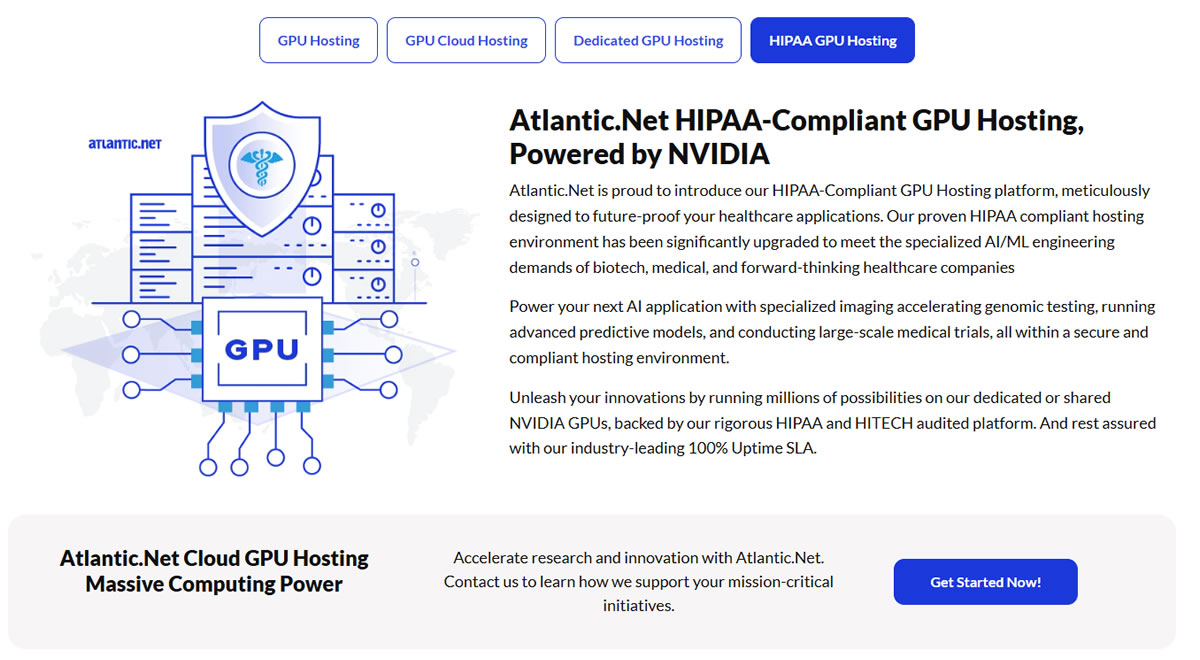
The report identifies several providers shaping the bare metal cloud landscape. Among them, Atlantic.Net and Liquid Web stand out, both of which we already recommend in our own best hosting picks.
Atlantic.Net offers compliance-ready bare metal servers trusted by healthcare and financial organizations. Its HIPAA- and SOC2-compliant infrastructure makes it a leading choice for businesses that prioritize data security alongside performance. On HostScore, we’ve highlighted Atlantic.Net as a top dedicated hosting provider, particularly for enterprises that need predictable uptime and transparent pricing.
Liquid Web, meanwhile, provides managed bare metal hosting that is designed for SMBs and agencies. The company supports high-traffic eCommerce stores, learning platforms, and creative agencies that want bare metal performance without having to manage servers themselves. We often feature Liquid Web in our best picks for businesses seeking a managed, hands-off hosting experience with strong support.
Other players named in the report include Scaleway, Vultr, IBM, Microsoft Azure, Rackspace Technology, and Amazon Web Services (AWS), all expanding their infrastructure and adding GPU-enabled servers to capture demand across enterprise and developer markets.
Why It Matters for Hosting Buyers?
Bare metal cloud sits at the crossroads of dedicated hosting and cloud hosting.
Like dedicated servers, it allocates full physical resources to a single tenant, eliminating the “noisy neighbor” effect of shared environments. At the same time, it integrates cloud-like provisioning and billing flexibility, which allows businesses to scale faster than traditional bare metal deployments.
For hosting buyers, this matters in three important ways:
- Performance for demanding workloads AI, analytics, or high-traffic WooCommerce stores often need direct access to CPUs, RAM, and storage without the overhead of virtualization. Bare metal provides that control.
- Compliance and data control Businesses in healthcare, finance, or government sectors often must prove data is housed on isolated hardware. Bare metal gives them a clear compliance path while still supporting modern cloud automation.
- Future-proofing infrastructure As more providers roll out GPU-accelerated and edge-enabled bare metal servers, businesses can start small and expand into advanced workloads without re-architecting their hosting environment.
At HostScore, we track how hosting providers deliver on these promises across shared, VPS, dedicated, and cloud categories. If you’re considering where bare metal fits into your hosting strategy, the best starting point is to compare today’s leading dedicated hosting providers in our best web hosting list.
