
Marketing campaigns can generate large bursts of traffic within minutes. Paid ads, affiliate promotions, product launches, and limited-time bonus offers often send thousands of visitors to a website simultaneously.
Marketing teams usually focus on targeting, messaging, and conversion funnels. Yet infrastructure often determines whether those visitors successfully complete their actions or leave because the website becomes slow or unstable.
HostScore load testing shows that websites frequently struggle when marketing campaigns generate sudden spikes in concurrent users. Response times increase, request queues form, and dynamic pages begin to stall even when overall server capacity appears sufficient.
Industry research reinforces this relationship between infrastructure performance and marketing outcomes. A Google-Deloitte study found that improving page speed by just 0.1 seconds increased conversion rates by up to 8.4% in retail environments. Even small infrastructure delays can therefore reduce the effectiveness of marketing campaigns.
Based on load testing observations and industry research, several hosting features consistently determine whether websites can sustain campaign-driven traffic. Below are five infrastructure features that most strongly influence marketing stability and performance.
1. Concurrent Request Capacity
What Is Concurrent Request Capacity?
Concurrent request capacity determines how many users a server can process at the same time.
Marketing campaigns rarely send traffic gradually. Paid ads, email promotions, influencer mentions, and affiliate campaigns can generate hundreds or thousands of visitors within minutes. Each visitor triggers multiple server operations as they browse pages or interact with site features.
A server must process these requests simultaneously. When capacity is insufficient, requests begin waiting in queues.
Why Marketing Campaigns Create Request Spikes
Marketing campaigns generate burst traffic patterns rather than steady growth.
Visitors may arrive within seconds after:
- a newsletter announcement
- a social media post
- an affiliate promotion
- a limited-time promotional offer
Each user triggers multiple backend processes. Page rendering, login requests, product searches, and checkout actions all require server processing. When these requests arrive simultaneously, infrastructure must handle them in parallel.
What HostScore Load Testing Shows
HostScore load testing shows that request queues frequently appear once application worker limits are reached.
At this point, response times increase sharply even though overall CPU capacity may still be available. Users experience slower pages because the server cannot process additional requests immediately.
This situation often appears during campaign launches. A sudden surge in visitors can exhaust concurrent request capacity within seconds.
Why This Matters for Marketing Performance
Concurrent request limits directly influence user experience during traffic spikes.
When servers reach processing limits, visitors may encounter slow pages, delayed checkouts, or temporary errors. These issues often occur at the exact moment when marketing campaigns generate the highest visitor interest.
Infrastructure that handles large numbers of concurrent requests helps maintain stable performance when marketing campaigns drive sudden traffic bursts.
High request volumes also increase pressure on another critical system component: the database.
2. Database Throughput and Query Speed
Why Databases Become Critical During Marketing Traffic
Databases store the dynamic information that websites use to generate pages and process transactions.
When visitors interact with a website, most actions trigger database queries. Product searches, user logins, account registrations, and checkout processes all depend on retrieving and updating stored data.
Marketing campaigns significantly increase these interactions. As traffic grows, database queries multiply quickly.
How Marketing Activity Increases Database Load
Marketing traffic creates large volumes of dynamic operations.
Visitors arriving through campaigns often perform actions such as:
- creating new accounts
- searching for products or service
- submitting forms
- completing purchases
Each action generates multiple database queries. When thousands of users interact with the site simultaneously, the database must process a large number of requests in parallel.
If query processing slows down, page generation also slows down.
What HostScore Load Testing Shows
HostScore load testing shows that database latency often becomes the dominant bottleneck once dynamic traffic increases.
Even when web servers still have available processing capacity, slow database queries can delay page generation. Pages appear to stall because the server is waiting for data retrieval operations to complete.
This pattern frequently appears during traffic spikes involving registrations, checkouts, or login flows.
Why Database Performance Affects Marketing Outcomes
Database performance directly affects the responsiveness of interactive pages.
When database queries slow down, visitors experience longer page loads and delayed form submissions. These delays often occur during the most critical stages of the conversion process.
Infrastructure designed for high database throughput helps websites sustain heavy interaction volumes during marketing campaigns.
Even when databases perform efficiently, another challenge appears when visitors arrive from different regions around the world.
3. CDN and Edge Caching
How Content Delivery Networks Reduce Server Load
Content delivery networks distribute website content across geographically distributed servers.
A CDN stores cached copies of static assets such as images, style sheets, and scripts. When visitors access the website, the CDN delivers these assets from the closest edge server instead of requesting them from the origin server.
This architecture reduces the number of requests reaching the core infrastructure.
What Research Shows About CDN Efficiency
Edge caching significantly reduces infrastructure load.
Performance benchmarks summarized by YouWare show that optimized CDN environments can achieve cache hit ratios above 90%. In these environments, most user requests are served directly from edge servers rather than the origin infrastructure.
This reduces processing demand on the primary servers during traffic spikes.
What HostScore Load Testing Shows
HostScore load testing shows that enabling CDN caching dramatically lowers the number of origin requests during simulated traffic bursts.
Static resources such as images, scripts, and style sheets are delivered directly from edge nodes. Application servers therefore handle fewer requests and remain more stable during traffic surges.
This behavior allows websites to maintain consistent performance even when visitor numbers increase rapidly.
How Promotion Ecosystems Create Traffic Bursts
Promotion-driven platforms often experience sudden waves of visitors. Sites that publish limited-time offers frequently attract bursts of search and affiliate traffic when new promotions appear. Websites that aggregate incentives, such as casino bonus directories (e.g. kasinobonukset), can experience rapid visitor growth whenever promotional campaigns launch.
In these environments, CDN caching plays an important role by absorbing a large portion of incoming traffic before it reaches the origin server. Although caching reduces infrastructure pressure, systems must still adapt when marketing campaigns generate unpredictable growth.
4. Infrastructure Scalability
Why Marketing Traffic Is Difficult to Predict
Campaign performance can change quickly depending on user behavior.
“Consumers are predictably unpredictable,” said Sean Scott, VP and general manager of consumer shopping at Google, in his recent Shoptalk 2025.
A viral social post, influencer endorsement, or affiliate promotion can multiply visitor numbers within minutes.
Infrastructure must therefore handle sudden increases in demand.
How Scalable Infrastructure Responds to Traffic Spikes
Scalable infrastructure allows systems to adjust computing resources as traffic increases.
Additional processing capacity can be allocated when visitor numbers grow. When traffic returns to normal levels, resources stabilize accordingly.
This flexibility helps websites maintain stable performance during unpredictable marketing events.
What HostScore Load Testing Shows
HostScore load testing shows that scalable infrastructure maintains more consistent response times during simulated traffic spikes. Systems with fixed capacity often begin degrading once traffic exceeds predefined thresholds. Request queues increase and page load times rise sharply. Infrastructure that can expand processing resources adapts more effectively to sudden campaign-driven demand.
Why Scalability Protects Campaign Performance
Scalable infrastructure helps prevent server overload during successful marketing campaigns.
When traffic increases rapidly, systems with adjustable resources maintain consistent performance levels. Visitors continue to experience responsive pages even when demand rises unexpectedly.
However, even scalable infrastructure must maintain fast response times to preserve user engagement.
5. Server Response Time (TTFB)
What Server Response Time Measures
Server response time measures how quickly a website begins delivering content after receiving a request. Time to First Byte (TTFB) represents the delay between a visitor sending a request and the server returning the first response.
Why Response Time Matters for Marketing Traffic
Visitors arriving through marketing channels typically expect immediate page loads.
Users clicking on advertisements, search results, or affiliate links often have strong purchase intent. Delays during page loading can interrupt this engagement and cause visitors to leave before interacting with the site.
Server response time therefore plays an important role in campaign effectiveness.
What Research Shows About Conversion Impact
Research highlights how sensitive conversions are to small performance changes.
A Google-Deloitte study found that improving site speed by just 0.1 seconds increased retail conversion rates by up to 8.4 percent. Even small improvements in page performance can therefore produce measurable gains in marketing outcomes.
Additional performance guidance cited by Grant Mucha suggests that TTFB below 200 milliseconds represents strong performance, while response times above 600 milliseconds are considered slow.
These thresholds illustrate how infrastructure latency can influence user behavior.
Why Response Time Determines Campaign ROI
Slow response times reduce the value of marketing traffic.
When visitors encounter delays during page loading, bounce rates increase and engagement declines. Marketing investments therefore lose effectiveness because potential customers abandon pages before interacting with the content.
Maintaining low server response times helps ensure that marketing campaigns translate into real user engagement and conversions.
Conclusion
Marketing performance is often discussed in terms of advertising budgets, creative messaging, or audience targeting. Yet infrastructure plays an equally important role in determining whether campaigns succeed.
Examples of different load test results of ScalaHosting (read full review here).


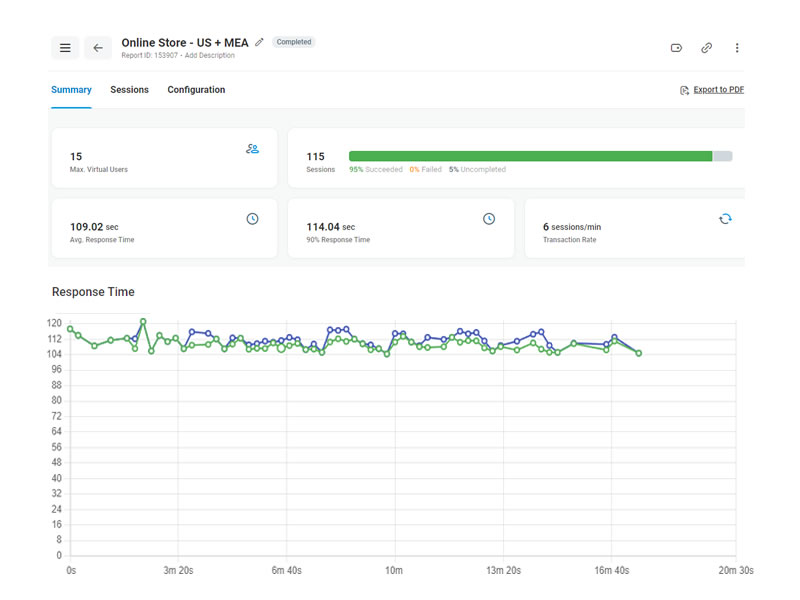
HostScore load testing shows that websites frequently encounter stability problems when marketing campaigns generate sudden traffic spikes. Request queues form, database queries slow down, and response times increase when infrastructure cannot handle concurrent demand.
Industry research points to the same conclusion. Even small improvements in site speed can produce measurable gains in conversion rates, while slow response times drive visitors away before they interact with a page.
The five infrastructure features discussed above: concurrent request capacity, database throughput, caching efficiency, scalability, and server response time, consistently determine whether a website can sustain marketing traffic without performance degradation.
Businesses investing heavily in marketing campaigns should therefore view hosting infrastructure as part of their marketing stack. When systems remain stable during traffic surges, campaigns deliver the engagement and conversions they were designed to generate.
If you want to explore hosting environments designed for performance and stability, try our Web Hosting Finder Tool (homepage) to compare providers that support high-traffic campaigns and demanding workloads.
