

Key Differences
The key differences between Hosting.com and GreenGeeks lie in their approach to performance, eco-commitments, and scalability options. Both are veteran hosting companies with long-standing reputations and reliable infrastructure; but neither is considered cutting-edge in today’s hosting landscape.
GreenGeeks stands out with its strong environmental pitch. The company offsets 300% of its energy usage with renewable energy credits (RECs) and plants a tree for every new hosting account. Hosting.com, meanwhile, takes a more traditional approach with speed-focused Turbo plans and developer-friendly features like Node.js and Redis on shared hosting.
From a performance standpoint, both hosts are stable and offer decent speed, but their shared hosting renewal costs are on the high side. In short, both hosts offer solid, no-frills hosting — but they cater to slightly different priorities.
Compare Hosting Offers & Features
GreenGeeks

Our Take
GreenGeeks stands out in the crowded hosting space by combining reliable performance with eco-friendly operations. The company offsets 300% of its energy usage with renewable energy credits, making it a go-to option for environmentally conscious users. Beyond the green appeal, GreenGeeks offers solid uptime, decent speed, and helpful support across its shared, VPS, and reseller plans. It’s a practical choice for small businesses, bloggers, and nonprofits that want a sustainable web presence without sacrificing functionality.
Hosting.com
Our Take
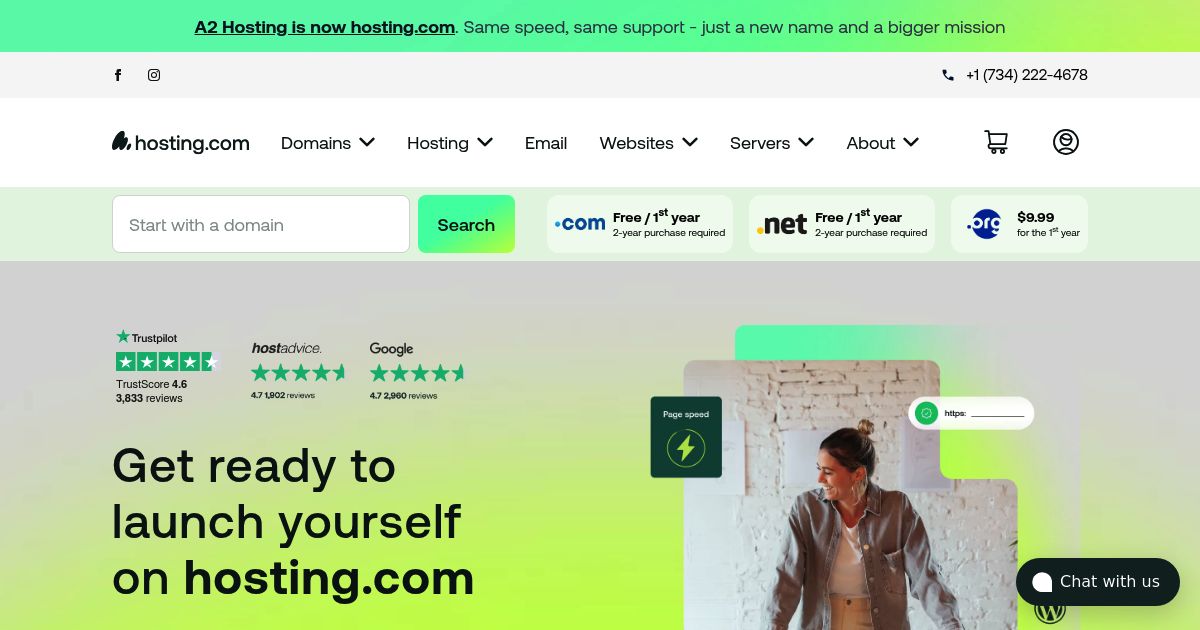
Hosting.com (formerly A2 Hosting) has repositioned itself under World Host Group, targeting solo developers, LMS users, and small businesses with streamlined hosting solutions. Based on our experience and review of their current offerings, the brand no longer aims to lead on raw performance — but still delivers where it counts: developer tools, global servers, and strong unmanaged VPS value. The new email hosting plan, in particular, stands out as a smart choice for small businesses and teams.
If You Seek Beginners-Friendly Hosting…
GreenGeeks is slightly more beginner-friendly than Hosting.com for entry-level hosting.
Both providers offer shared hosting with decent specs, but GreenGeeks includes free daily backups, website migration, and a straightforward onboarding process. Hosting.com also includes site migration and developer tools, but accessing its full performance potential requires upgrading to Turbo plans — which start at $11.99/month and renew much higher.
In contrast, GreenGeeks’ Lite plan starts lower and delivers more features upfront, including WordPress tools and email hosting. Beginners will appreciate the extra hand-holding and lower commitment to access core features.
GreenGeeks vs Hosting.com in Pricing
| Hosting Type | Hosting.com | GreenGeeks |
|---|---|---|
| Shared Hosting | $1.99 - 8.99/mo | $2.95 - 8.95/mo |
| VPS Hosting | $4.99 - 31.99/mo | $69.95 - 179.95/mo |
| Dedicated Hosting | $179.99 - 539.99/mo | $169.00 - 439.00/mo |
| Cloud Hosting | $ - /mo | $ - /mo |
| Managed WP Hosting | $2.99 - 6.99/mo | $2.95 - 8.95/mo |
| Windows Hosting | $ - /mo | $ - /mo |
| Coupon | - | - |
| Coupon Details | - | - |
For Advanced Users Looking for VPS Hosting
Hosting.com and GreenGeeks both offer VPS hosting, but neither stands out as particularly innovative in this area.
Hosting.com offers both usual managed VPS and cheap unmanaged VPS options with good specs for developers who prefer to configure everything themselves. GreenGeeks offers managed VPS plans that are easier to deploy but priced on the higher side compared to newer cloud-native hosts.
Both platforms support reliable VPS setups, but lack modern cloud flexibility like autoscaling or customizable resource allocation. Advanced users may find better performance-to-price ratios elsewhere — but between these two, it depends on your management preference: raw control with Hosting.com vs. simplicity with GreenGeeks.

For Small Businesses & eCommerce
Overall GreenGeeks may have a slight edge for small business hosting, particularly for sustainable brands.
Its VPS and dedicated options offer room to scale, and features like daily backups and free site migrations reduce overhead. Hosting.com’s Turbo plans provide speed, which can help with eCommerce performance, but the one-site limit per plan and steep renewal costs are limiting for small business operators managing multiple properties.
If sustainability aligns with a brand’s values, GreenGeeks is the better marketing fit. If performance trumps all and you don’t mind paying for it, Hosting.com’s Turbo plan is a solid alternative.
If You Seek Eco-Friendly Hosting…
GreenGeeks is clearly the better choice if sustainability is a priority.
GreenGeeks has built its brand around environmentally responsible hosting. The company matches 300% of its energy usage with renewable energy credits (RECs) and partners with One Tree Planted to contribute one tree for every new customer. This makes it one of the few web hosts that offers tangible climate-positive actions as part of its service.
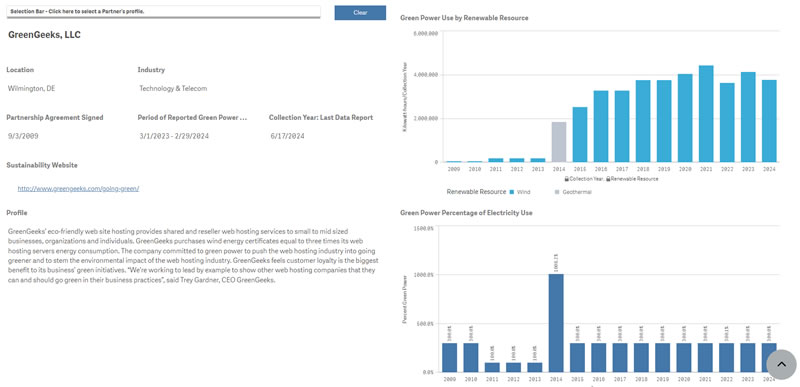
Hosting.com doesn’t currently highlight any green initiatives or sustainability goals. Its focus is more on technical performance and developer features. While that appeals to speed-focused users, it leaves eco-conscious buyers without much reason to choose it over GreenGeeks.
For website owners looking to reduce their digital carbon footprint — whether for personal ethics or public-facing branding — GreenGeeks is the obvious winner.
Our Final Verdict
Hosting.com and GreenGeeks are closely matched in performance and reputation, but cater to different types of users. Choose GreenGeeks if eco-conscious branding, simplicity, and daily backups matter to you. Go with Hosting.com if you’re a tech-savvy user who values performance optimization and doesn’t mind spending more on Turbo plans.
More About the Companies
GreenGeeks

Founded in 2008 by web hosting veteran Trey Gardner, GreenGeeks emerged in Santa Monica, California, with a pioneering mission: to make web hosting environmentally sustainable. Alongside Gardner, COO Kaumil Patel, with his extensive background in hosting operations, plays a key role in driving the company’s success. GreenGeeks sets itself apart with a strong commitment to the environment, using renewable energy credits to offset three times the power consumed by its clients’ websites. This innovative approach not only positions GreenGeeks as a leader in eco-friendly hosting but also underscores its dedication to making a meaningful environmental impact.
GreenGeeks Pros
- 300% green energy offset with RECs
- Affordable entry pricing for shared and WordPress hosting plans
- Free daily backup for all shared hosting plans
- Partnership with One Tree Planted plants a tree for every new hosting account
- Free website migration assistance
- Enhanced scalability options with VPS and dedicated plans
GreenGeeks Cons
- Higher renewal rates across shared and WordPress plans
- Slightly lackluster customer service, with complaints of limited support for customers transferring domains out of the platform
- No Windows Server hosting option
Hosting.com
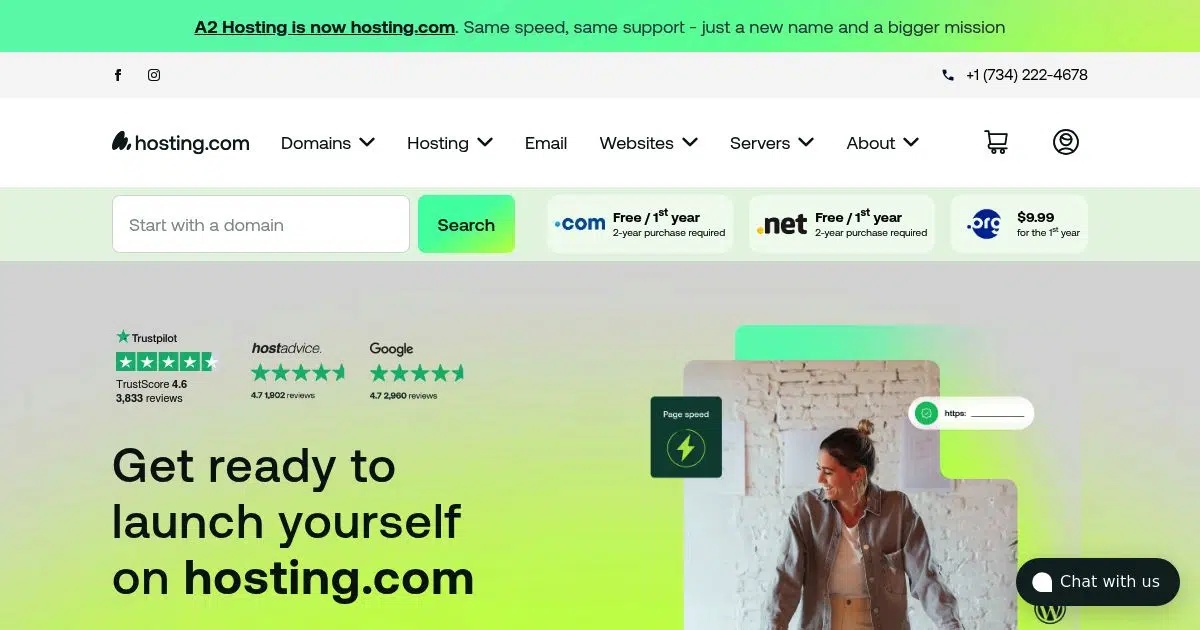
Hosting.com, previously known as A2 Hosting, was originally founded by Bryan Muthig in 2003 in Ann Arbor, Michigan. The company built a reputation for developer-first hosting, becoming one of the earliest providers to adopt SSD storage and optimize WordPress performance through its A2 Optimized platform.
In January 2025, the company was acquired by World Host Group and rebranded as Hosting.com. While the ownership has changed, the service still emphasizes tools for developers, fast server technology, and global infrastructure. Today, Hosting.com is actively repositioning itself to serve small businesses, LMS websites, and tech-savvy freelancers; offering a mix of shared, WordPress, VPS, and email hosting built on its legacy of performance and customization.
Hosting.com Pros
- Developer-friendly: Node.js, Python, Redis, and SSH acces even on shared plans
- Turbo plans include NVMe, LiteSpeed, and HTTP/3 tech
- Excellent email hosting deal for small businesses
- Free cPanel site migrations
- Cheap unmanaged VPS with strong specs
Hosting.com Cons
- Renewal rates jump steeply after promo
- One website limit on all Turbo plans
- Lacks modern cloud or autoscaling options
- Managed VPS plans have become more restrictive post-A2 migration

