
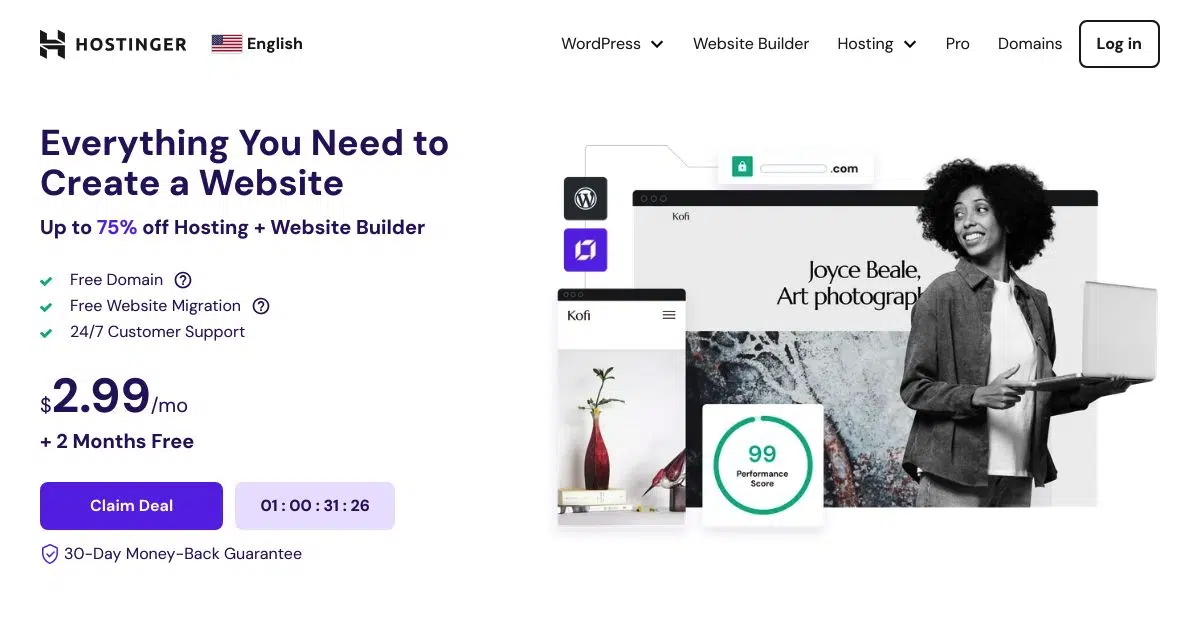
Hostinger
Innovative hosting with AI-powered builder starting at $2.99/mo. Try risk-free for 30 days.
84.9%
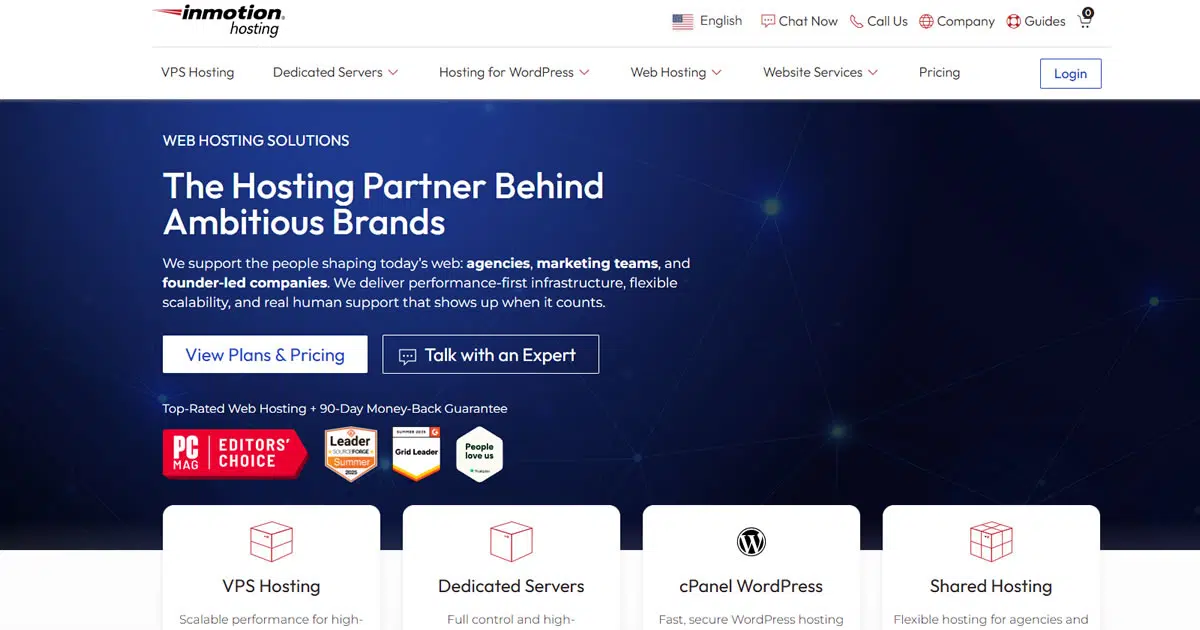
InMotion Hosting
Shared hosting with US-based support starting at $1.99/mo. Try risk-free for 45 days.
80.2%
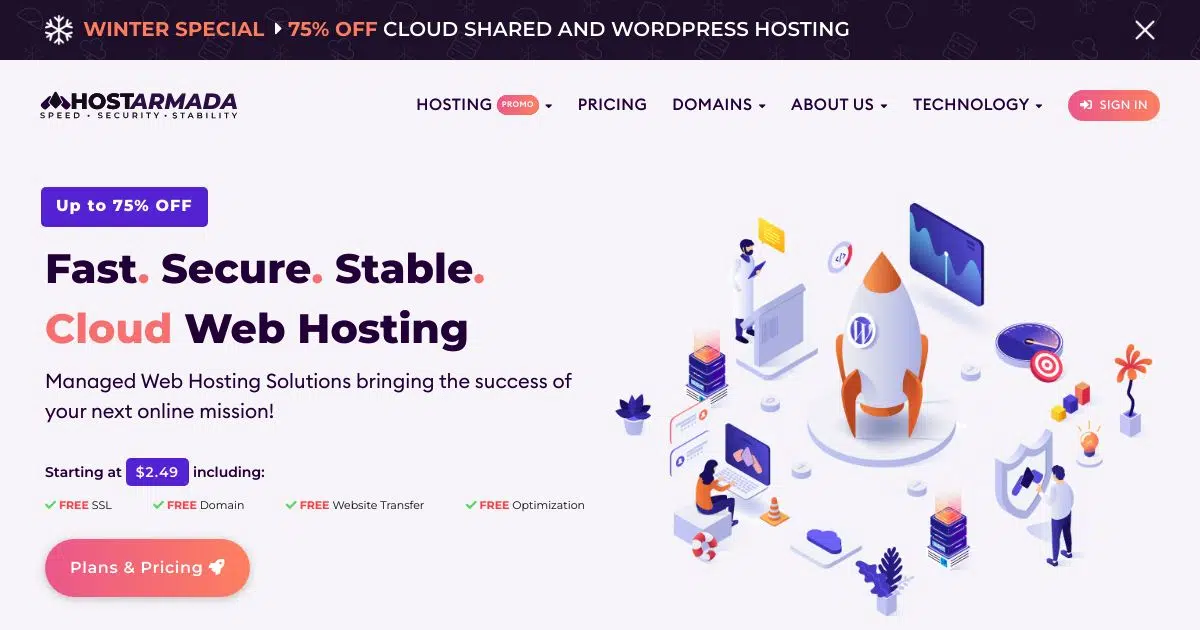
HostArmada
cPanel hosting with wide server location choices. Price from $1.99/mo, 45 days risk free.
81.1%

Verpex
Cheap cPanel shared hosting with month-to-month billing. Try risk-free for 45 days.
82.2%

GreenGeeks
300% eco-friendly hosting at $2.95/mo. Start risk-free with 30-day money back guarantee.
79.8%
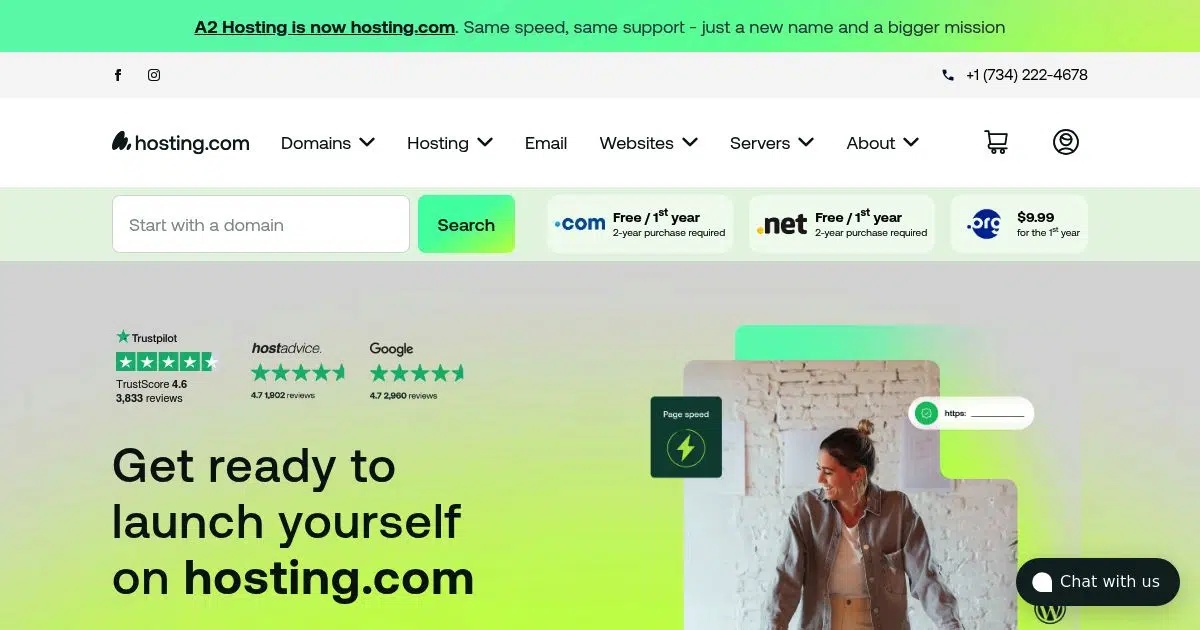
Hosting.com
Developer-friendly hosting starting at $1.99/mo. All new signups get a 30-day moneyback guarantee.
79.7%

NameCheap
Cheap shared hosting starting at $1.48/mo. Try risk-free for 30 days.
62.9%
Hostinger

Hostinger offers low-cost hosting through a beginner-friendly platform that combines managed website tools, WordPress support, and room to scale. Its custom hPanel replaces cPanel with a simpler interface, while built-in caching, a CDN, automated migration, staging, SSH, Git, and WP-CLI support more advanced workflows.
The entry-level Premium plan currently starts at $2.99 per month* with a 48-month commitment and renews at $10.99 per month. It supports three websites and includes 20GB of SSD storage, weekly backups, free SSL certificates, a domain for the first year, and two mailboxes per website for the first year. Higher plans add NVMe storage, daily backups, more websites, and greater server resources.
Hostinger provides one of the best overall balances of price, performance, and ease of use in this comparison. It is particularly suitable for beginners, WordPress users, and owners managing several small websites, although experienced cPanel users will need to adjust to hPanel.
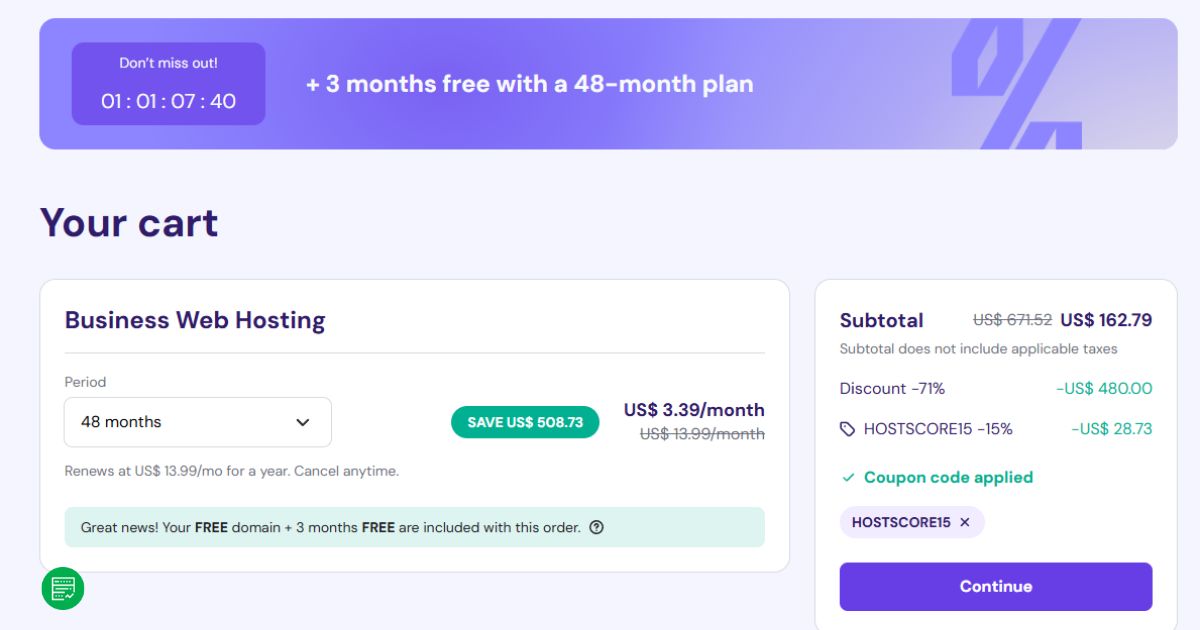
* Note: HostScore readers can enter promo code ‘HOSTSCORE15’ or ‘HOSTSCORE’ at checkout to unlock additional savings on eligible Hostinger plans.
Exclusive Hostinger Coupons – Save 10% or 15%!
Use promo code ‘HOSTSCORE’ for 10% off any plan — Or go big with promo code ‘HOSTSCORE15’ on a 4-year plan and unlock 15% off. Longer subscription = bigger savings. Claim Your Hostinger Deal Here!
Cheapest Hosting Plans Available
Number of Websites Allowed
HostScore
Hostinger Pros
- Affordable entry plan at $2.99/month for 3 websites, plus 15% off with HOSTSCORE15.
- Global network of data centers in Europe, Asia, North America, and South America
- Excellent AI ecosystem with AI Builder (new!), Hostinger Agent with memory, OpenClaw, Hermes, n8n, and Paperclip
- User-friendly hPanel with API and MCP access for AI-assisted hosting management
- Developer API and MCP integration – Hostinger Connector lets Claude, Cursor, Codex, and other MCP-compatible tools manage websites
- Multiple payment methods accepted, including crypto and digital wallets
Hostinger Cons
- The lowest price requires 48 months upfront and renews at $10.99/month
- Advanced Agent features and managed AI applications may require separate paid plans
- Hostinger AI Builder sites have limited portability compared with WordPress websites
- Hostinger does not support Windows hosting.
Verpex

Verpex provides cPanel hosting for individuals, freelancers, and agencies that want a choice of server locations and assistance moving existing websites. Its plans include NVMe storage, daily off-site backups, free SSL certificates, domain-based email, CloudLinux, Softaculous, and 24/7 support.
The Bronze plan (starts from $3 and renews at $6 per month) supports one website with 30GB of NVMe storage, 1GB of RAM, and one vCPU. Silver increases the allowance to 100 websites, 50GB of storage, 2GB of RAM, and two vCPUs, while Gold supports unlimited websites with 100 GB of storage. A free domain is available on qualifying non-monthly terms, and Verpex advertises free expert migration for up to 100 websites.
Based on our first hand experience, Verpex is a practical choice for users who value cPanel, migration assistance, email hosting, and geographic flexibility. However, you should note that the Bronze plan carries a lower published uptime guarantee than the two higher tiers.
Exclusive Deal: Get an Extra 50% discount at Verpex!
Use promo code ‘MOVEME’ at checkout to enjoy an additional 50% discount on your first bill. Click here to claim your discount and start saving with Verpex today!
Cheapest Hosting Plans Available
Number of Websites Allowed
HostScore
Verpex Pros
- Budget-friendly entry pricing on shared and VPS hosting plans
- 45-day money-back guarantee on shared/reseller plans (longer than industry standard)
- Daily backup included in all shared hosting plans at no extra cost
- Unlimited free site migrations
- Choice of 8 global data centers across five continents
- Wide hosting selection including Windows, reseller, and managed servers
Verpex Cons
- Steep renewal pricing after the first term (up to 90% higher than intro rates)
- Short refund window on managed VPS (7 days compared to 30+ with some competitors)
HostArmada

HostArmada combines low introductory prices with managed cPanel hosting, clearly defined server resources, and hands-on technical support. Its shared plans use NVMe storage and include free SSL certificates, website migration, dynamic caching, malware scanning and removal, firewall protection, and multiple daily backup copies.
The Start Dock plan currently costs $1.99 per month with a 36-month commitment and renews at $9.95 per month. It supports one website with 15GB of NVMe storage, two CPU cores, 2GB of RAM, and seven daily backups. Web Warp increases the allocation to 30GB, four CPU cores, 4GB of RAM, unlimited websites, and 14 daily backups, but it also carries a substantially higher renewal price.HostArmada is particularly suitable for buyers who want familiar cPanel management, clearly-stated resource limits, or assistance moving an existing website. Its introductory price is strong, but you should evaluate the regular price before choosing a long-term plan.Cheapest Hosting Plans Available
Number of Websites Allowed
HostScore
HostArmada Pros
- Competitive pricing
- Daily remote backups with up to 21 days of restore points
- NGINX server and NVMe storage for all shared hosting plans
- 45-day money-back guarantee
- Free malware scans and Web Application Firewall (WAF) on all shared hosting plans
- Supports hosting of legal adult content websites
- Wide range of server locations
HostArmada Cons
- Price increases upon renewal
- Entry-level plan supports only one website
- Advanced speed features like dynamic caching are limited to the highest-tier shared plan
- No Windows Server hosting option
InMotion Hosting
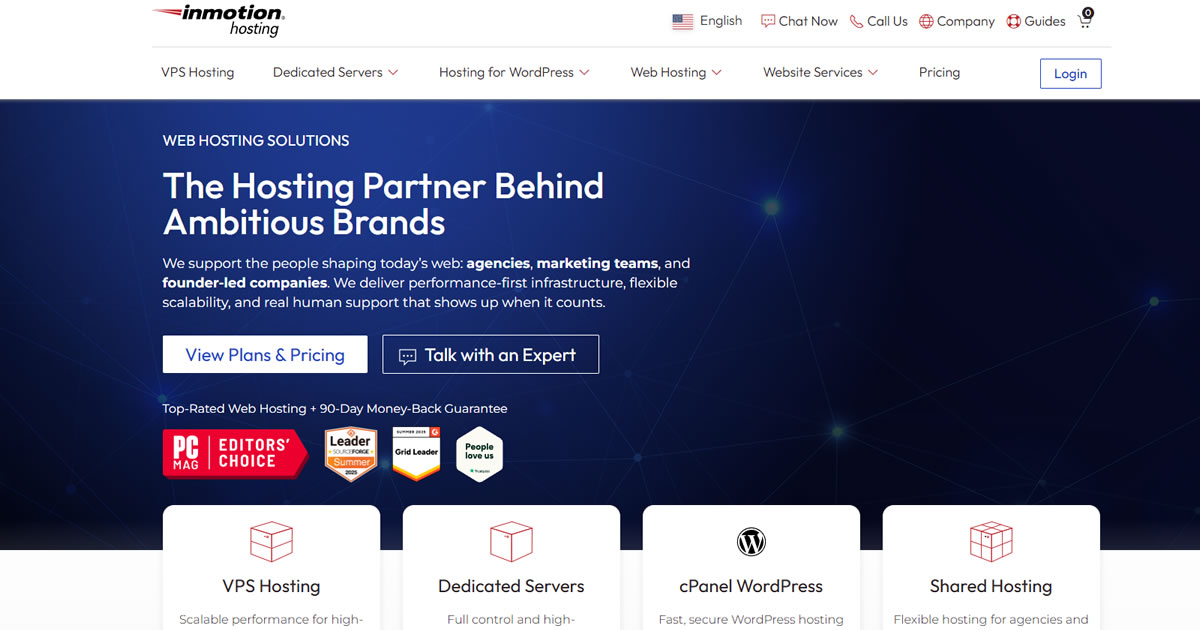
InMotion Hosting positions its shared hosting around small businesses and growing websites rather than the lowest possible entry price. The company has operated since 2002 and combines cPanel management with generous storage, bundled email, developer tools, and access to human support.
The Launch plan currently starts at $4.99 per month, depending on the billing term, and renews from $14.99 per month. It supports two websites and includes 100GB of NVMe storage, unmetered bandwidth, free SSL, domain-based email, a first-year domain on eligible terms, and migration assistance. The Power and Pro plans increase website limits, storage, performance features, and support access. All shared plans support tools such as Python, Node.js, Ruby, and Git.
InMotion Hosting costs more than budget-first competitors, but the larger resource allocations, 90-day money-back guarantee, bundled email, and established support operation make it a stronger value choice for small businesses. Note that the Launch plan provides chat and ticket support; phone support begins with higher tiers.
Cheapest Hosting Plans Available
Number of Websites Allowed
HostScore
InMotion Hosting Pros
- Affordable entry pricing
- Developer stack on all shared hosting plans (Python/Node/Ruby, Git, SSH)
- Built-in hack, DDoS, and malware protection
- Long 90-day money back guarantee refund window (best in market)
- Free SSL, email, and site migration
InMotion Hosting Cons
- Lower shared hosting plans lack advanced speed features
- Higher renewal rates across shared, VPS, and reseller plans
- No Asia-based data center
- No Windows Server hosting option
GreenGeeks

GreenGeeks sets itself apart in the crowded hosting market with a strong environmental commitment. For every unit of energy their servers consume, they purchase 3x that amount in renewable energy credits. This makes GreenGeeks one of the few truly eco-conscious web hosts on the market, a compelling option for nonprofits, creators, and businesses who want to reduce their carbon footprint.
Their shared hosting plans start at $2.95 per month and come with SSD storage, cPanel access, unlimited email accounts, nightly backups, and a free domain for the first year. You also get free CDN integration, staging tools, and built-in security features. WordPress users benefit from auto-updates, one-click install, and performance optimizations tailored for CMS-driven sites.
Beyond its green angle, GreenGeeks maintains good server performance across data centers in the United States, Canada, and Europe. With responsive customer support and a rich feature set even at entry level, the company offers a unique combination of sustainability and value that makes it ideal for socially conscious website owners.
Cheapest Hosting Plans Available
Number of Websites Allowed
HostScore
GreenGeeks Pros
- 300% green energy offset with RECs
- Affordable entry pricing for shared and WordPress hosting plans
- Free daily backup for all shared hosting plans
- Partnership with One Tree Planted plants a tree for every new hosting account
- Free website migration assistance
- Enhanced scalability options with VPS and dedicated plans
GreenGeeks Cons
- Higher renewal rates across shared and WordPress plans
- Slightly lackluster customer service, with complaints of limited support for customers transferring domains out of the platform
- No Windows Server hosting option
Hosting.com

Hosting.com is the new name of A2 Hosting, which rebranded in 2025 after more than two decades in the hosting industry. The provider now offers both simplified standard hosting and a separate cPanel product for users who want direct access to traditional file, database, email, PHP, and application-management tools. Read the official rebrand announcement.
Hosting.com’s cheapest plan starts at $1.99 per month, offering key features like cPanel access, unlimited email accounts, free site migrations, and multiple PHP versions. SSH access, Git integration, WP-CLI, and support for staging environments are available even on some entry-level plans—making Hosting.com ideal for technical users who want control without paying for a VPS.
From our perspective, Hosting.com is a good fit for developers, agencies, and experienced hosting users who want a modern server stack without giving up cPanel.
Cheapest Hosting Plans Available
Number of Websites Allowed
HostScore
Hosting.com Pros
- Developer-friendly: Node.js, Python, Redis, and SSH acces even on shared plans
- Turbo plans include NVMe, LiteSpeed, and HTTP/3 tech
- Excellent email hosting deal for small businesses
- Free cPanel site migrations
- Cheap unmanaged VPS with strong specs
Hosting.com Cons
- Renewal rates jump steeply after promo
- One website limit on all Turbo plans
- Lacks modern cloud or autoscaling options
- Managed VPS plans have become more restrictive post-A2 migration
NameCheap

Namecheap combines domain registration and cPanel hosting within one account, making it convenient for users who prefer to manage both services through the same company. Its shared hosting range now includes AI-assisted WordPress setup, a Sitejet website builder, domain-based email, free SSL certificates, and Imunify360 security.
The Stellar plan currently costs $1.48 per month after an eligible 30-day trial and renews at $4.48 per month. It supports three websites with 20GB of SSD storage and 30 mailboxes. Stellar Plus and Stellar Business support unlimited websites and mailboxes, while adding more storage and an automated backup tool. The entry plan receives internal backups approximately twice per week, but Namecheap explicitly states that these backups are not guaranteed. Review Namecheap’s current shared hosting plans and limitations.
Namecheap is a sensible low-cost option for personal sites, experiments, and small multi-domain projects. Its renewal pricing is relatively moderate, but readers who require dependable daily backups or larger server allocations should consider a higher tier or another provider.
Cheapest Hosting Plans Available
Number of Websites Allowed
HostScore
NameCheap Pros
- Budget-friendly shared hosting plans with free domain and SSL
- Competitive domain pricing with free lifetime privacy protection
- Free site migration for new customers
- Developer-friendly environment with Perl, Ruby, and Python support on shared hosting
NameCheap Cons
- Intro prices increase at renewal, sometimes doubling
- VPS plans are raw and unmanaged — control panels and management add significant extra cost
- Extra fee to host in UK instead of default US data center
- Weak security on shared hosting
Setting up hosting can be confusing. That’s why we created HostScore Setup Help, a done-for-you service for getting your hosting configured the right way.
We help with SSL installation, DNS & nameserver setup, WordPress install or migration, and security tuning. One-time fee. Backed by a 100% refund guarantee.
Explore Our ServicesWhat Is Cheap Web Hosting?
Cheap web hosting is an entry-level service designed for small websites with modest traffic and resource requirements. Most cheap plans use shared hosting, where multiple customer accounts share the same server infrastructure, CPU capacity, memory, and network connection.
A low price in web hosting does not necessarily mean poor service. Based on more than 20 years of building and hosting websites, we have found that a good budget hosting plan can comfortably support blogs, portfolios, brochure websites, and small business sites when it provides sufficient storage, dependable uptime, SSL, backups, email, and accessible support.
How Much Does Cheap Web Hosting Cost Today?
Cheap shared hosting typically costs around $3 to $5 per month during the introductory term, based on HostScore’s market research. Renewal prices commonly rise to between $10 and $20 per month after the initial contract ends.
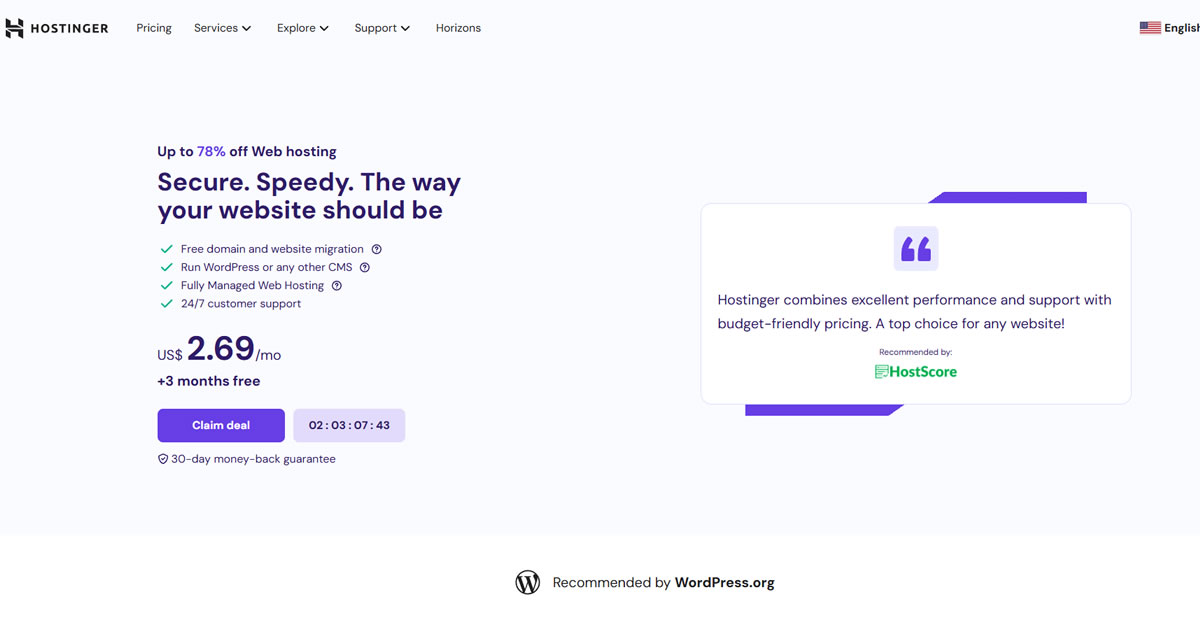
Hostinger illustrates how this pricing model works. Its Premium plan currently starts at $2.69 per month when purchased for 48 months, or $129.12 upfront. The same plan renews at $10.99 per month under the terms displayed at the time of our latest check.
The advertised monthly price therefore represents only part of the cost. You should compare:
- Initial contract cost: The amount paid upfront for the first billing term.
- Contract length: Longer commitments usually produce a lower monthly equivalent.
- Renewal price: The rate charged after the introductory term expires.
- Included services: SSL, domains, email, backups, migration, and security tools may be bundled or sold separately.
- Plan capacity: Website limits, storage, CPU, memory, inodes, and concurrent processes affect how much work the plan can handle.
How are Cheap Web Hosting Plans So Affordable?
Hosting companies cut down their costs by placing multiple user accounts on the same server (hence the term “Shared Server Hosting“). Each website uses a portion of the available processing power, memory, storage, and network capacity rather than paying for an isolated server environment.
Long-term contracts (depends on providers, cheap hosting contracts normally span from 24 to 48 months) reduce the apparent monthly price further. A host may divide the total cost of a two-, three-, or four-year contract into a monthly equivalent, even though the customer pays the entire amount upfront.
Cheap entry-level hosting plans also impose server resource and feature limits. A provider may restrict storage, number of websites, databases, inodes, PHP workers, CPU usage, or email capacity. These limits keep the service affordable while reserving greater capacity for higher-priced plans.
What are the Trade-Offs with Cheap Web Hosting?
Cheap web hosting mainly compromises on two areas: performance capacity and included features. These trade-offs are usually acceptable for small websites, but they become more noticeable as traffic, content, or technical requirements grow.
How Does Cheap Web Hosting Affect Performance?
Cheap hosting provides less predictable performance because multiple accounts share the same server resources. The host allocates CPU, RAM, storage operations, and concurrent processes across many customers to keep each plan affordable.
Shared resources do not automatically make your website slow. A well-configured blog, portfolio, or business site can perform well when page caching, image optimization, and a CDN reduce server processing. Problems are more likely to appear when a website receives traffic spikes or generates many dynamic requests.
Online stores, forums, membership sites, and learning platforms place heavier demands on shared hosting. Product searches, checkout pages, logged-in sessions, and forum posts often bypass full-page caching. The server must process these requests through PHP and the database each time.
Entry-level shared hosting plans commonly enforce several performance limits:
- CPU and RAM limits: CPU processes application tasks, while RAM supports active scripts, databases, and caching. Budget hosts may restrict these resources without showing a dedicated allocation for each account.
- PHP worker limits: Each PHP worker processes one uncached PHP request at a time. Too few workers can create a queue when many visitors access dynamic pages simultaneously.
- Entry-process limits: Entry processes restrict how many scripts can run concurrently. Reaching the limit can produce slow responses or temporary resource errors.
- Storage performance: SSD or NVMe storage can accelerate file and database operations, but faster storage cannot compensate for insufficient CPU, RAM, or PHP capacity.
Which Features Do Cheap Hosting Plans Restrict?
Low cost hosting plans often exclude advanced management, development, backup, and security features. Providers reserve these tools for higher tiers or sell them as optional add-ons.
Common feature restrictions include:
- Backups and restoration: An entry plan may include weekly backups instead of daily copies. On-demand backups, longer retention, and assisted restoration may require an upgrade or separate backup service.
- Staging environments: Some budget plans exclude staging tools that let site owners test plugin, theme, or code changes before updating the live website.
- Email hosting: Providers may limit the number of mailboxes, storage per inbox, or daily sending volume. Some include business email for only the first year.
- Security tools: Free SSL is now common, but malware removal, advanced scanning, web application firewalls, and account recovery services may cost extra.
- Developer access: Cheap shared hosting normally excludes root access and custom server configurations. SSH, Git deployment, WP-CLI, cron jobs, and PHP controls also vary between plans.
- Website and file capacity: Entry plans may cap websites, databases, storage, inodes, subdomains, or email accounts. Inode limits matter because every image, plugin file, email, and cache file counts toward the total.
- Migration support: A provider may migrate one standard website for free but charge for multiple sites, complex applications, or transfers that cannot use a conventional backup.
Feature restrictions can also increase the real hosting cost. Renewal prices often rise substantially, while domains, backups, security tools, and email may convert into paid services after a trial period. Bluehost, for example, automatically charged our account for email hosting after its one-month trial ended. You should review optional subscriptions and disable unwanted renewals before the trial expires. Read our Bluehost review for more details about our performance tests, pricing, and cancellation experience.
These limitations do not make cheap hosting a poor choice. They define who it suits. A small informational website may never require the missing tools, while a growing business site can benefit from stronger backups, staging, additional security, and more predictable server capacity.
What Criteria Should You Use to Choose Cheap Web Hosting?
The best cheap web host should fit your workload, long-term budget, and technical needs. Price matters, but it should not outweigh performance, resource limits, essential features, support, or upgrade options.

What Will the Hosting Plan Cost Over Time?
Compare the total signup and renewal costs, not only the advertised monthly rate. The lowest promotional price often requires a two-, three-, or four-year commitment paid upfront.
Check four figures before ordering:
- The total amount due at checkout
- The effective monthly introductory price
- The price and billing period at renewal
- The cost of domains, email, backups, and other add-ons
Monthly billing provides more flexibility but usually costs more. A longer contract may reduce the initial price, but it also commits more money before you have tested the service.
Does the Plan Provide Enough Server Resources?
A cheap hosting plan should provide enough resources for your website type and expected traffic. Storage and bandwidth matter, but CPU, RAM, PHP workers, entry processes, and inode limits often have a greater effect on dynamic websites.
A cached blog or portfolio can run comfortably with modest resources. WooCommerce stores, forums, membership sites, and learning platforms process more uncached requests and database queries. These workloads can reach shared hosting limits much sooner.
Provider estimates such as “supports 50,000 monthly visits” offer a rough reference, not a performance guarantee. Actual capacity depends on page caching, plugins, database activity, traffic patterns, and website optimization.
Does the Host Deliver Acceptable Speed and Uptime?

Cheap web hosting should still provide dependable uptime and responsive page delivery. Look for a published uptime commitment, recent performance measurements, and clear information about the host’s server platform.
HostScore uses test sites and benchmark tools to evaluate how hosting plans behave under different conditions. We pay particular attention to uptime, server response, uncached WordPress performance, and stability under concurrent traffic.
Your results may differ according to the website and server location. Monitor the site after launch with an uptime service and periodically test important pages under real-world conditions.
Which Essential Features Does the Plan Include?
A useful budget plan should include the features required to operate and protect the website. At minimum, check for SSL, automated backups, email hosting, migration assistance, and access to a suitable control panel.
The value of each feature depends on its terms:
- SSL: Confirm that certificates remain free and renew automatically.
- Backups: Check the frequency, retention period, and restoration process.
- Email: Review mailbox limits, storage, sending restrictions, and future charges.
- Migration: Confirm how many websites the host will transfer and what assistance is included.
- Security: Look for account-level 2FA, malware scanning, DDoS mitigation, and server monitoring.
- Development tools: Check for staging, SSH, Git, WP-CLI, cron jobs, and selectable PHP versions when needed.
Free domains, builders, and marketing credits add value only when you would otherwise pay for them. A large bundle should not compensate for weak performance or restrictive server resources.
What Customer Support Does the Host Provide?
Customer support should match your technical ability and the importance of your website. Beginners may need 24/7 live chat or phone assistance, while experienced users may be comfortable with ticket support and detailed documentation.
Test the support team before committing when possible. Ask a specific question about inode limits, backup restoration, PHP workers, migration procedures, or cancellation terms. The response can reveal whether the agent provides technical answers or merely repeats sales information.
Support scope matters as much as availability. Hosting teams normally maintain the server, but they may not troubleshoot WordPress plugins, custom code, email clients, or third-party services.
Is the Server Location Suitable for Your Audience?
A server near your primary audience can reduce network latency and improve response times. A website serving European visitors, for example, will generally benefit from a European data center rather than a distant location.
A content delivery network can cache static files closer to visitors worldwide, but it does not eliminate every location-related delay. Dynamic pages and database requests may still travel to the origin server.
Read our guide to local versus global hosting for a closer look at server location, latency, and international audiences.
Can the Hosting Plan Scale With Your Website?
A suitable provider should offer a practical upgrade path when the website needs more capacity. Check whether you can move to a higher shared, managed WordPress, VPS, or cloud plan without rebuilding the site or changing providers.
Review both the technical and financial sides of upgrading. A provider may allow instant plan changes but charge significantly more for the next tier. Migration difficulty, control-panel differences, and email transfer requirements can also affect future expansion.
Learn about the different types of web hosting before deciding which upgrade path your website may eventually need.
Can You Test the Host Without a Long-Term Commitment?
A money-back guarantee gives you time to test the control panel, support, website migration, and real-world performance. Guarantee periods vary between providers, and some services are excluded from refunds.
Review the company’s cancellation terms before ordering. Domain registration fees, setup charges, monthly plans, licensed software, and optional add-ons may be non-refundable. You should also confirm whether cancellation requires contacting support or can be completed directly from the account dashboard.
A refund policy reduces purchase risk, but it does not replace careful plan comparison. Choose the host based on the criteria above, then use the guarantee period to confirm that the service meets your expectations.
Which Cheap Web Hosts Are Best for Different Needs?
Choosing the best cheap web hosting depends heavily on the type of website you are building and the features it requires. A WordPress site may benefit from managed updates and caching, while a business website may prioritize email, migration assistance, or cPanel access. Our recommendations below match each use case with the provider that delivers the best balance of price, features, and practical support.
Which Cheap Web Host is Best for WordPress?
Hostinger is the best cheap web host for WordPress. The platform combines LiteSpeed servers and caching with automatic WordPress updates, staging, backups, one-click installation, and free website migration. This makes Hostinger a practical choice for users who want managed WordPress features without paying premium managed-hosting prices. However, users familiar with cPanel will need to adjust to Hostinger’s custom hPanel interface.
Which Cheap Web Host is Best for Small Businesses?
InMotion Hosting is the best cheap web host for small businesses. The company combines a long operating track record with generous entry-level resources, business email, migration assistance, and a (industry longest) 90-day money-back guarantee.
InMotion Hosting’s Launch plan supports two websites and includes 100GB of NVMe storage. The provider estimates that the plan can accommodate around 50,000 monthly visits, although actual capacity depends on caching, plugins, and workload. The plan also includes cPanel email accounts, SSL, malware and DDoS protection, and live-chat support.
These resources suit brochure websites, professional service firms, and small companies that need more room than a typical starter plan provides. The longer refund window also gives a business more time to test its website, email, and support experience.
Which Cheap Web Host is Best for Email Hosting?

InMotion Hosting is our preferred cheap web host for bundled email. Its shared hosting plans include cPanel email accounts, allowing businesses to create domain-based addresses without immediately subscribing to a separate email platform.
The company also provides standalone professional email when the bundled service becomes too basic (see screenshot above). Its separate Titan-powered plans add larger mailboxes, mobile apps, calendars, contacts, anti-spam tools, and collaboration features. This gives businesses a practical upgrade path without moving their website.
Buyers should distinguish between the included cPanel email and InMotion’s paid Professional Email trial. The latter becomes a separate subscription (extra cost) if retained after the trial period.
Which Cheap Web Host Offers the Best Free Migration Service?

HostArmada offers the best free migration service among our cheap hosting picks. Its support team handles both full cPanel migrations and manual website transfers, allowing users to move from hosts that use different control panels.
A full cPanel migration can transfer website files, databases, email accounts, subdomains, addon domains, aliases, and other account data. A manual migration transfers the website files and database when a complete account backup is unavailable. Email accounts and related services may then need to be transferred or reconfigured separately.
The number of included migrations depends on the shared hosting plan. HostArmada currently includes one transfer with Start Dock, three with Web Warp, and five with Speed Reaper. This policy is more useful than a vague “free migration” promise because buyers can see the included scope before ordering.
Which is the Best Cheap cPanel Hosting?
HostArmada is the best cheap cPanel hosting in our current comparison. Every shared hosting tier with HostArmada uses cPanel and includes its standard tools for managing files, databases, domains, DNS records, email accounts, backups, and cron jobs.
The entry-level Start Dock plan supports one website while higher plans (Web Warp and Speed Reaper) support multiple websites and allocate more server capacity. For experienced users, you should therefore choose the plan according to workload rather than selecting a higher tier for cPanel alone.
Which is the Best Cheap Web Hosting With a Free Domain?
Hostinger is the best cheap web host with a free domain. It holds the highest HostScore rating among the providers in our comparison and includes one domain for the first year with eligible annual and multi-year plans.
However, a free domain should remain a secondary factor when choosing cheap hosting. A standard domain typically costs around $15 per year, while server performance, renewal pricing, backups features, and after-sales support have a much bigger long-term impact. Further, you should also remember that the domain renews separately after the free period.
Which is the Best Cheap Hosting for Multiple Domains?
Hostinger is the best cheap host for users running several domains. Its lowest web hosting plan currently supports three websites, compared with two websites on InMotion Hosting’s Launch plan and one website on several competing starter plans mentioned in our list.
The website limit determines how many separate sites the hosting account can operate. It does not mean Hostinger includes three free domain registrations. Only one qualifying domain is free for the first year, so users must register or transfer the remaining domains separately.
Which is the Best Cheap Hosting for a Personal Website?
Based on our market study and first hand experience, Hostinger is the best paid cheap host for personal websites. Its AI Website Builder can generate a starting layout from a description, while its prebuilt templates suit portfolios, personal profiles, résumés, hobby sites, and simple blogs. The company also bundles domain management, SSL, backups, and support within one dashboard. This consolidated setup suits users who prefer a guided building process over configuring deployment services separately.
Note that, however, paid hosting is not always necessary for a static personal website. Cloudflare Pages and Vercel provide free options for sites that do not require WordPress, databases, or bundled email. These platforms suit technically comfortable users who can deploy through Git or a static-site workflow.
For more options, also read our list of best static website hosting here.
Which is the Best Cheap VPS Hosting?
Hostinger is our best cheap VPS hosting choice, while Hosting.com provides a strong alternative for experienced developers. Both companies provide self-managed VPS plans, meaning the customer remains responsible for the operating system, software stack, updates, and server configuration.
Hostinger differentiates its VPS platform through Kodee, its integrated AI assistant. Kodee can execute commands, inspect server health, troubleshoot configurations, and manage selected server settings through conversational prompts. This assistance lowers some management friction, but it does not turn the service into fully managed VPS hosting.
Hosting.com targets developers who want inexpensive Linux infrastructure with root access. Its self-managed VPS supports Ubuntu, Debian, and AlmaLinux, while optional tools include cPanel, CloudLinux, LiteSpeed, and Imunify360. Backups are optional, and VPS purchases do not carry its standard money-back guarantee.
Which is the Best Cheap Reseller Hosting?
GreenGeeks is the best cheap reseller host in our current comparison. Its entry-level RH-25 plan supports up to 25 separate cPanel accounts, giving freelancers and small agencies an affordable way to isolate and manage client websites.
At time of writing, the RH-25 plan currently allocates 60GB of storage and 600GB of bandwidth across the reseller account. Each client account receives cPanel access, free SSL, email hosting, databases, and its own resource limits.
GreenGeeks also matches three times its calculated energy use through renewable energy certificates and plants one tree for each new hosting account. This policy gives environmentally focused resellers an additional positioning angle.
Which is the Best Cheap Linux Hosting?
Hostinger is our preferred cheap Linux host, although every provider in this comparison runs its shared hosting platform on Linux. Linux dominates budget hosting because it supports popular software such as WordPress, PHP, MySQL, Apache, NGINX, and LiteSpeed without Windows licensing costs.
Hostinger combines its managed web hosting environment with AI-assisted tools and a clear path to self-managed VPS hosting. Its VPS catalog includes Ubuntu, Debian, AlmaLinux, CloudLinux, Rocky Linux, and several other Linux distributions or templates. Kodee can also assist with selected server-management tasks after a user moves to VPS.
Most website owners do not need to choose or administer the underlying Linux distribution on shared hosting. The operating system becomes a more important selection criterion when moving to VPS, installing custom packages, or configuring a development stack.
Which Is the Best Cheap Windows Hosting?
Hosting.com is the best cheap Windows host in our current collection. The company provides self-managed Windows VPS hosting for applications that require Windows Server, Microsoft-compatible software, remote desktop access, or a Plesk-based environment.
Cheap Windows hosting is less common because providers must account for Microsoft operating-system licensing and, in many cases, a separate Plesk licence. These costs make Windows servers more expensive to operate than comparable open-source Linux environments.
Hosting.com currently provides Windows Server 2022, administrator-level control, NVMe storage, and optional Plesk accounts. The self-managed plan requires customers to handle operating-system updates, monitoring, security configuration, backups, and application maintenance. Buyers who lack server-management experience should consider its managed Windows VPS instead.
Which Cheap Web Host Should You Choose?
The right cheap web host should match your website’s workload, budget, and management needs. Compare renewal pricing, server resources, included features, support, and plan limits before committing to a long contract.
Use the table below to recap our recommendations and identify which option best fits your website.
| Provider | Cheapest Shared Plans | Cheapest VPS Plans | Free Domain? | Storage Space | Money Back Guarantee |
|---|---|---|---|---|---|
| Hostinger | $2.99/mo* | $6.49/mo | Yes | 20 GB | 30 days |
| InMotion Hosting | $4.99/mo | $10.99/mo | No | 100 GB | 90 days |
| HostArmada | $1.99/mo | $29.95/mo | Yes | 15 GB | 45 days |
| Verpex | $3.00/mo | $10.00/mo | Yes | 30 GB | 45 days |
| GreenGeeks | $2.95/mo | $69.95/mo | Yes | 50 GB | 30 days |
| Hosting.com | $1.99/mo | $4.99/mo | Yes | 15 GB | 30 days |
| NameCheap | $1.48/mo | $6.88/mo | Yes | 20 GB | 30 days |
Frequently Asked Questions
Is Cheap Web Hosting Suitable for Beginners?
Yes. Cheap web hosting (usually shared hosting) suits beginners because the provider manages the server infrastructure, operating system, security patches, and control panel. Look for one-click installation, automatic backups, accessible support, and a dashboard you can understand.
Is Cheap Web Hosting Safe?
Cheap web hosting can protect a basic website when the plan includes SSL, account isolation, server monitoring, backups, and malware protection. However, security coverage varies considerably between providers. Check whether malware removal, backup restoration, and advanced firewall protection are included or sold separately.
Can Cheap Web Hosting Support an Online Store?
Cheap hosting can support a small online store with limited products and modest traffic. WooCommerce checkout pages, customer accounts, product searches, and background processes generate uncached requests, so stores can outgrow entry-level shared hosting faster than blogs or portfolio sites.
What Happens If My Website Exceeds Its Hosting Limits?
A web host may slow processes, display resource-limit errors, temporarily restrict the account, or recommend a higher plan. The outcome depends on which limit the site exceeds, such as CPU, RAM, PHP workers, entry processes, storage, inodes, or bandwidth.
When Should I Upgrade From Cheap Web Hosting?
You should upgrade when cheap hosting no longer meets your website’s performance, security, functionality, or management requirements. Common warning signs include repeated resource-limit errors, slow dynamic pages, database delays, insufficient backup protection, and poor performance during traffic spikes.
Business requirements can also trigger an upgrade before traffic becomes a problem. A website may need staging, object caching, isolated resources, advanced security, longer backup retention, custom software, or proactive server management. Revenue-generating sites should upgrade before hosting limitations begin affecting customers, sales, or daily operations.
What Should I Upgrade to After Cheap Shared Hosting?
A higher shared hosting plan provides the simplest upgrade when the website only needs more storage, processing capacity, or bundled features. Managed WordPress hosting suits users who need stronger WordPress performance, security, backups, and platform-specific support.
VPS or cloud hosting becomes more appropriate when the website requires isolated CPU and RAM, custom software, greater server control, or a clearer scaling path. Choose managed hosting if you want the provider to handle server maintenance; an unmanaged VPS transfers that responsibility to you.

