The best web hosting providers for hosting multiple domains are Hostinger, HostArmada, and Cloudways.
Hosting multiple domains requires more than just “unlimited websites.” A hosting plan must support enough resources per account, maintain consistent uptime across sites, simplify DNS and domain management, and scale without forcing frequent upgrades.
Hostinger remains the best overall choice for most users managing multiple domains. Its Cloud Startup plan supports up to 100 websites, includes email hosting and daily + on-demand backups, and runs on optimized LiteSpeed-powered infrastructure in our past tests. The hPanel dashboard keeps domain, email, and file management simple, which matters when you handle several small-to-medium sites under one account. For price-to-feature ratio, Hostinger delivers strong value.
HostArmada, in our perspective, offers a more support-driven approach. Its shared hosting plans allow multiple websites, include daily backups, cPanel access, free SSL, and free migration. The cloud-based setup improves uptime consistency, and the support team assists with account-level configuration when juggling several domains. From our perspective, HostArmada suits users who want hands-on help while consolidating sites.
Cloudways rounds out the top three with a cloud-based model built for scalability. It supports unlimited applications and domains on all plans and allocates dedicated CPU and RAM resources per server. Running on providers like DigitalOcean, Vultr, AWS, and Google Cloud, Cloudways scales vertically as traffic grows. For agencies and developers managing performance-heavy or revenue-generating sites, it provides more control than traditional shared hosting.
Compare Top Web Hosts for Hosting Multiple Domains
| Hosting Provider | Domain Limit | Starting Price | Control Panel | Scalability | Best For |
|---|---|---|---|---|---|
| Hostinger | 25 – 100 websites | $2.99 – $3.79/mo* | hPanel | Shared & VPS | Budget users with <25 sites |
| HostArmada | Unlimited | $1.99 – $3.95/mo | cPanel | Shared & Cloud | Beginners with long-term needs |
| Cloudways | Unlimited | $No data found for this field. – $No data found for this field./mo | Custom | Vertical & Horizontal | Devs & growing businesses |
| InMotion Hosting | Unlimited (VPS/Dedicated) | $4.99 – $10.59/mo | cPanel | Shared, VPS, Dedicated | Business and email-focused users |
| Hosting.com | Unlimited (Unmanaged VPS) | $1.99 – $8.99/mo | None (user installs) | Full manual scaling | Developers with DIY setups |
* Price before special discount using our exclusive coupon code “HOSTSCORE15”.
Note: While our HostScore ratings offer a data-backed overview of hosting performance, choosing the best multi-domain hosting depends on your specific needs — whether it’s addon domain capacity, server scalability, pricing, tech support, or developer features. This guide is designed to help readers who are actively looking for the best web host for multiple domains based on real-world use cases and key decision factors.
1. Hostinger
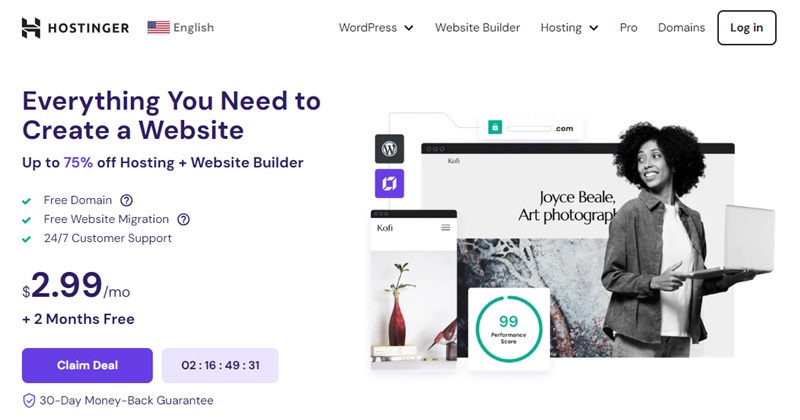
Website: https://www.hostinger.com
Established in 2004, Hostinger is a budget hosting company running on multiple data centers worldwide. The company went through rampant growth and expansion over the years. They achieve a huge milestone of having 1 million users, just 6 years from the day that they started.
Today, Hostinger manages over 29 million users and has established worldwide localized offices with 150 people working across 39 countries worldwide.
Exclusive Hostinger Coupons – Save 10% or 15%!
Use promo code ‘HOSTSCORE’ for 10% off any plan — Or go big with promo code ‘HOSTSCORE15’ on a 4-year plan and unlock 15% off. Longer subscription = bigger savings.
To Order Hostinger with Discount, Click Here
What makes Hostinger good for hosting multiple domain?
What makes Hostinger ideal for hosting multiple domains is its generous resource allocation—even on its entry-level plans. The Premium Shared Hosting plan supports up to 25 websites, and includes free email, weekly backups, and a free domain for the first year — all at a beginner-friendly price.
The custom-built hPanel makes domain management easy. While it uses slightly different terms than cPanel, it’s equally intuitive for managing DNS, SSL, email accounts, and multiple domains from one place.
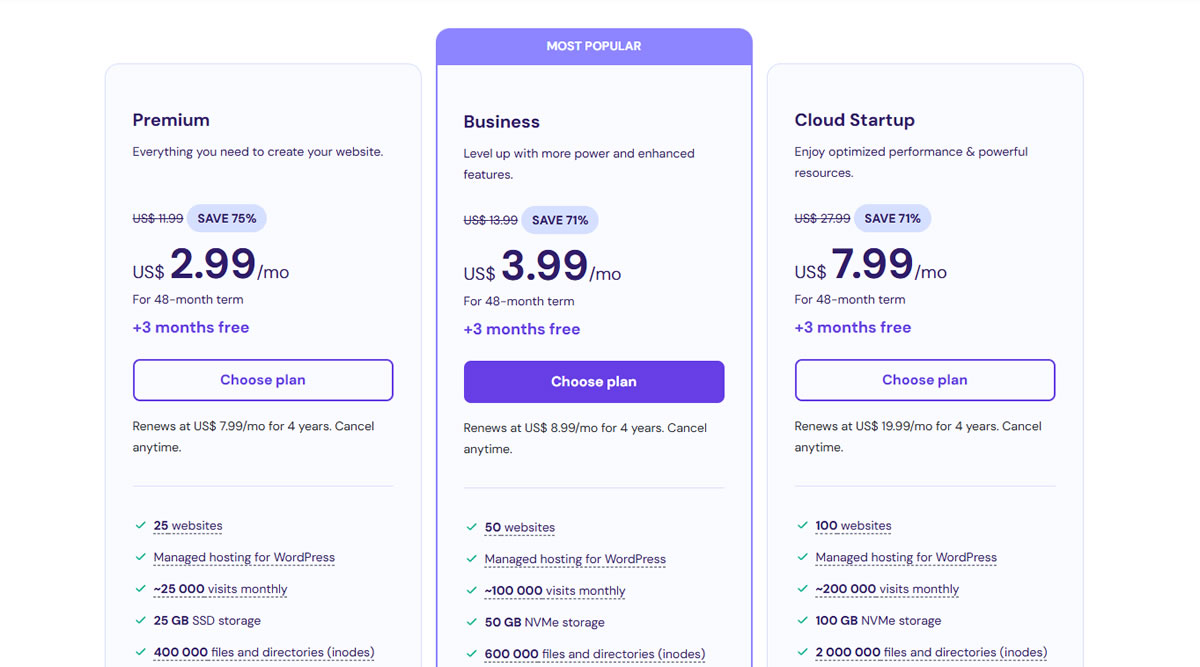
Most budget hosts limit you to just one domain per account on their basic plans. Hostinger’s 25-site limit stands out in this price range, making it especially appealing for users managing personal blogs, small business sites, or portfolios.
In our HostScore performance tracking, Hostinger delivers uptime above 99.95% and consistently fast TTFB, even under moderate load. It’s a reliable pick for users who want to run multiple low-traffic websites without upgrading to VPS or cloud hosting.
How to add a domain in Hostinger’s hPanel?
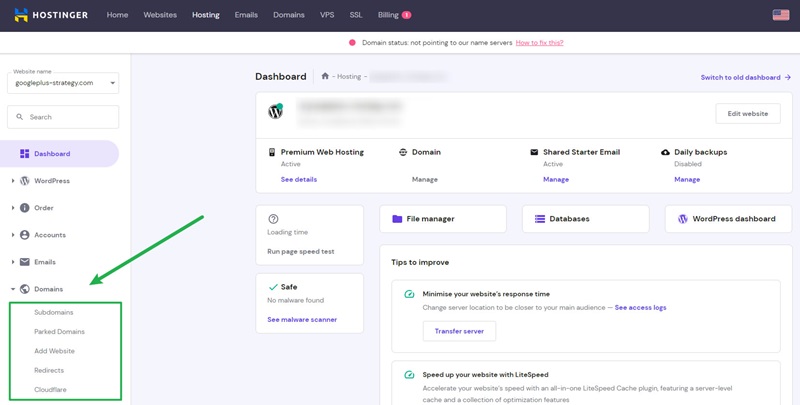
To add an addon domain, go to Domains > Add Website. For parked domains or subdomains, navigate to Domains > Parked Domains. The steps mirror cPanel’s structure, making it easy even for first-time users to get started.
Hostinger Pros
- Affordable entry plan at $2.99/month for 3 websites, plus 15% off with HOSTSCORE15.
- Global network of data centers in Europe, Asia, North America, and South America
- Excellent AI ecosystem with AI Builder (new!), Hostinger Agent with memory, OpenClaw, Hermes, n8n, and Paperclip
- User-friendly hPanel with API and MCP access for AI-assisted hosting management
- Developer API and MCP integration - Hostinger Connector lets Claude, Cursor, Codex, and other MCP-compatible tools manage websites
- Multiple payment methods accepted, including crypto and digital wallets
Hostinger Cons
- The lowest price requires 48 months upfront and renews at $10.99/month
- Advanced Agent features and managed AI applications may require separate paid plans
- Hostinger AI Builder sites have limited portability compared with WordPress websites
- Hostinger does not support Windows hosting.
2. HostArmada

Website: https://www.hostarmada.com/
HostArmada is a U.S.-based hosting company that positions itself as a high-performance, cloud-focused provider. The company uses a mix of NGINX and LiteSpeed stack and operates data centers in key global regions.
What makes HostArmada good for hosting multiple domain?
HostArmada is well-suited for hosting multiple domains thanks to its support for unlimited websites on most plans, even on its mid-tier “Web Warp” shared hosting package. It also includes a free domain, daily backups, and free website migration. The use of LiteSpeed Web Server in higher-tier plans gives users a performance edge—particularly when managing resource-heavy WordPress installations across multiple domains.
The control panel (cPanel) is familiar to most users and makes domain and subdomain management straightforward. Combined with stable performanceand generous security features like a free WAF and malware scans, HostArmada is a great balance between usability and power for multi-site users.
HostArmada Pros
- Competitive pricing
- Daily remote backups with up to 21 days of restore points
- NGINX server and NVMe storage for all shared hosting plans
- 45-day money-back guarantee
- Free malware scans and Web Application Firewall (WAF) on all shared hosting plans
- Supports hosting of legal adult content websites
- Wide range of server locations
HostArmada Cons
- Price increases upon renewal
- Entry-level plan supports only one website
- Advanced speed features like dynamic caching are limited to the highest-tier shared plan
- No Windows Server hosting option
3. Cloudways

Website: https://www.cloudways.com/
Cloudways is a managed cloud hosting platform that lets users deploy applications on top-tier cloud providers like DigitalOcean, AWS, and Google Cloud. The company focuses on giving developers and agencies a scalable, pay-as-you-go alternative to traditional hosting.
What makes Cloudways good for hosting multiple domain?
All Cloudways plans support unlimited websites per server, making it a strong option for hosting multiple domains under one account.
What sets Cloudways apart is its vertical scaling capability – you can upgrade server resources (CPU, RAM, storage) on the fly without downtime. This makes it easy to host fast-growing websites together on the same server and scale them as traffic increases – ideal for agencies or developers managing multiple client projects or business units.
Each Cloudways server also comes with dedicated resources, built-in caching (Varnish, Memcached, Redis), free SSL, automated backups, and a staging environment for every site. Combined with pay-as-you-go pricing (monthly subscription), it offers both control and efficiency for power users running multiple active domains.
Cloudways Pros
- Reliable server uptime and speed performance
- Good abstration over complex cloud server setups with integrated dashboard
- High scalability; Autonomous plan supports auto-scaling
- Easy server cloning, site staging, and website transfer
- Host unlimited websites and applications in one account
- 30% discount for first two months with coupon "HOSTSCORE"
Cloudways Cons
- Getting expensive - Prices increased steadily for the past few years
- Limited trial period
- Excellent technical support, but poor billing practices and support
4. InMotion Hosting
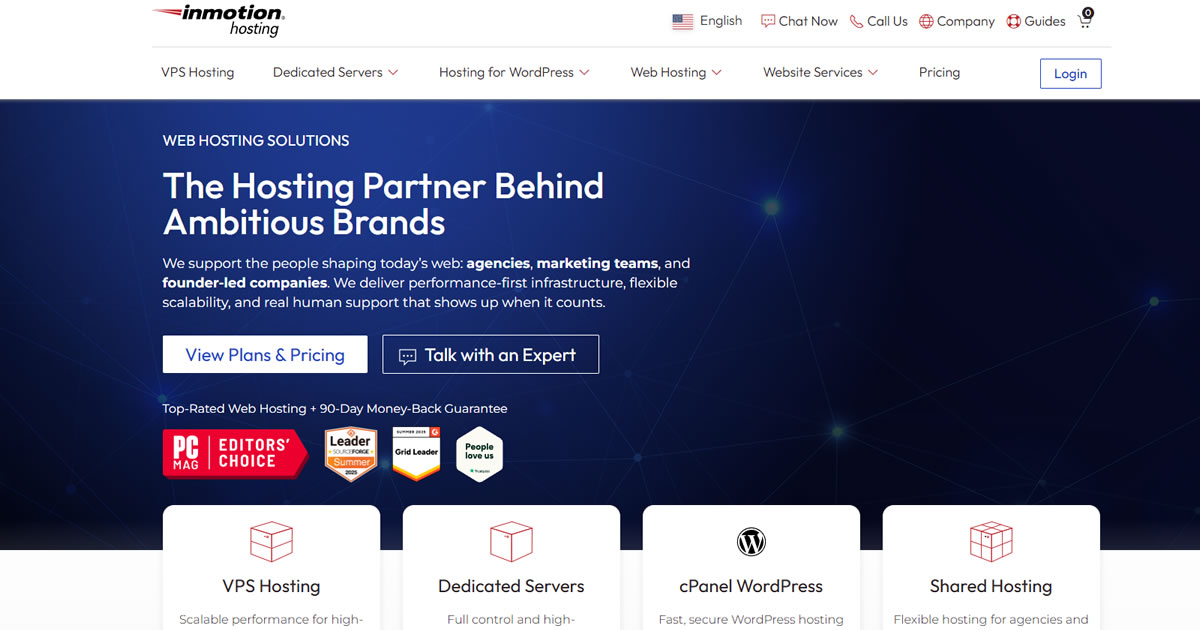
Website: https://www.inmotionhosting.com/
InMotion Hosting is a veteran U.S. web hosting provider that caters to small businesses and agencies with a wide range of hosting services. It offers shared, VPS, and dedicated hosting, and is well-regarded for its technical support and business-friendly tools.
What makes InMotion good for hosting multiple domain?
InMotion Hosting is a solid pick for managing multiple domains because its Launch and Power shared hosting plans support multiple websites, while VPS and Dedicated plans come with unlimited domain support. It also includes free SSL, SSH access, and dedicated IPs on most VPS plans.
One of InMotion’s key advantages is its bundled business email hosting, which can be customized per domain. Combined with NVMe SSDs, U.S.-based data centers, and free migrations, InMotion provides a well-rounded solution for SMBs (especially in the United States) that want a mix of simplicity and power under one roof.
InMotion Hosting Pros
- Affordable entry pricing
- Developer stack on all shared hosting plans (Python/Node/Ruby, Git, SSH)
- Built-in hack, DDoS, and malware protection
- Long 90-day money back guarantee refund window (best in market)
- Free SSL, email, and site migration
InMotion Hosting Cons
- Lower shared hosting plans lack advanced speed features
- Higher renewal rates across shared, VPS, and reseller plans
- No Asia-based data center
- No Windows Server hosting option
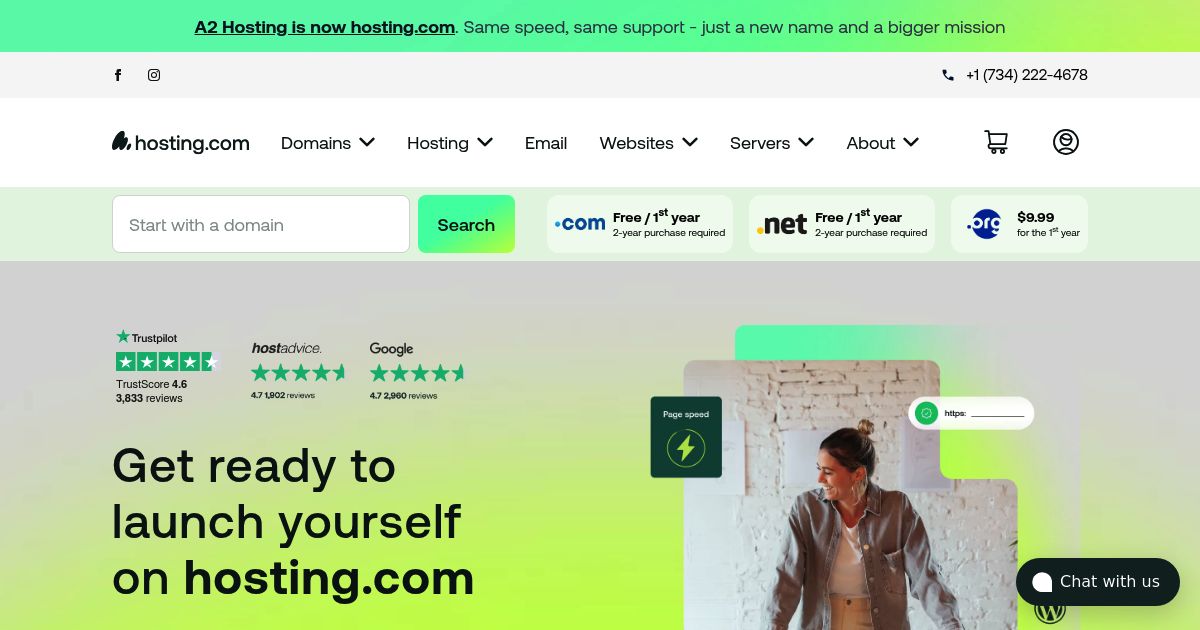
5. Hosting.com
Website: https://www.hosting.com
Hosting.com is a U.S.-based hosting provider offering bare-metal and unmanaged VPS solutions tailored for developers and IT professionals. It targets technically skilled users looking for complete control over their hosting environment.
What makes Hosting.com good for hosting multiple domain?
For those who want to host multiple domains without the constraints of shared hosting, Hosting.com offers low-cost unmanaged VPS servers that can be configured to support any number of domains. While there’s no free domain or managed support, users get full root access, complete OS control, and the freedom to set up their preferred DNS and mail servers.
This makes Hosting.com best suited for experienced users (read: not for beginners!) who want a DIY hosting setup. – whether it’s to manage multiple personal projects, internal business sites, or staging environments.
Hosting.com Pros
- Developer-friendly: Node.js, Python, Redis, and SSH acces even on shared plans
- Turbo plans include NVMe, LiteSpeed, and HTTP/3 tech
- Excellent email hosting deal for small businesses
- Free cPanel site migrations
- Cheap unmanaged VPS with strong specs
Hosting.com Cons
- Renewal rates jump steeply after promo
- One website limit on all Turbo plans
- Lacks modern cloud or autoscaling options
- Managed VPS plans have become more restrictive post-A2 migration
Setting up hosting can be confusing. That’s why we created HostScore Setup Help, a done-for-you service for getting your hosting configured the right way.
We help with SSL installation, DNS & nameserver setup, WordPress install or migration, and security tuning. One-time fee. Backed by a 100% refund guarantee.
Explore Our ServicesCompare Best Web Hosts for Multiple Domains
When comparing hosting providers for multi-domain use, the key differences lie in domain limits, performance, scalability, and ease of management. Here’s a quick breakdown:
| Hosting Provider | Domain Limit | Starting Price | Control Panel | Scalability | Best For |
|---|---|---|---|---|---|
| Hostinger | 25 – 100 websites | $2.99 – $3.79/mo | hPanel | Shared & VPS | Budget users with <25 sites |
| HostArmada | Unlimited | $1.99 – $3.95/mo | cPanel | Shared & Cloud | Beginners with long-term needs |
| Cloudways | Unlimited | $No data found for this field. – $No data found for this field./mo | Custom | Vertical & Horizontal | Devs & growing businesses |
| InMotion Hosting | Unlimited (VPS/Dedicated) | $4.99 – $10.59/mo | cPanel | Shared, VPS, Dedicated | Business and email-focused users |
| Hosting.com | Unlimited (Unmanaged VPS) | $1.99 – $8.99/mo | None (user installs) | Full manual scaling | Developers with DIY setups |
What Type of Hosting is Best for Managing Multiple Websites?
The best type of hosting for managing multiple websites depends on your technical experience, the complexity of your sites, and how quickly you expect them to grow.
Shared Hosting

Shared hosting is a cost-effective entry point and works well for users managing a handful of low-traffic sites. However, shared server resources mean that one busy site can slow down the others, and scaling is often limited. Some shared web hosts, like Hostinger, support multiple domains in their cheapest account, but performance is limited to the allocated capacity (for example, Hostinger recommend the lowest plan for sites with not more than 25,000 visits per month).
VPS Hosting

VPS hosting gives you isolated server resources and greater control. You can configure how your domains are managed, run separate applications, and allocate resources more efficiently across sites. It’s suitable for developers, resellers, or businesses managing medium-traffic websites that need more stability.
Cloud Hosting

Cloud hosting, such as Cloudways, offers the most flexibility. It’s ideal for hosting multiple fast-growing websites under a single account. With vertical scaling, you can upgrade CPU, RAM, and storage in real-time without downtime. This means you can start small and expand only when needed. Cloud hosting also handles traffic spikes better and separates each app for security and performance.
What’s the difference between shared vs VPS vs cloud for multi-domain hosting?
In short: Shared hosting is easy but restrictive. VPS gives you flexibility and root access. Cloud hosting offers the best long-term value for growing, high-traffic multi-site setups with variable resource needs.
| Hosting Type | Best For | Multi-Domain Support | Control & Isolation | Price Range |
|---|---|---|---|---|
| Shared | Beginners, budget users | Limited (25–100 sites) | Low | $3 – $10/mo |
| VPS | Power users, technical admins | Unlimited | Medium to High | $10 – $50/mo |
| Cloud | Developers, agencies, fast growth | Unlimited | High + Scalable | $15 – $100+/mo |
Can I Host Unlimited Domains on a Single Hosting Account?
Technically, only Cloudways allows you to host an “unlimited number” of domains without fixed restrictions, because it gives you a dedicated cloud instance where you control the number of applications and domains. You can add as many websites as your server resources (CPU, RAM, disk) can handle. If your sites grow in size or traffic, you can upgrade your server vertically to ensure smooth operation without reconfiguring your environment.
Other providers, even those advertising “unlimited domains,” place limitations on actual usage. For example:
- HostArmada and InMotion Hosting advertise “unlimited websites” on certain plans, but you’re still bound by CPU and inode limits, which can throttle or suspend your account if exceeded (see screenshot).
- Hostinger clearly caps domain support at 25 on its Premium plan.
So while many hosts use “unlimited” as a selling point, in practice, the term usually means “no fixed cap” but performance and account health still depend on actual usage.
How do I Set Up Domain Mapping or Add-on Domains?
Setting up domain mapping or add-on domains allows you to host multiple websites under a single hosting account. The process may vary depending on your control panel (cPanel, hPanel, custom panels like Cloudways), but the key steps are generally similar:
1. Register or point your domain to the host’s DNS
- First, either register your domain with your host or update your domain registrar’s nameservers to point to your hosting provider. This ensures your DNS traffic is routed correctly.
- For example, with Cloudflare or Namecheap, you’ll replace default nameservers with the ones provided by Hostinger, InMotion, etc.
2. Add the domain through your control panel
- In cPanel, go to Domains > Addon Domains.
- In hPanel (Hostinger), use Domains > Add Website.
- In Cloudways, launch your application, go to Domain Management, and add your domain there.
3. Assign a root directory
- Each new domain needs its own root folder. This folder will house the files specific to that domain (e.g., /public_html/domain2.com/).
- Make sure it’s distinct from your primary domain’s root to avoid file conflicts.
4. Set up SSL for the new domain
- Most hosting providers offer free Let’s Encrypt SSL.
- After the domain resolves, you can activate SSL through your control panel or Cloudways dashboard.
5. Configure additional settings
- If you’re using WordPress or another CMS, you’ll need to install the CMS to the correct root directory.
- Set up email accounts and DNS records as needed for each domain.
6. Test and verify
- Visit the new domain in your browser to ensure it loads the intended content.
- Use tools like DNS Checker or SSL Labs to verify propagation and security.
Depending on your host, some of these steps may be automated or simplified. However, for VPS and cloud platforms, you may need to manually configure virtual hosts (Apache/Nginx), SSL, and DNS—especially if you’re not using a panel.
Best Practices for Managing Multiple Domains
Hosting multiple domains under one account can be cost-effective and efficient. Without clear structure and oversight, your websites may suffer from performance issues, security risks, and administrative chaos. Below are best practices (and common pitfalls to avoid) when managing multiple domains on a single hosting account.
Structure Your File System and DNS Correctly
Each domain should have its own isolated root directory to prevent file conflicts and simplify backups or migrations. A consistent structure like the following helps maintain clarity:
/public_html/domain1.com/
/public_html/domain2.com/
Avoid mixing assets between sites. Misplaced files or overlapping scripts can cause bugs or vulnerabilities.
Likewise, DNS records must be configured properly for each domain. Ensure A, CNAME, MX, and TXT records are accurate to avoid email delivery issues or site downtime. If you’re using an external DNS manager (e.g., Cloudflare), update records consistently across all domains.
Use Clear and Consistent Naming Conventions
For easier troubleshooting and migration, use clear names across all resources (see example below). This avoids confusion when managing backups, security settings, or database access.
- Databases:
domain1_db,domain2_db - Email addresses:
[email protected],[email protected]
Monitor Hosting Resources and Prevent Overloading
Hosting multiple sites means multiple sites sharing the same server resources. Without active monitoring, one high-traffic domain can slow down the others.
- Track CPU, RAM, and bandwidth via your hosting dashboard or tools like New Relic or Netdata.
- Set resource caps (where possible) per site, especially on VPS or cloud setups.
- Use a CDN (e.g., Cloudflare, BunnyCDN) to offload static content and speed up global delivery.
- Avoid overloading shared hosting—this is a common mistake. Many users max out “unlimited” domain plans without realizing the soft resource limits in place.
Automate Backups and Software Updates
Neglecting backups or software updates is one of the most frequent errors in multi-site setups.
- Enable automated daily backups, ideally stored offsite (Google Drive, Amazon S3).
- Keep WordPress, plugins, and themes updated to minimize vulnerabilities.
- Use third-party tools like JetBackup, UpdraftPlus, or host-integrated solutions for backup automation.
Outdated software on even one domain can become a security risk to the entire server—especially if you share file permissions.
Use WP-CLI or Management Tools for Bulk Updates
If you’re managing multiple WordPress sites, WP-CLI can be a game-changer. It allows bulk updates, database optimizations, as well as cache clearing from a single terminal window.
For less technical users, platforms like ManageWP, InfiniteWP, or MainWP offer user-friendly dashboards for bulk updates, monitoring, and backups across domains.
Avoid the mistake of logging in manually to each WordPress dashboard — this is inefficient and increases the chance of missing updates.
Streamline Email Management
Each domain should have dedicated email addresses for professionalism and deliverability. For example:
Set up spam filtering, DKIM/SPF records, and DMARC policies to protect your reputation. If managing multiple inboxes becomes overwhelming, consolidate them using email forwarding to a centralized Gmail or Outlook account.
Failing to organize email properly is a common oversight that leads to missed communications and inbox clutter.
Plan for Scalability and Periodic Audits
Multi-domain setups often start small but grow quickly. A common mistake is staying on shared hosting too long.
- Upgrade to VPS or cloud hosting once you see performance dips or increased traffic.
- Consider load balancing if your sites scale significantly or have traffic peaks at different times.
- Audit your hosting every 6 to 12 months. Check usage, performance, and whether your current plan still fits your needs.
Wrapping Up
While many hosting providers claim to support multiple domains, not all plans are built for this purpose – even the expensive ones. Some premium hosts, like Kinsta and WP Engine, deliver excellent performance but impose strict limits on the number of websites you can host. This means you could end up paying significantly more per site, making them less practical for users managing multiple smaller websites.
On the other hand, affordable multi-domain hosting providers – like those that we reviewed above – offer the flexibility to host 25 or more websites on a single shared plan without breaking the bank. These providers strike the right balance between cost, resource allocation, and ease of management, making them ideal for freelancers, small businesses, and agencies handling multiple projects.
The key takeaway? Not all web hosting plans are created equal when it comes to multiple domains. Choosing the wrong provider can lead to unnecessary costs, performance issues, or frustrating limitations.
Get Personalized Help
At HostScore.net, we understand that finding the perfect multi-domain hosting plan can be challenging. Our free web hosting consultation helps you compare providers, assess your specific needs, and select the best option for your budget and goals.
If you’re unsure which hosting service best fits your needs, we can help. Fill up this form to get a free web hosting consultation – Let us guide you toward the right solution for your websites.
You May Also Be Interested In: