

The key differences between Hosting.com and HostGator come down to server performance, infrastructure quality, and overall user experience.
Hosting.com (formerly A2 Hosting) prioritizes performance — offering NVMe storage, LiteSpeed servers, and HTTP/3 on all Turbo plans. HostGator, in contrast, leans heavily on low entry pricing and marketing perks like ad credits, but its infrastructure hasn’t kept up with modern standards.
While both hosts offer shared, VPS, and WordPress hosting, Hosting.com appeals more to users who care about backend tech and stability. HostGator, meanwhile, may suit casual users looking for temporary or low-priority sites — but comes with a few hidden strings attached.
Compare Hosting Offers & Features
Hosting.com
Our Take
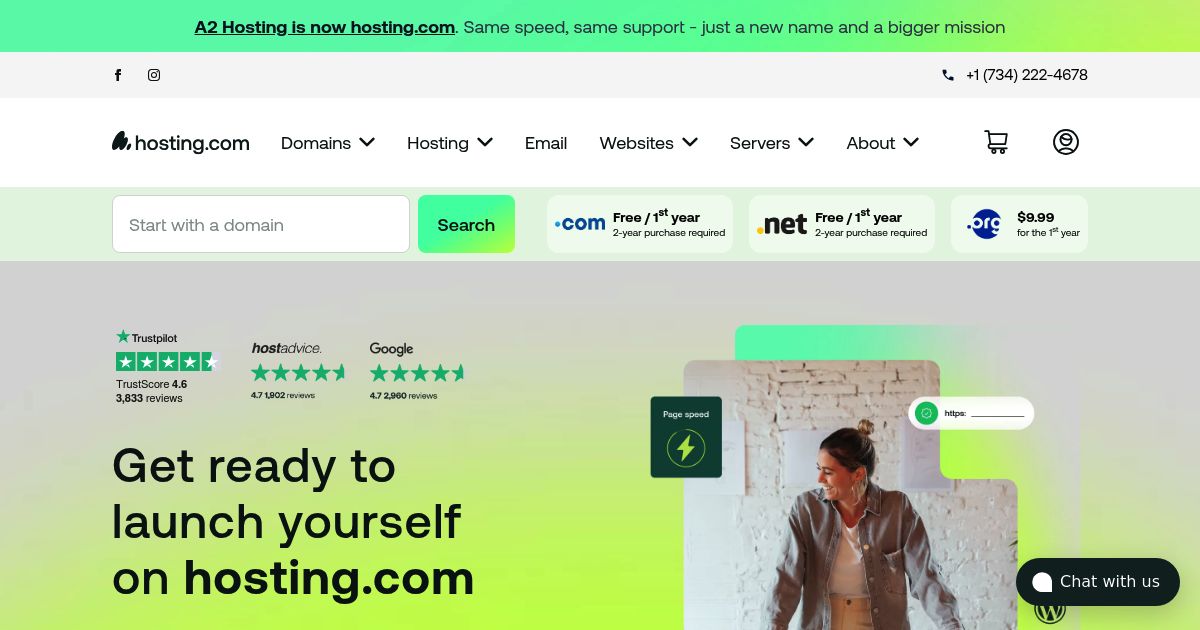
Hosting.com (formerly A2 Hosting) has repositioned itself under World Host Group, targeting solo developers, LMS users, and small businesses with streamlined hosting solutions. Based on our experience and review of their current offerings, the brand no longer aims to lead on raw performance — but still delivers where it counts: developer tools, global servers, and strong unmanaged VPS value. The new email hosting plan, in particular, stands out as a smart choice for small businesses and teams.
Hostgator

Our Take
HostGator offers a wide range of hosting plans with promotional perks like free domains and ad credits. However, these offers mask deeper issues: aging server infrastructure, hidden costs such as paid migrations, and a misleading “free” email trial. All servers are U.S.-based, and high renewal rates make the service harder to justify. While still popular, HostGator struggles to match the standards set by newer, more transparent competitors.
For Beginners Looking for Affordable Hosting
HostGator’s upfront pricing can appear tempting, especially since its lowest shared plan supports up to 10 websites and includes ad credits. However, that affordability quickly fades. Email hosting is only a 1-month trial and renews at $2.99/month. Migrations are not free. Renewal prices climb steeply after the first term. Furthermore, the web host no longer includes a native site builder in its plans, which means beginners now have to install WordPress or another CMS to build their site.

In contrast, Hosting.com is more upfront about its pricing and what’s included. You get performance plugins, Turbo server access, and full email functionality even on its lowest plan — albeit limited to one website. The $2.99/month Starter plan renews higher (at $107.88/year), but at least you’re not dealing with surprise upsells or broken expectations.
For beginners who value clarity and site performance over a long list of promo perks, Hosting.com wins out.
For Advanced Users Looking for VPS Hosting
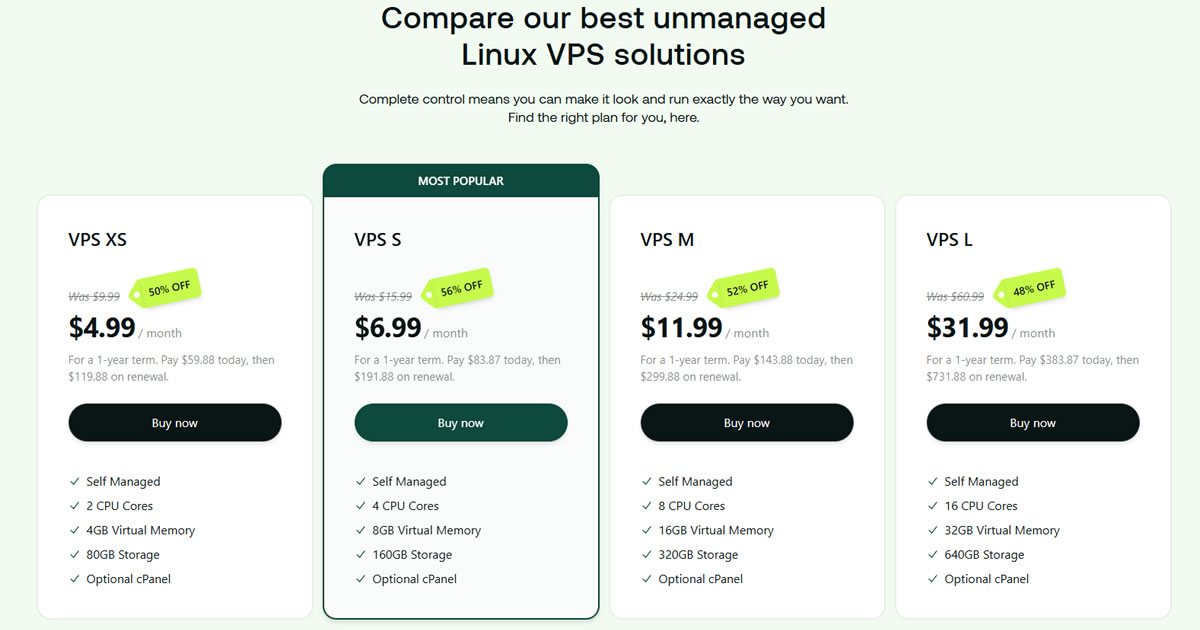
When it comes to VPS hosting, Hosting.com is clearly the stronger option. It offers unmanaged VPS plans with solid specs, developer-friendly tools (like SSH, Node.js, Python), and aggressive pricing for users who don’t need hand-holding.
HostGator’s VPS plans feel more like a legacy product — the specs are decent, but there’s nothing standout about the performance stack. There’s no NVMe, no LiteSpeed, and no premium caching layer unless you install it yourself. Plus, you’re locked into U.S.-based servers with no regional choice or scaling flexibility.
For developers looking to self-manage and optimize, Hosting.com provides more bang for the buck, though there are better and cheaper VPS hosts exist today.
For Small Businesses
On paper, both web hosts offer what small business owners need: free domains, SSL, email, and unmetered storage/bandwidth. But in practice, neither platform delivers strong value or long-term performance.
HostGator’s entry-level plans start cheap, but most of the essential tools for a secure, fast site (like backups, security, and caching) cost extra. Renewal prices are steep, and the upsell-heavy ecosystem gets expensive fast.
Hosting.com delivers more performance and security at higher tiers, especially with the Turbo plans – but you’re looking at a higher monthly commitment and a relatively old-school admin interface.
If you’re running a serious business website, there are leaner, faster, more transparent hosting options available (check out ScalaHosting, Cloudways, and LiquidWeb).
Verdict
While neither brand tops the charts, Hosting.com is the stronger overall choice. Its Turbo plans offer real-world performance gains, developer-friendly tools, and transparent pricing. HostGator may attract budget-conscious users, but its reliance on upsells, outdated infrastructure, and lack of premium features makes it hard to recommend for anything beyond basic, throwaway sites.
More About the Companies
Hosting.com
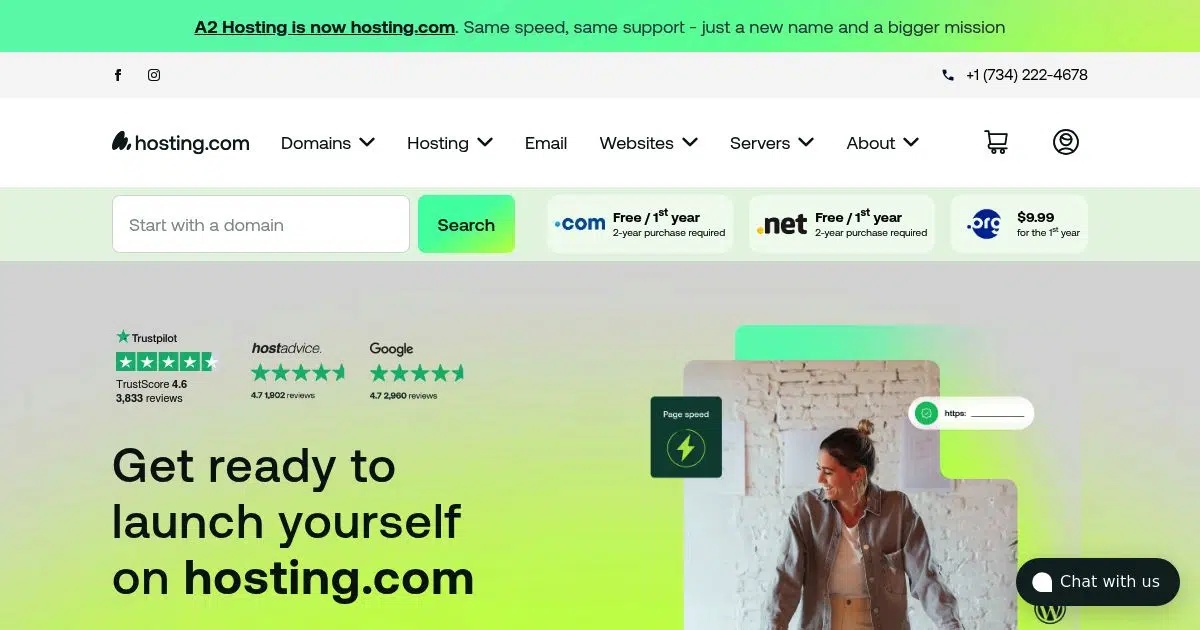
Hosting.com, previously known as A2 Hosting, was originally founded by Bryan Muthig in 2003 in Ann Arbor, Michigan. The company built a reputation for developer-first hosting, becoming one of the earliest providers to adopt SSD storage and optimize WordPress performance through its A2 Optimized platform.
In January 2025, the company was acquired by World Host Group and rebranded as Hosting.com. While the ownership has changed, the service still emphasizes tools for developers, fast server technology, and global infrastructure. Today, Hosting.com is actively repositioning itself to serve small businesses, LMS websites, and tech-savvy freelancers; offering a mix of shared, WordPress, VPS, and email hosting built on its legacy of performance and customization.
Hosting.com Pros
- Developer-friendly: Node.js, Python, Redis, and SSH acces even on shared plans
- Turbo plans include NVMe, LiteSpeed, and HTTP/3 tech
- Excellent email hosting deal for small businesses
- Free cPanel site migrations
- Cheap unmanaged VPS with strong specs
Hosting.com Cons
- Renewal rates jump steeply after promo
- One website limit on all Turbo plans
- Lacks modern cloud or autoscaling options
- Managed VPS plans have become more restrictive post-A2 migration
Hostgator
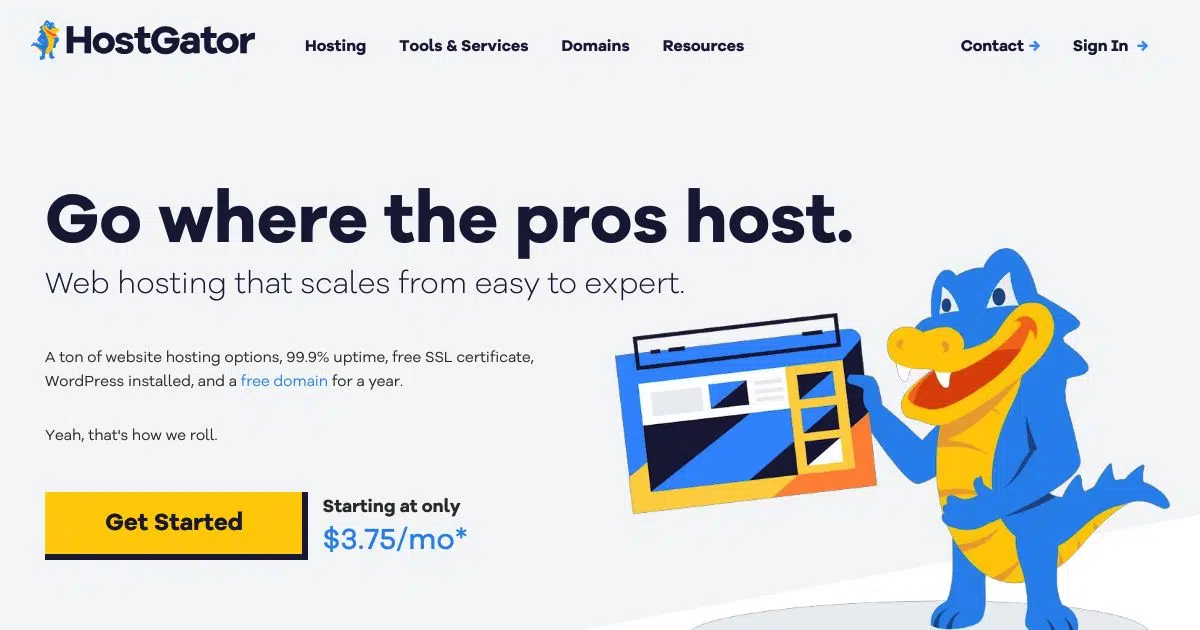
In October 2002, Brent Oxley, then a student at Florida Atlantic University, founded HostGator, a rising star in the web hosting industry. Starting in Boca Raton, Florida, the company relocated to Houston, Texas, in 2006 as it grew. HostGator expanded internationally with offices in Canada (2006) and India (2011).
A major milestone occurred in July 2012 when Endurance International Group acquired HostGator for $299.8 million, cementing its position as a leading web hosting provider in the global market.
The company offers a range of hosting services, including shared, VPS, dedicated, and reseller hosting. With shared hosting plans, you’ll snag a free domain and benefit from up to $200 in ad credits on mid- and higher-tier plans.
However, it’s not without limitations—server resources can be constrained, VPS options are limited, and the servers are exclusively US-based. Additionally, be prepared for a price increase at renewal, making it important to weigh the initial savings against the long-term costs.
Hostgator Pros
- Wide range of web hosting solutions
- Reasonable signup price (but increase sharply after)
- Free $100 Bing and $100 Google ad credits (for users in certain locations)
- 45-day money-back guarantee
- Lowest plan supports up to 10 websites with unmetered bandwidth
Hostgator Cons
- Pro Email is a 1-month trial; renews at $2.99/month
- Lacks NVMe storage; still using standard SSDs
- Only US-based servers
- Site migration isn’t free
- Higher renewal pricing vs competitors

