

Quick Summary
The main differences between ScalaHosting and Cloudways revolve around pricing models, hardware control, and the range of hosting features. Both web hosts are known for reliable performance, easy management tools, and helpful support.
However, ScalaHosting covers more ground with shared, reseller, and VPS plans; while Cloudways focuses on a pay-as-you-go approach through multiple cloud infrastructures. In the sections below, we’ll break down their strengths and weaknesses so you can pick the best option for your website.
ScalaHosting

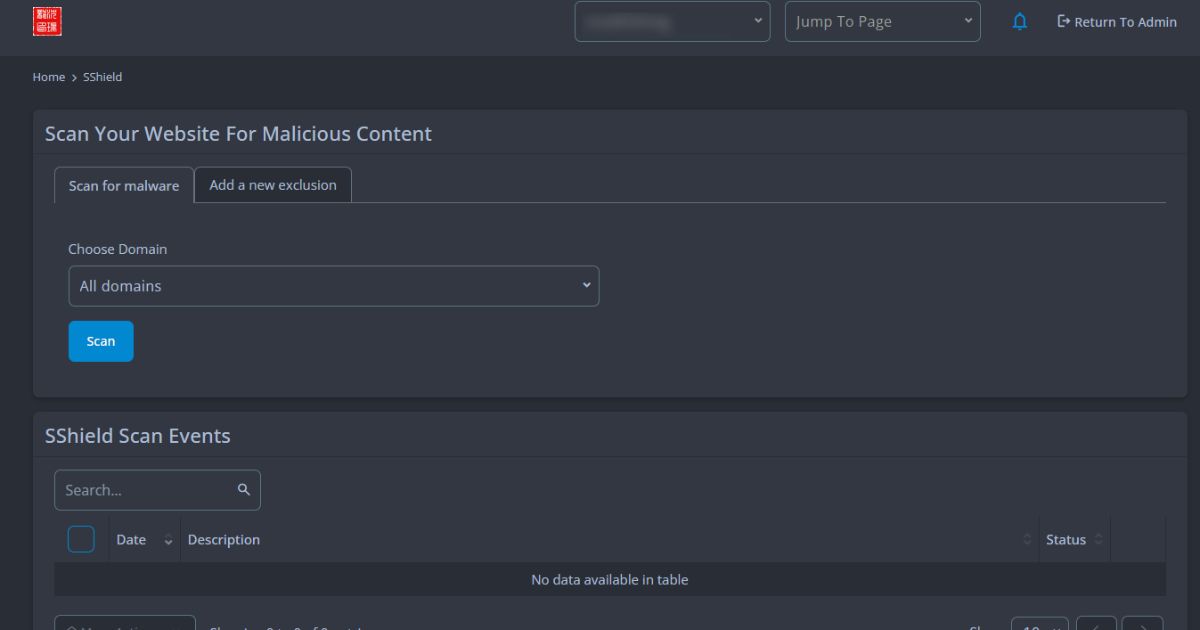
ScalaHosting delivers excellent uptime, fast performance, and advanced in-house technology at competitive prices. Its shared and managed VPS plans include NVMe storage, SShield security, daily backups, and the proprietary SPanel control panel for simplified management. In HostScore’s tests, it maintained strong stability across U.S. and European servers. While renewal rates are higher and dedicated hosting is unavailable, ScalaHosting’s managed VPS plans remain up to 40% cheaper than rivals. All-in-all, it is it a reliable, high-value choice for users upgrading from shared hosting.
Cloudways

Cloudways delivers managed hosting built on top of major cloud platforms, including DigitalOcean, AWS, Vultr, and Google Cloud. It gives site owners access to cloud-level performance and scaling, but without the burden of handling server administration themselves. The service is geared toward agencies, developers, and fast-growing businesses that need flexibility. That said, Cloudways is not aimed at first-time site owners. Its pricing structure can be harder to follow than traditional shared hosting, and there are no low-cost entry plans. Still, for users who want managed cloud power with advanced features, Cloudways is a strong choice.
Compare Features & Services
| Feature | Cloudways | ScalaHosting | Winner |
|---|---|---|---|
| Hosting Type | Managed Cloud Hosting only | Shared, Reseller, Cloud VPS, WordPress, Game Server Hosting | ScalaHosting |
| Control Panel | Custom Cloudways Dashboard | SPanel | Tie |
| Cloud Infrastructure | Choice of 5 providers (AWS, Google Cloud, DO, Linode, Vultr) | Proprietary Scala Infrastructure | Cloudways |
| Payment Model | Pay-as-you-go (monthly billing) | Prepaid 12/24/36 months with signup discounts | Cloudways |
| Total Cost (5 Years) | Higher (no signup discounts) | Lower (up to 20-29% cheaper) with long-term plans | ScalaHosting |
| Refund Policy | 3-day free trial, no refunds | Anytime Money Back Guarantee (pro-rata refund) | ScalaHosting |
| Email Hosting | Not included (Rackspace add-on, $1/email) | Free email hosting for all plans | ScalaHosting |
| Backup & Restore | Hourly backups, up to 4-week retention | Daily backups, single restore point | Cloudways |
| File Manager | Not available | Available via SPanel | ScalaHosting |
| Multi-PHP Support | Global PHP version per server | Different PHP version per app | ScalaHosting |
| Database Support | Single database per app | Multiple databases per app | ScalaHosting |
| Reseller Hosting | Not available | Available with reseller-specific plans | ScalaHosting |
| Backup Customization | Hourly backups, user-defined retention | Fixed daily backups, one restore point | Cloudways |
| Control Over Hardware | None (depends on AWS, DO, Linode, etc.) | Full control (Scala owns hardware) | ScalaHosting |
| Reseller Capabilities | Not supported | Supported via SPanel reseller hosting | ScalaHosting |
| Pricing Transparency | Pay-as-you-go, no long-term savings | Lower long-term cost with upfront payment | ScalaHosting |
| User Reviews | 88% 5-star on TrustPilot (2,500+ reviews) | 99% 5-star on TrustPilot (1,900+ reviews) | ScalaHosting |
| Customer Support | 24/7 live chat and ticket support | 24/7 live chat and ticket support | Tie |
| Overall User Experience | Clean dashboard, simple to use | More features via SPanel, greater control | ScalaHosting |
If you want an affordable, feature-packed hosting solution, ScalaHosting is the clear winner. However, if flexibility in cloud infrastructure and pay-as-you-go pricing are non-negotiable priorities, Cloudways is the superior choice.
But as you’ll see, there’s more to this comparison than just price and payment models. By the end of this guide, you’ll have a clear understanding of the core differences and which provider is right for your business or project.
Overview
About Cloudways

Cloudways is a managed cloud hosting platform that aims to simplify the process of launching and managing websites on cloud infrastructure.
How Cloudways Works?
Unlike traditional web hosting, Cloudways does not own physical servers. Instead, it acts as an intermediary, providing an interface that connects users to cloud infrastructure providers. When you sign up for Cloudways, you’ll be asked to select which cloud provider you want to use for your server (options: DigitalOcean, Vultr, Linode, Amazon Web Services, and Google Cloud).
Once chosen, Cloudways handles all the server setup, management, and monitoring — letting users focus on their applications and websites.
Instead of dealing with complex cloud hosting configurations, Cloudways users get access to an user-friendly, centralized dashboard that makes server management, website monitoring, and application deployment much easier. The platform is particularly popular among agencies, freelancers, and developers who want more control over infrastructure without the complexity of raw cloud services.
Notable Features of Cloudways
- Multi-cloud support: Choose from 5 leading cloud providers.
- Pay-as-you-go pricing: No upfront payments; pay only for the resources you use.
- Custom control panel: Clean, easy-to-use dashboard to manage servers and applications.
- Advanced backup system: Customizable backup frequency (hourly, daily, weekly) and retention (up to 4 weeks).
- No built-in email hosting: Users must purchase Rackspace email hosting or use third-party services.
About ScalaHosting

If Cloudways is the “connector” between users and third-party cloud providers, ScalaHosting takes a different approach. Unlike Cloudways, ScalaHosting builds and maintains its own infrastructure, and they control both the hardware (data centers) and software (control panel). This unique approach is comparable to Apple, which controls both its devices (hardware) and iOS (software).
At the heart of ScalaHosting’s offering is SPanel, a proprietary alternative to cPanel. SPanel eliminates the need to rely on third-party control panels, giving ScalaHosting full control over pricing and features. This is significant because, after Oakley Capital acquired cPanel and Plesk, the industry saw significant price increases. By moving away from cPanel, ScalaHosting provides its users with a cost-stable alternative while also packing in additional features.
ScalaHosting Offerings
ScalaHosting offers a full range of hosting options, including:
- Shared hosting: Affordable hosting for small websites.
- Cloud VPS hosting: Scalable hosting with full root access.
- Reseller hosting: Ideal for agencies and freelancers managing client websites.
- Email hosting: Custom email hosting included in all plans.
- Managed WordPress hosting: Fully optimized WordPress hosting with one-click installs.
- Game server hosting: Specialty hosting designed for online gaming servers.
Notable Features of ScalaHosting
- SPanel (cPanel alternative): Full control over server and hosting features.
- Custom-built infrastructure: Owns and manages its own cloud servers.
- Free email hosting: No extra fees for custom domain email hosting.
- Anytime money-back guarantee: Users can request refunds at any point.
- Multiple hosting types: Shared, cloud, reseller, email, WordPress, and game server hosting options.
Four Similarities Between Cloudways and ScalaHosting
Both Cloudways and ScalaHosting have earned glowing reputations for performance, support, and innovation. While their approaches to hosting differ, they share several key similarities that set them apart from traditional hosting providers.
1. Proprietary Control Panels
One of the most notable similarities is their decision to break away from the traditional cPanel control panel. cPanel was once the industry gold standard for hosting management, but since its acquisition by Oakley Capital, prices have skyrocketed, forcing hosting providers to look for alternatives.
Cloudways
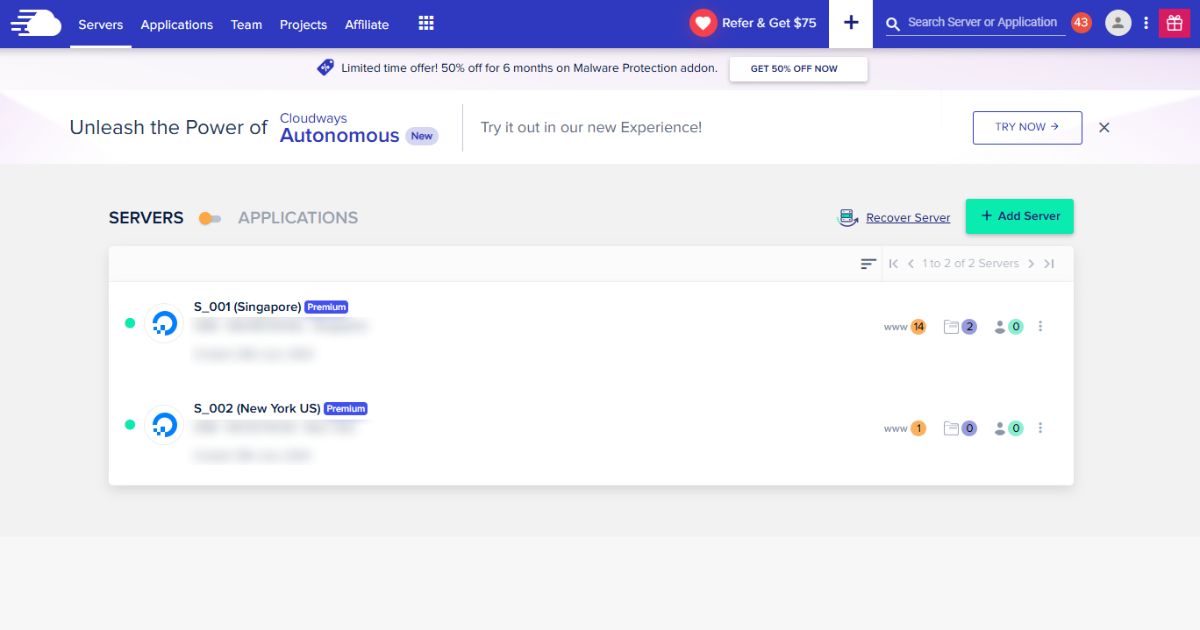
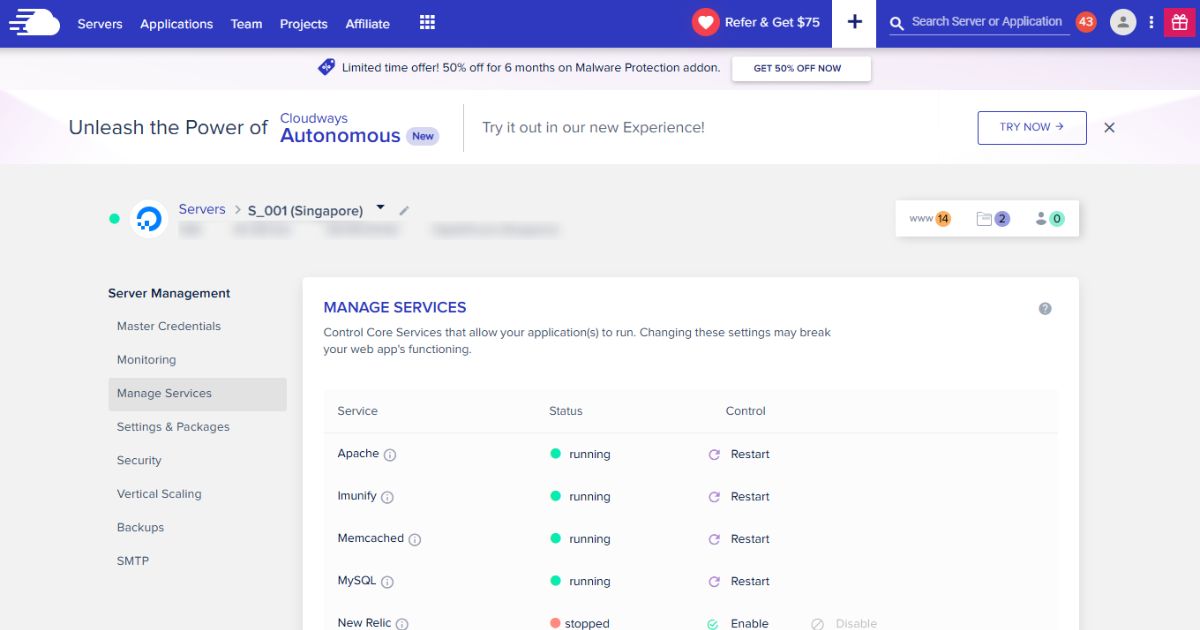
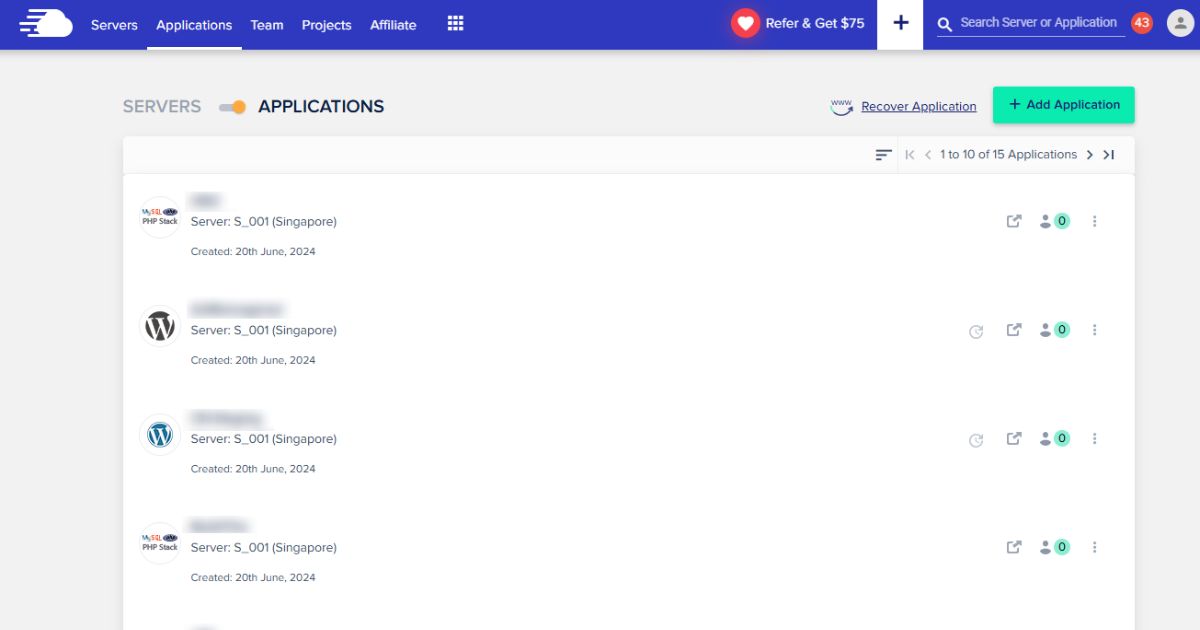
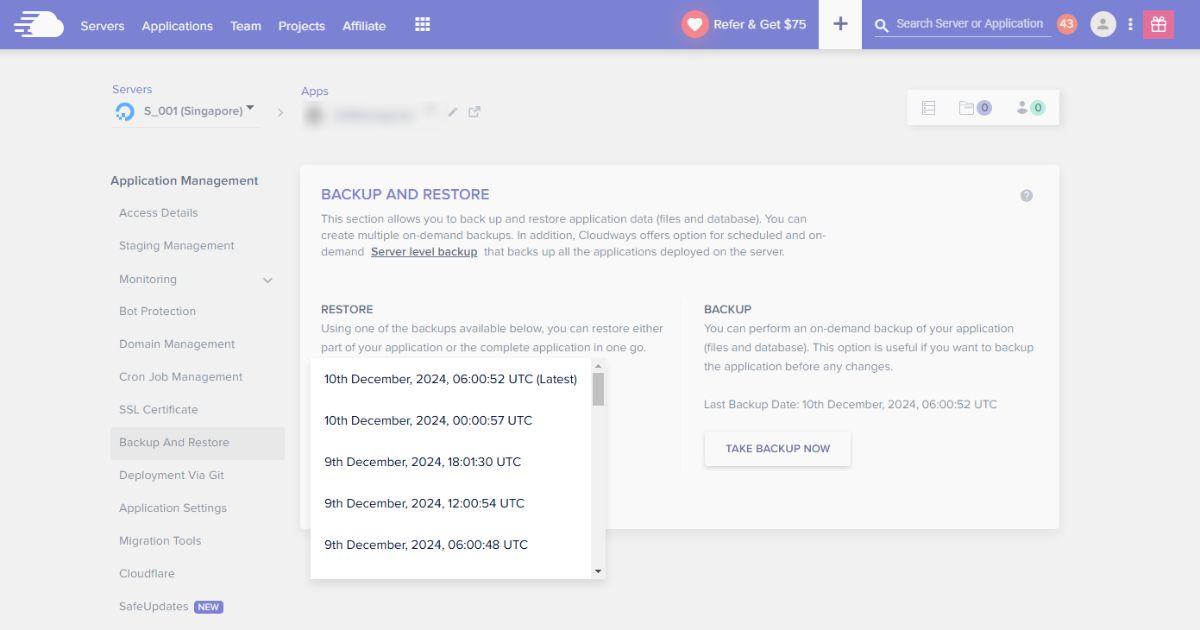
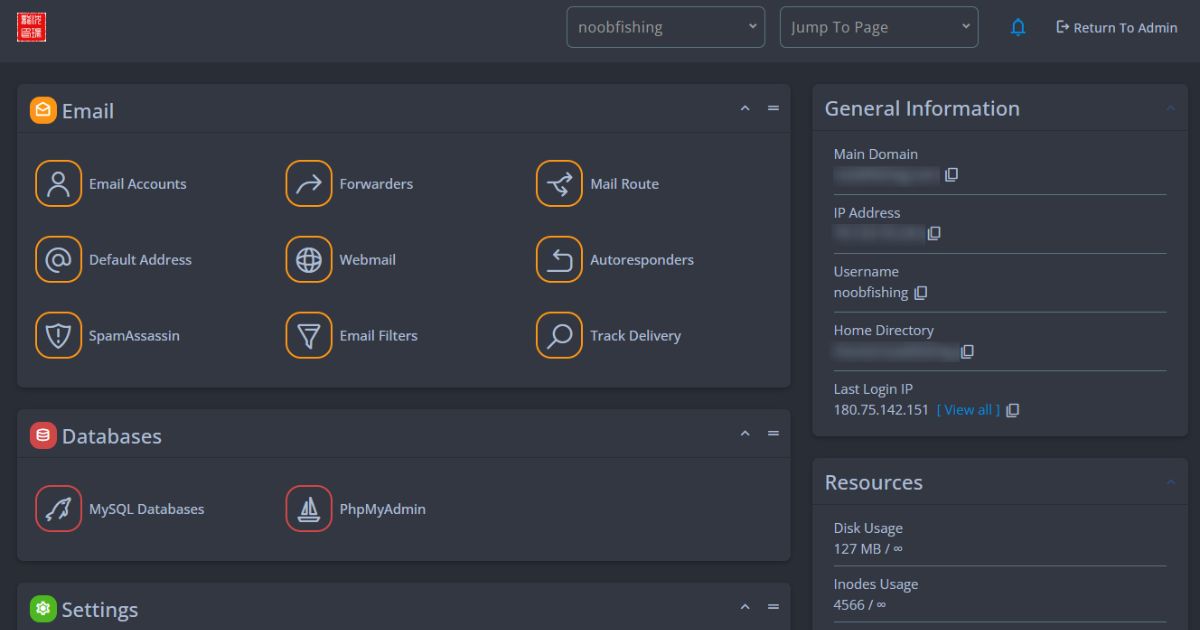
Developed its own custom control panel, offering users a clean and easy-to-use dashboard. This panel simplifies cloud hosting management and allows non-technical users to manage websites, deploy applications, and access performance tools with ease.
ScalaHosting
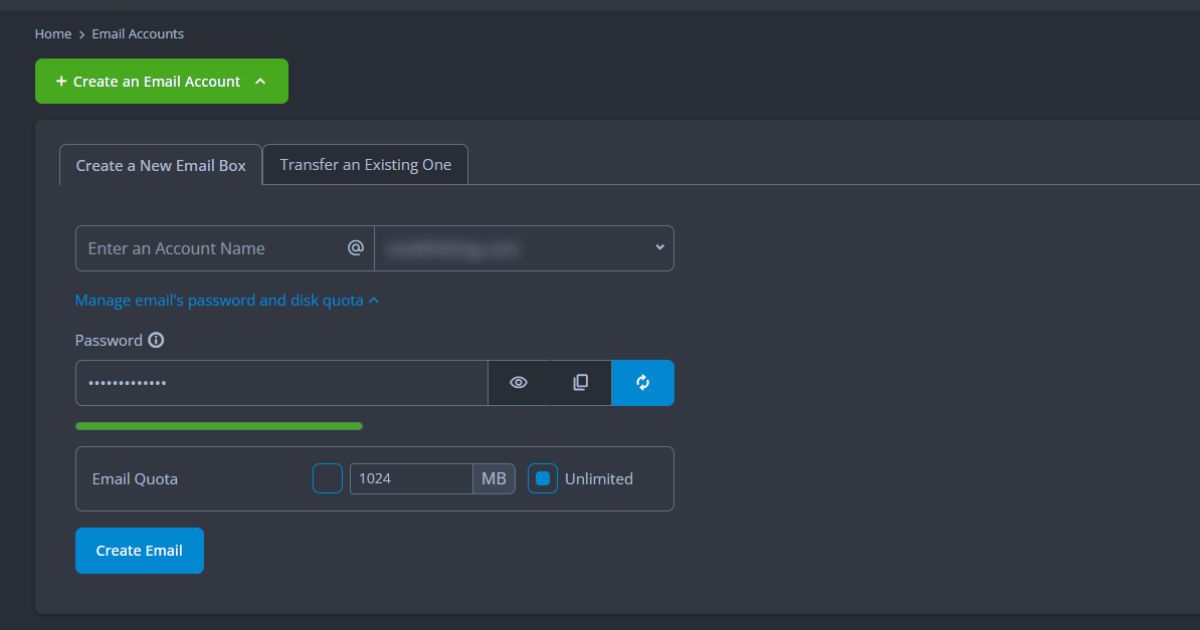
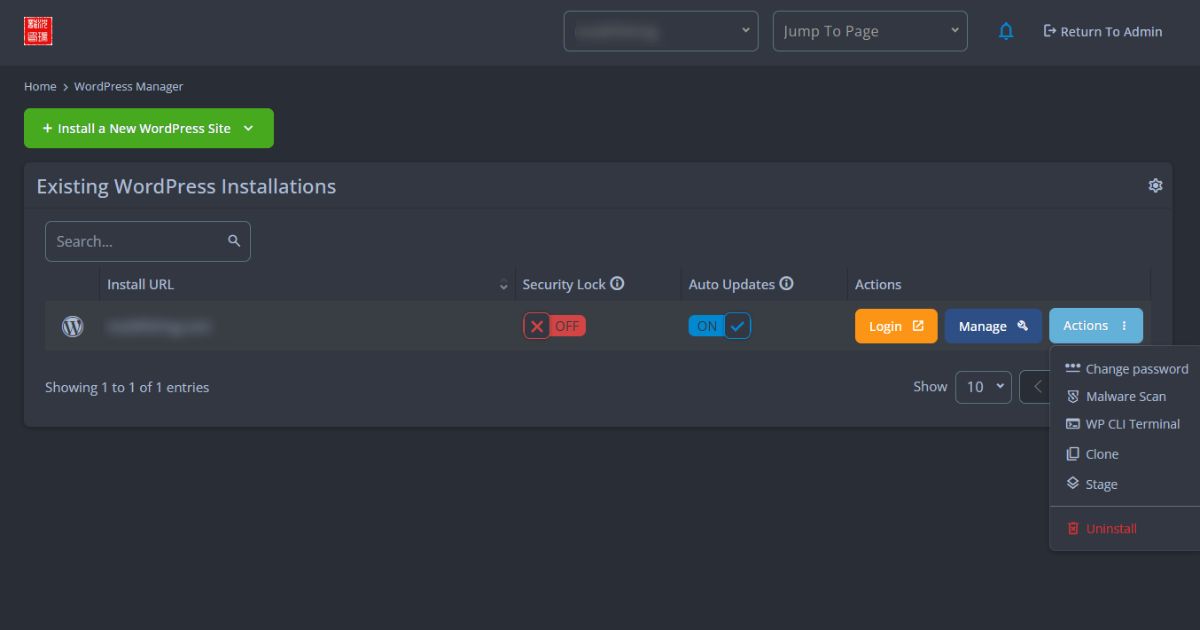
Went one step further by creating SPanel, a fully independent control panel that works as an alternative to cPanel. Unlike Cloudways’ dependency on third-party cloud providers, ScalaHosting manages both the software (SPanel) and the hardware (its cloud infrastructure) under one roof, offering users full control.
This shift away from cPanel is a big deal. Hosting companies no longer have to raise their prices in response to cPanel’s price hikes, and users benefit from unique, homegrown interfaces that are built with user experience in mind.
2. Excellent Customer Support
Both Cloudways and ScalaHosting are celebrated for their exceptional customer support. Users frequently praise them for fast response times, knowledgeable support agents, and effective problem-solving.
ScalaHosting boasts a near-perfect 99% 5-star rating on TrustPilot, while Cloudways has a strong but slightly lower 88% 5-star rating.


3. Reliable Uptime and Performance
Performance and uptime are non-negotiables for hosting providers, and both Cloudways and ScalaHosting excel in this area.
Cloudways
Performance is dependent on the cloud infrastructure chosen (DigitalOcean, AWS, Google Cloud, Linode, or Vultr). This flexibility means users can tap into the performance of global cloud giants, optimizing speed and stability.
Cloudways’ hosting performance has been praised by many in the industry, including Online Media Masters, which notes its fast load speeds and minimal downtime.
ScalaHosting
ScalaHosting builds and manages its own cloud infrastructure, ensuring full control over performance. They consistently achieve high server uptime and fast site loading times.
Our load testing confirms that ScalaHosting’s managed VPS is well-optimized, providing smooth and consistent performance for business-critical websites.
4. Managed Hosting for Non-Technical Users
Both Cloudways and ScalaHosting offer managed hosting solutions, meaning users don’t need to handle server maintenance, security patches, or performance optimization. Managed hosting takes care of these backend tasks so users can focus on their websites and businesses.
Cloudways
Offers full managed cloud hosting, abstracting away the complexity of working with providers like AWS and Google Cloud. This hands-off approach allows users to access the power of big cloud providers without requiring technical expertise.
ScalaHosting
Goes beyond managed cloud hosting by offering a range of services, including managed VPS, shared hosting, WordPress hosting, and reseller hosting. Each hosting plan includes proactive security measures, automated updates, and hands-on support to make server management as simple as possible.
Differences Between Cloudways and ScalaHosting
Although Cloudways and ScalaHosting share several similarities, they also have some key differences that affect usability, cost, and customer experience. Here’s a look at the crucial areas where the two diverge.
1. Cloud Infrastructure Options
Cloudways
Users can choose from five cloud providers: DigitalOcean, Linode, Vultr, AWS, and Google Cloud. This makes Cloudways more versatile for businesses with specific infrastructure preferences, especially large enterprises that require AWS or Google Cloud.
ScalaHosting
Users are tied to ScalaHosting’s own cloud infrastructure, which it builds and controls. Previously, users could also choose DigitalOcean or AWS, but this option appears to have been phased out. For companies with strict client requirements on cloud provider choice, this limitation may be a deal-breaker.
2. Features and Tools
When it comes to essential hosting features and tools, there’s a stark difference between Cloudways and ScalaHosting.
On the surface, Cloudways presents itself as a sleek, modern platform with a user-friendly dashboard. For a while, I believed Cloudways had everything I needed. The platform was intuitive, and I could get most of my tasks done without much hassle.
But after spending more time using both services, I realized something important — many of the essential features I expected from a hosting platform were missing in Cloudways.
Cloudways Product Feedback

A quick visit to the Cloudways Feedback Forum revealed a consistent pattern of user feature request.
The most requested features — like a file manager, multi-PHP support, LiteSpeed web server, multiple databases per application, and reseller hosting — were repeatedly requested by users (see screenshot above). It wasn’t just a handful of users, either. These requests had hundreds of upvotes, showing a clear demand from the Cloudways community. Yet, these critical features still haven’t been fully implemented, and some have been sitting on the forum for years.
Enter ScalaHosting
This is where ScalaHosting truly shines. Every feature that Cloudways users are begging for on the feedback forum is already available in SPanel, ScalaHosting’s proprietary control panel. It’s like the company preemptively understood what users would want — and then built it directly into the platform.
File Manager? Yes
For example, the File Manager on ScalaHosting allows users to upload, download, and edit files directly from the browser. This is something Cloudways users can’t do without third-party tools like SFTP clients.
Multi-PHP for Different Domains? Yes
Another major win for ScalaHosting is its multi-PHP support. With this feature, users can select different PHP versions for each application or site they host. This is crucial for developers and businesses with multiple sites running on different frameworks or legacy applications. In contrast, Cloudways only allows one global PHP version per server — a significant limitation for users managing diverse projects.
Multiple Databases per Application? Yes
But it doesn’t stop there. Multiple databases per application is another area where ScalaHosting outperforms Cloudways. With ScalaHosting, you can run multiple databases for a single app or website, which is useful if you’re managing multi-tenant applications or need separate databases for subdomains. On Cloudways, this is not possible, and users are forced to work around this limitation, which can be frustrating.
Reseller Hosting? Yes
Finally – reseller hosting — a feature that many agencies and freelancers rely on to sell hosting to their clients. ScalaHosting provides full reseller hosting support, allowing you to white-label services and manage client accounts directly.
This is a big deal for web developers or agencies looking to offer web hosting as part of their service packages. Cloudways, on the other hand, does not offer native reseller hosting. If you’re an agency looking to expand into hosting, you’ll be forced to look for alternatives — and for many, that alternative is ScalaHosting.
3. Pricing Model & Long-Term Cost
| Hosting Type | Cloudways | ScalaHosting |
|---|---|---|
| Shared Hosting | $ - /mo | $2.95 - 14.95/mo |
| VPS Hosting | $ - /mo | $29.95 - 94.95/mo |
| Dedicated Hosting | $ - /mo | $ - /mo |
| Cloud Hosting | $11.00 - 1056.00/mo | $29.95 - 94.95/mo |
| Managed WP Hosting | $35.00 - 1640.00/mo | $2.95 - 14.95/mo |
| Windows Hosting | $ - /mo | $39.95 - 485.00/mo |
| Coupon | HOSTSCORE | - |
| Coupon Details | 30% Discount for 3 Months | - |
When it comes to pricing, Cloudways and ScalaHosting take fundamentally different approaches.
Cloudways uses a flexible month-to-month billing model, so you only pay for what they use. There are no long-term contracts, making it ideal for users with limited cash flow. ScalaHosting offers significant discounts for users who pay upfront for 12 months or more. However, you must pay a larger lump sum at the start, which may strain small business budgets.
At first glance, Cloudways’ pay-as-you-go pricing might seem like the more affordable option, but when you look at the long-term cost, the picture shifts significantly.
Cloudways: Month-to-month Billing
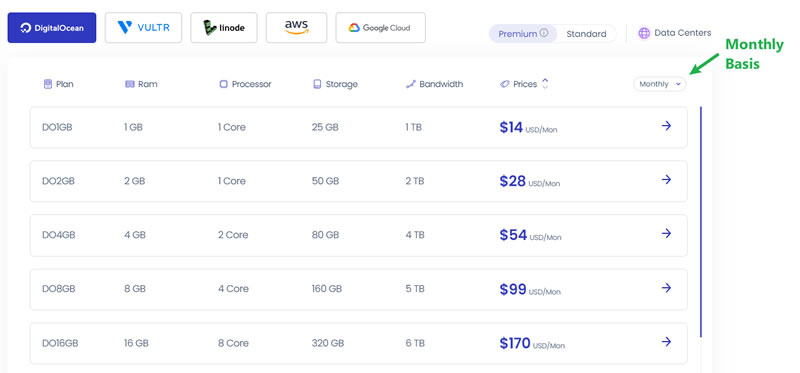
Let’s start with Cloudways. With their month-to-month billing model, you don’t have to worry about paying for an entire year (or more) upfront. Instead, you’re billed each month for exactly what you use. For people with tight cash flow, this approach feels much more manageable.
There’s no large upfront payment required, and you’re free to cancel at any time without losing any money.
| Cloudways + Digital Ocean | DO4GB | DO8GB | DO16GB | DO32GB |
|---|---|---|---|---|
| Basic Specs | 2CPU 4GB RAM 80GB NVMe | 4CPU 8GB RAM 100GB NVMe | 8CPU 16GB RAM 320GB NVMe | 8CPU 32GB RAM 640GB NVMe |
| Signup Price | $54.00/mo | $99.00/mo | $170.00/mo | $279.00/mo |
| Renewal Price | $54.00/mo | $99.00/mo | $170.00/mo | $279.00/mo |
| 5 Years Cost | $3,240.00 | $5,940.00 | $10,200.00 | $16,740.00 |
However, there’s a hidden downside: there are no long-term discounts. This means that every month, you’re paying the full price — and over the course of several years, this adds up to a lot more than you’d pay with other hosting providers.
ScalaHosting: 12 or 36-Month Subscription Plans
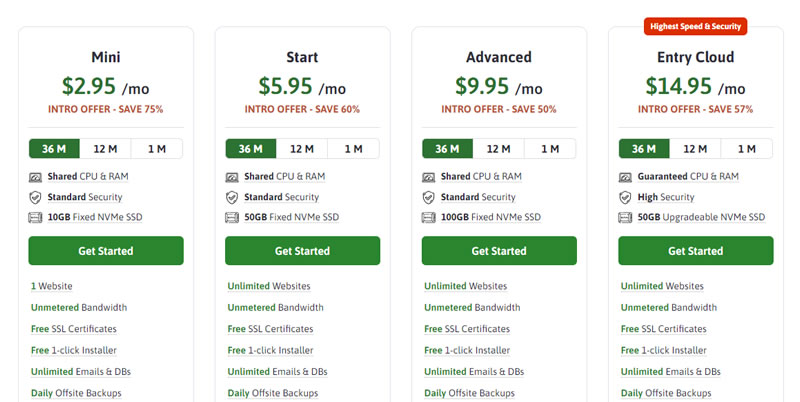
On the other hand, ScalaHosting takes a more traditional approach with its payment structure. Users can lock in significant signup discounts if they commit to 12 or 36-month plans.
The longer the commitment, the bigger the discount.
| ScalaHosting Plans | Build #1 | Build #2 | Build #3 | Build #4 |
|---|---|---|---|---|
| Basic Specs | 2CPU 4GB RAM 50GB NVMe | 4CPU 8GB RAM 100GB NVMe | 8CPU 16GB RAM 150GB NVMe | 12CPU 24GB RAM 200GB NVMe |
| Signup Price (3 years) | $29.95/mo | $61.95/mo | $115.95/mo | $169.95/mo |
| Renewal Price | $49.95/mo | $91.95/mo | $165.95/mo | $239.95/mo |
| 5 Years Cost | $2,277.00 | $4,437.00 | $8,157.00 | $11,877.00 |
Long Term Wise, ScalaHosting is Cheaper
At first, this may seem like a disadvantage because you have to pay a large lump sum upfront, which can be difficult for some small businesses or individuals. But here’s the twist — when you do the math for the total cost over 3 or 5 years, ScalaHosting comes out 20% – 29% cheaper.
Even after the promotional period ends and the renewal rates apply, ScalaHosting still maintains a lower total cost compared to Cloudways.
Here’s why: Cloudways never offers promotional pricing or long-term discounts.
You pay the same rate every month. With ScalaHosting, you’re taking advantage of a heavily discounted first-term rate, which saves you money upfront. And while renewal rates are higher, the total cost of hosting for 3 to 5 years is still lower than what you’d pay if you stayed with Cloudways.
ScalaHosting’s Anytime Money Back Guarantee

Another crucial difference is ScalaHosting’s Anytime Money Back Guarantee.
Unlike most hosting providers that offer 30-day refunds, ScalaHosting allows you to cancel your plan at any time and receive a pro-rata refund for unused time. This is a major win for users who want the flexibility to back out without losing their investment. With Cloudways, the only option is their 3-day free trial, which honestly isn’t enough time to properly test a hosting provider. Once you’re past those 3 days, there are no refunds.
In summary, ScalaHosting wins on long-term cost. While Cloudways’ month-to-month pricing is appealing in the short term, the total cost of ownership after several years is much higher.
4. Backup and Restore Capabilities
Cloudways allows hourly backups, with retention periods of up to 4 weeks. Users have complete control over how frequently backups occur and how long they’re stored. In comparison, ScalaHosting offers only daily backups with a single restore point, meaning you can only roll back to the most recent version of your site. This is a potential risk if something goes wrong during an update.
5. Email Hosting
Cloudways

Email is not included in Cloudways platform. To have your own custom email account, you must purchase Rackspace email hosting from Cloudways at $1/month per email account or rely on third-party services like Google Workspace.
ScalaHosting
Offers free email hosting as part of its hosting plans. This is a critical cost-saving feature, especially for businesses with multiple employees.
Final Verdict: Which Should You Choose?
So, which option is better?
Choosing between ScalaHosting and Cloudways comes down to your specific needs, budget, and technical preferences. Both are exceptional hosting providers, but they cater to different types of users.
If you prioritize flexibility, pay-as-you-go pricing, and access to top-tier cloud providers like AWS, Google Cloud, and DigitalOcean, then Cloudways is the better choice. It allows you to avoid large upfront payments and gives you access to a global network of cloud infrastructure. This makes it especially appealing for agencies, freelancers, or businesses with clients that request specific cloud environments. Cloudways’ customizable backup system is also a major plus, offering hourly backups and up to four weeks of retention.
However, if you value long-term affordability, essential hosting features, and more control over your hosting environment, then ScalaHosting is the clear winner. With its proprietary SPanel, you get access to tools that Cloudways users are still begging for, like a built-in file manager, multi-PHP support, and free email hosting. ScalaHosting is also significantly cheaper over 3 to 5 years thanks to its discounted long-term plans, even after renewal rates kick in. The added benefit of an Anytime Money Back Guarantee makes the initial commitment less risky.
Which Host Should You Pick?
- Choose Cloudways if you need cash flow flexibility, multi-cloud support (AWS, DO, GCP), and advanced backup options.
- Choose ScalaHosting if you want a lower total cost, essential features (like a file manager and email hosting), and an all-in-one system that gives you control over both hardware and software.
Both providers offer excellent performance, reliability, and customer support. But if cost, features, and control matter most, ScalaHosting offers better value. If flexibility, cloud choice, and low commitment are your priorities, Cloudways is a solid choice

