

The key differences between Hosting.com and DreamHost Services
The key differences between Hosting.com and DreamHost lie in transparency, user experience, and technical flexibility. Hosting.com, formerly A2 Hosting, offers performance-oriented plans powered by LiteSpeed, NVMe storage, and HTTP/3 — but locks these features behind pricey Turbo tiers. DreamHost, by contrast, emphasizes clear pricing, included daily backups, and a clean, upsell-free experience.
Hosting.com is stronger on developer features, with support for Node.js, Python, and Redis even on shared plans. DreamHost is better for users who value privacy-first policies, simple site setups, and generous refund terms. However, it lacks cPanel and doesn’t offer free site migrations — two things Hosting.com includes out of the box.
In terms of long-term value and ease of use, DreamHost appeals more to privacy-minded beginners and bloggers. Hosting.com suits users who want premium performance and don’t mind paying extra for it.
Compare Essential Features & Service Offering
Hosting.com
Our Take
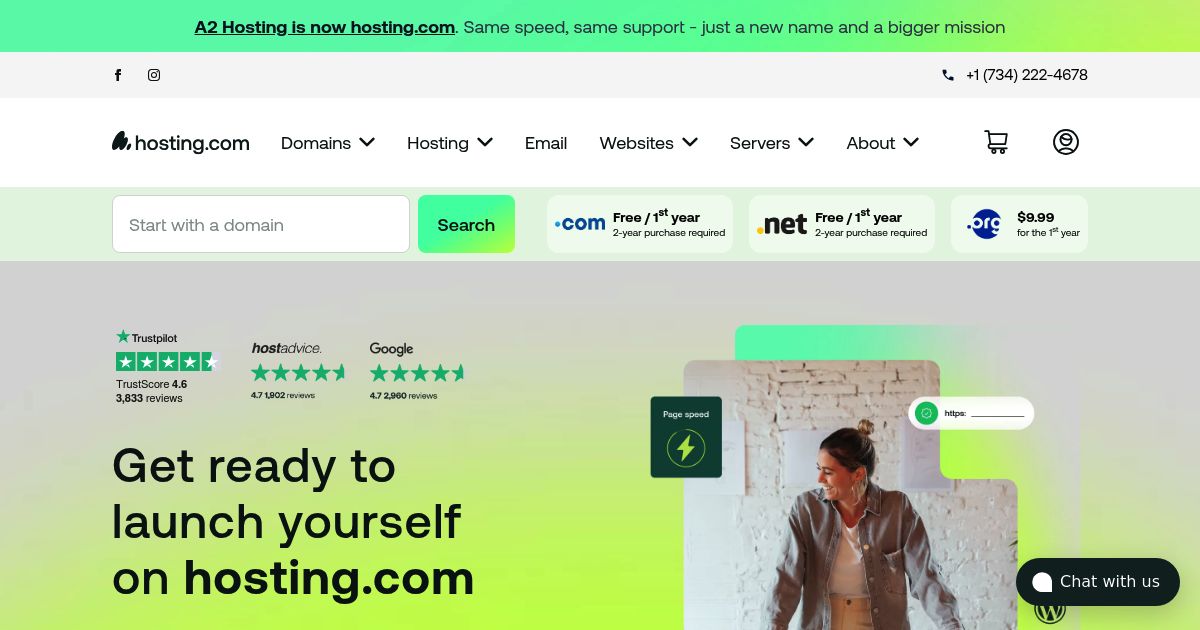
Hosting.com (formerly A2 Hosting) has repositioned itself under World Host Group, targeting solo developers, LMS users, and small businesses with streamlined hosting solutions. Based on our experience and review of their current offerings, the brand no longer aims to lead on raw performance — but still delivers where it counts: developer tools, global servers, and strong unmanaged VPS value. The new email hosting plan, in particular, stands out as a smart choice for small businesses and teams.
DreamHost

Our Take
DreamHost emphasizes privacy, transparency, and solid uptime across its hosting services. While it doesn’t lead the pack in speed or control panel design, it delivers stable performance and clean, ad-free hosting. DreamHost is especially appealing to bloggers, nonprofits, and small businesses looking for a straightforward, long-term hosting partner without upsells or gimmicks.
For Newbies Looking for Affordable Hosting
DreamHost and Hosting.com take very different approaches when it comes to entry-level hosting. For most new users, as per our research, DreamHost offers a more predictable and user-friendly experience.
DreamHost Plans & Pricing

DreamHost’s shared Starter plan is priced at $2.95/month for the first year, renewing at $6.99/month. For that, you get a free domain, unlimited traffic, automated WordPress migrations, daily backups, and access to their AI-powered website builder — all without intrusive upsells or bloat. The interface is clean, and the 97-day money-back guarantee is one of the longest in the industry.
Hosting.com (A2 Hosting) Plans & Pricing

In contrast, Hosting.com’s true performance perks don’t kick in until you opt for a Turbo plan — starting at $11.99/month (renewing at $27.99), and limited to one site per plan. That means beginners pay significantly more just to get comparable speed and still miss out on basic features like daily backups unless they upgrade.
If you’re just getting started and want affordable hosting with clear terms and fewer hidden costs, DreamHost is simply easier to live with — even if you’re not deeply technical. Hosting.com makes more sense if you’re prioritizing speed from day one and willing to spend for it.
Compare Pricing
| Hosting Type | DreamHost | Hosting.com |
|---|---|---|
| Shared Hosting | $2.89 - 9.99/mo | $1.99 - 8.99/mo |
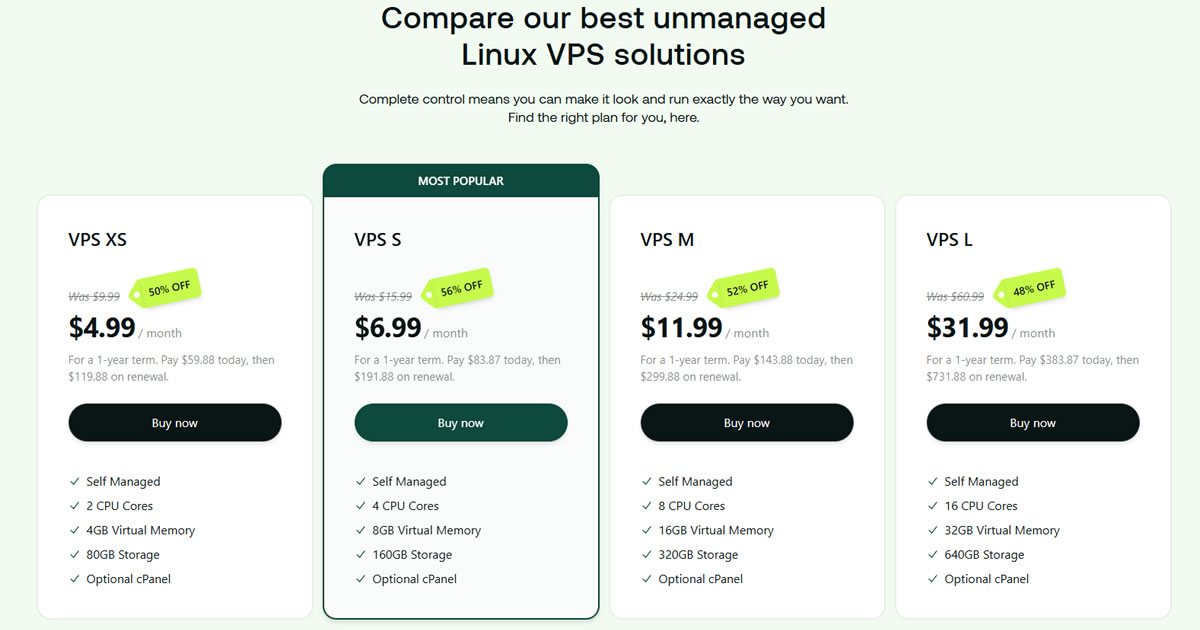
| VPS Hosting | $13.75 - 110.00/mo | $4.99 - 31.99/mo |
| Dedicated Hosting | $149.00 - 399.00/mo | $179.99 - 539.99/mo |
| Cloud Hosting | $4.50 - 48.00/mo | $ - /mo |
| Managed WP Hosting | $16.95 - 71.95/mo | $2.99 - 6.99/mo |
| Windows Hosting | $ - /mo | $ - /mo |
| Coupon | - | - |
| Coupon Details | - | - |
For Experienced Developers
Hosting.com is the better pick for web developers who want more control and tech stack flexibility.
Its unmanaged VPS plans (our favorite plans with Hosting.com) come with full root access, affordable base specs, and support for developer tools like Redis, Node.js, and Python — even on shared hosting. This makes Hosting.com a solid choice for developers who want hands-on server management or to host custom apps and frameworks.
DreamHost also offers VPS plans, but they’re fully managed and limited in terms of stack customization. You won’t get cPanel or as many built-in developer tools. For developers who need full control or want to deploy non-standard setups, DreamHost may feel restrictive.
For Small Businesses & eCommerce
Both Hosting.com and DreamHost are capable of supporting small business websites, but they appeal to different priorities.
DreamHost focuses on long-term value, automated backups, and domain privacy. All these features are useful for business owners who don’t want to manage every detail. However, the lack of live chat responsiveness and no free migration service can be frustrating if you’re moving from another host or need help quickly.
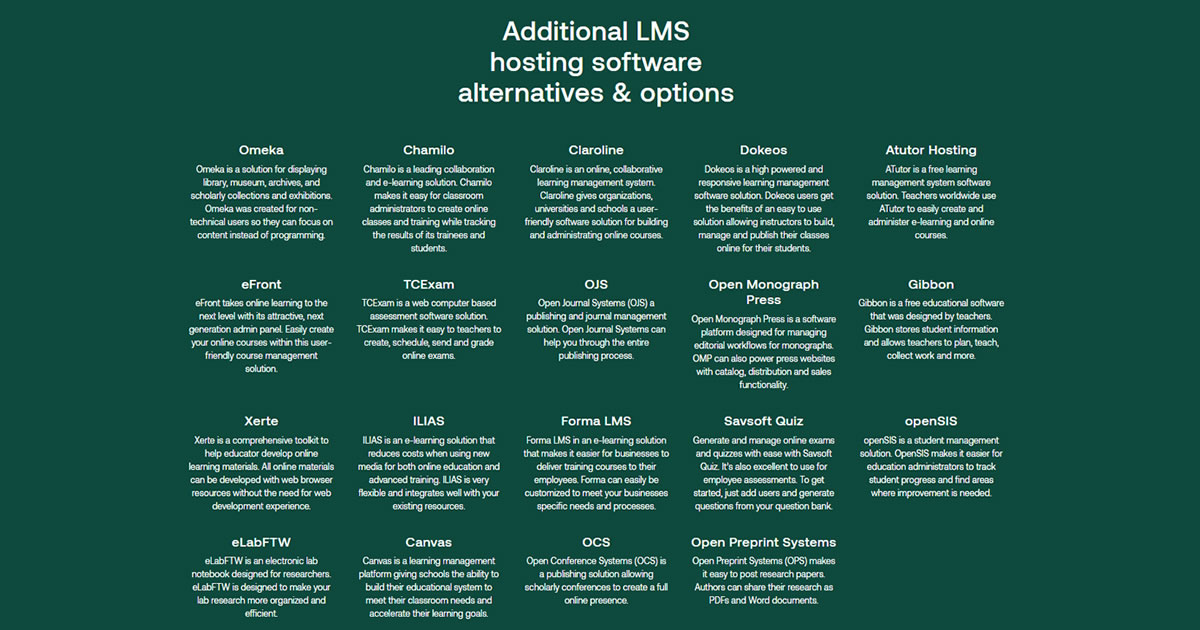
Hosting.com offers more performance-oriented solutions with its Turbo plans, making it ideal for WooCommerce stores or LMS sites that demand faster page loads. It also includes free cPanel migrations, email hosting, and developer features useful for scaling projects over time.
If you’re running a straightforward website or blog and want to keep costs and complexity low, DreamHost works well. If performance and backend customization matter more, Hosting.com gives you more firepower — for a price.
Our Final Verdict
Hosting.com and DreamHost both represent the “old guard” of web hosting — established providers with decent reputations, stable infrastructure, and a predictable user experience. If you’re deciding between these two, you’re probably after reliability, not novelty (and there’s nothing wrong with that).
DreamHost excels in its transparency and simplicity. Its pricing is clear, daily backups are included, and it avoids the heavy upsells that plague many hosting dashboards. DreamHost’s 97-day money-back guarantee is also the most generous in the industry. But it has some drawbacks: there’s no free site migration, support can be slow, and its proprietary control panel isn’t as intuitive as cPanel.
Hosting.com, meanwhile, goes in a slightly different direction. Its selling point is speed — provided that you’re willing to pay for the Turbo plans. It also supports developer tools like Node.js, Python, and Redis, even on shared hosting. But the limitations on its Turbo plans (one site per plan) and the aggressive renewal pricing model make it less appealing over time. Like DreamHost, it’s reliable but doesn’t feel like it’s pushing forward.
The reality is: there are better options for eCommerce hosting than either of these two. If you’re running a serious online store, you’ll likely hit scaling walls with both DreamHost and Hosting.com, or end up paying more for less flexibility. For example, DreamHost lacks free migrations, and Hosting.com’s higher-tier pricing isn’t proportional to the value provided.
If your focus is eCommerce, we highly recommend checking out our Best eCommerce Hosting guide where we compare today’s top-performing, scalable, and value-packed options. Hosts like Cloudways, Verpex, and 20i often outperform legacy providers in both price-performance ratio and long-term usability.
In short, if you’re choosing between Hosting.com and DreamHost for a personal blog or low-traffic business site, either will get the job done. But if you’re planning to grow, you owe it to yourself to explore newer, more purpose-built hosting alternatives.
More About the Companies
Hosting.com
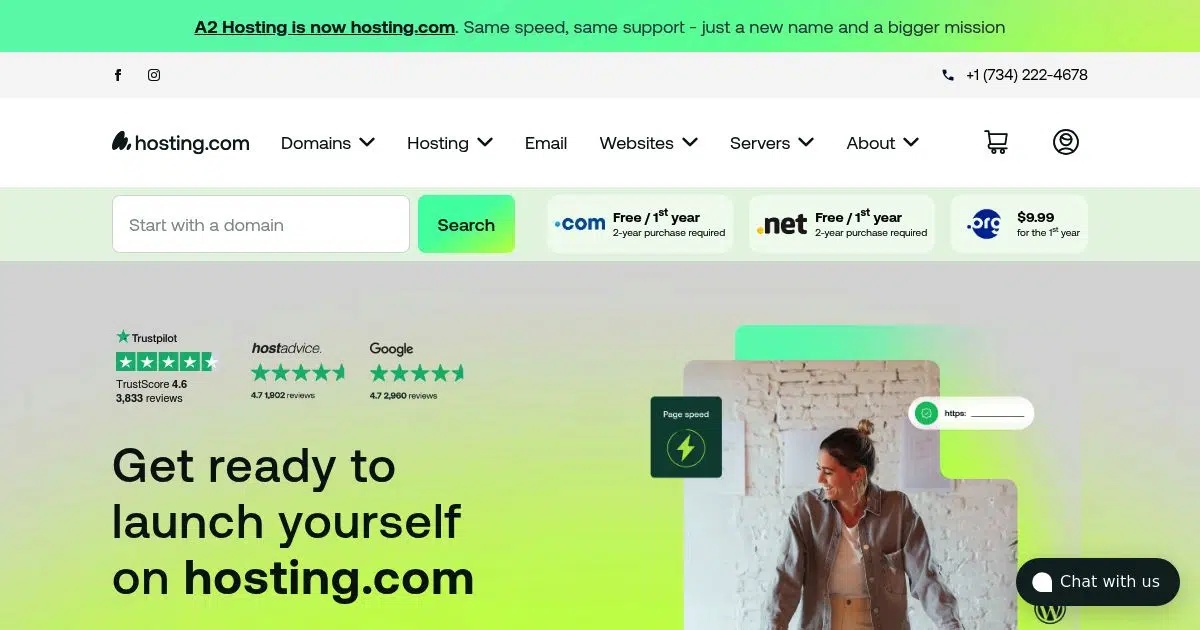
Hosting.com, previously known as A2 Hosting, was originally founded by Bryan Muthig in 2003 in Ann Arbor, Michigan. The company built a reputation for developer-first hosting, becoming one of the earliest providers to adopt SSD storage and optimize WordPress performance through its A2 Optimized platform.
In January 2025, the company was acquired by World Host Group and rebranded as Hosting.com. While the ownership has changed, the service still emphasizes tools for developers, fast server technology, and global infrastructure. Today, Hosting.com is actively repositioning itself to serve small businesses, LMS websites, and tech-savvy freelancers; offering a mix of shared, WordPress, VPS, and email hosting built on its legacy of performance and customization.
Hosting.com Pros
- Developer-friendly: Node.js, Python, Redis, and SSH acces even on shared plans
- Turbo plans include NVMe, LiteSpeed, and HTTP/3 tech
- Excellent email hosting deal for small businesses
- Free cPanel site migrations
- Cheap unmanaged VPS with strong specs
Hosting.com Cons
- Renewal rates jump steeply after promo
- One website limit on all Turbo plans
- Lacks modern cloud or autoscaling options
- Managed VPS plans have become more restrictive post-A2 migration
DreamHost
DreamHost has established itself in the web hosting and domain services sector since its founding in 1996 by Dallas Bethune, Josh Jones, Michael Rodriguez, and Sage Weil. Based in Los Angeles, California, DreamHost’s origin and location underscore its longstanding role and innovation in web hosting and domain registration services.
DreamHost Pros
- Reliable server uptime performance
- Daily backup included in all shared hosting plans
- 97-day Money back guarantee
- Extensive knowledgebase
DreamHost Cons
- Price increase during the renewal
- Live chat support can be better
- No free site migration assistance

With DreamHost achieving a HostScore of 66.9%, it marginally falls below the industry average of 67% (based on our latest market study). This suggests DreamHost is in line with the general market performance, providing reliable hosting solutions. In comparison, A2 Hosting holds a HostScore of 58.1% and sits further below the industry benchmark.
A2 Hosting & UltaHost HostScore
Web host not found
63.2%
Compare Service Offering
| Feature | Hosting.com | DreamHost |
|---|---|---|
| Hosting Services | Shared, VPS, and Reseller Hosting | Shared, VPS, Dedicated, and Cloud Hosting |
| Specialized Services | Managed WordPress, and Email Hosting | Managed WordPress, Adult Websites, Email, and Game Server Hosting |
| Server Locations | USA, Netherlands, and Singapore | USA and Netherlands |
| Control Panel | cPanel | In-House |
| Uptime Guarantee | 99.9% | 100% |
| Money Back (Days) | 30 | 97 |
| Free Migration | Yes | No |
| Support Channels | Live chat and email | Phone, live chat, and email |
Key Takeaways
- A2 Hosting offers user-friendly cPanel and free migration services. DreamHost uses a custom control panel and lacks free migration, which might be a downside for some.
- DreamHost offers a generous 97-day money-back guarantee, while A2 Hosting’s is limited to 30 days.
Plans & Pricing
| Hosting Type | Hosting.com | DreamHost |
|---|---|---|
| Shared Hosting | $1.99 - 8.99/mo | $2.89 - 9.99/mo |
| VPS Hosting | $4.99 - 31.99/mo | $13.75 - 110.00/mo |
| Dedicated Hosting | $179.99 - 539.99/mo | $149.00 - 399.00/mo |
| Cloud Hosting | $ - /mo | $4.50 - 48.00/mo |
| Managed WP Hosting | $2.99 - 6.99/mo | $16.95 - 71.95/mo |
| Windows Hosting | $ - /mo | $ - /mo |
| Coupon | - | - |
| Coupon Details | - | - |
Key Takeaways
- A2 Hosting and DreamHost offer shared hosting under $3/month. DreamHost’s VPS hosting is pricier but includes more advanced features for better performance.
- Both A2 Hosting and DreamHost raise prices at renewal, but A2 Hosting’s increases are steeper, making DreamHost more budget-friendly long-term.
Development Features & Others
| Feature | Hosting.com | DreamHost |
|---|---|---|
| Language Support | PHP, Java, Python, Node.js, Django, Perl, and Ruby on Rails | PHP, Java, Python, Node.js, Django, Perl, and Ruby on Rails |
| Dev Features | GIT access, WP-CLI, cron jobs, Multiple PHP versions, and SSH access | GIT access, WP-CLI, cron jobs, Multiple PHP versions, and SSH access |
| Staging Tool | Softaculous | No |
| Free SSL | Yes | Yes |
| Built-in Cache | Yes | Higher plans |
| Global CDN | Higher plans | No |
| Free Malware Scan | Yes | Need purchase |
| DDoS Protection | Yes | No |
| Web Application Firewall (WAF) | Yes | Yes |
Key Takeaways
- A2 Hosting offers Softaculous as a staging tool and a global CDN for better performance and easier development. DreamHost lacks a staging tool and a global CDN, which might be a drawback for some users.
- Both hosts offer robust security features like free SSL and WAF. However, A2 Hosting includes free malware scanning and DDoS protection, while DreamHost charges extra for malware scanning and lacks built-in DDoS protection, making A2 Hosting a more comprehensive choice for security-conscious users.
Our Recommendation
Choose DreamHost for reliable WordPress hosting and A2 Hosting for performance-optimized hosting. However, it’s crucial for shoppers to remain informed about the key considerations between both web hosts.
Key Considerations
When choosing between A2 Hosting and DreamHost, consider these key factors:
- Cost and Pricing: DreamHost offers competitive pricing and a 97-day money-back guarantee, giving users great value and a risk-free trial. A2 Hosting has budget-friendly plans but steeper renewal prices, making it more expensive in the long run.
- Hosting Flexibility: DreamHost offers various hosting options, including shared, VPS, dedicated, and cloud hosting, with strong WordPress integration. A2 Hosting provides similar options but focuses on performance optimization, making it ideal for those prioritizing speed and efficiency.
- Ease of Use: DreamHost uses a user-friendly in-house control panel that may require a learning curve for new users. A2 Hosting relies on the widely recognized and easy-to-use cPanel, though rising cPanel prices could impact long-term costs.
- Performance and Scalability: A2 Hosting offers NVMe storage in its higher-tier plans for superior performance. DreamHost provides SSD storage across all plans, which is reliable but may not match the speed and efficiency of NVMe storage.
- Customer Support: DreamHost offers comprehensive support via phone, live chat, and email, though phone support isn’t free. Users are generally satisfied with DreamHost’s server performance and pricing. A2 Hosting provides reliable support through live chat and email but receives mixed reviews on user satisfaction, with both positive feedback and areas of concern.
- Performance and Reliability: DreamHost boasts a 100% uptime guarantee for maximum reliability. A2 Hosting guarantees 99.9% uptime and offers additional performance optimization tools, making it ideal for those prioritizing speed and reliability. Both hosts provide robust performance, but A2 Hosting includes features like a global CDN and staging tools, enhancing scalability and site management.
A2 Hosting or DreamHost for Your Website?
DreamHost is ideal for users seeking reliable WordPress hosting with strong uptime performance, making it perfect for bloggers and small businesses. A2 Hosting, despite its below-average HostScore, is great for those needing performance-optimized hosting with a broad geographical reach and developer-friendly features.
About Hosting.com
Hosting.com, previously known as A2 Hosting, was originally founded by Bryan Muthig in 2003 in Ann Arbor, Michigan. The company built a reputation for developer-first hosting, becoming one of the earliest providers to adopt SSD storage and optimize WordPress performance through its A2 Optimized platform.
In January 2025, the company was acquired by World Host Group and rebranded as Hosting.com. While the ownership has changed, the service still emphasizes tools for developers, fast server technology, and global infrastructure. Today, Hosting.com is actively repositioning itself to serve small businesses, LMS websites, and tech-savvy freelancers; offering a mix of shared, WordPress, VPS, and email hosting built on its legacy of performance and customization.
Hosting.com Pros
- Developer-friendly: Node.js, Python, Redis, and SSH acces even on shared plans
- Turbo plans include NVMe, LiteSpeed, and HTTP/3 tech
- Excellent email hosting deal for small businesses
- Free cPanel site migrations
- Cheap unmanaged VPS with strong specs
Hosting.com Cons
- Renewal rates jump steeply after promo
- One website limit on all Turbo plans
- Lacks modern cloud or autoscaling options
- Managed VPS plans have become more restrictive post-A2 migration
About DreamHost
DreamHost has established itself in the web hosting and domain services sector since its founding in 1996 by Dallas Bethune, Josh Jones, Michael Rodriguez, and Sage Weil. Based in Los Angeles, California, DreamHost's origin and location underscore its longstanding role and innovation in web hosting and domain registration services.
DreamHost Pros
- Reliable server uptime performance
- Daily backup included in all shared hosting plans
- 97-day Money back guarantee
- Extensive knowledgebase
DreamHost Cons
- Price increase during the renewal
- Live chat support can be better
- No free site migration assistance

