

What is PaaS?
Platform as a Service (PaaS) is a cloud computing model that provides developers with a ready-to-use platform for building, deploying, and managing applications. It eliminates the need to manage underlying infrastructure, such as servers, storage, and networking, by offering a suite of tools, services, and APIs that streamline the development process. Rather than code everything from the ground up, PaaS providers often have pre-built blocks that developers can just plug and play to build better apps quickly.
PaaS is ideal for developers looking to streamline the development process, as it automates tasks such as software updates, security patches, and resource scaling.
1. Kinsta
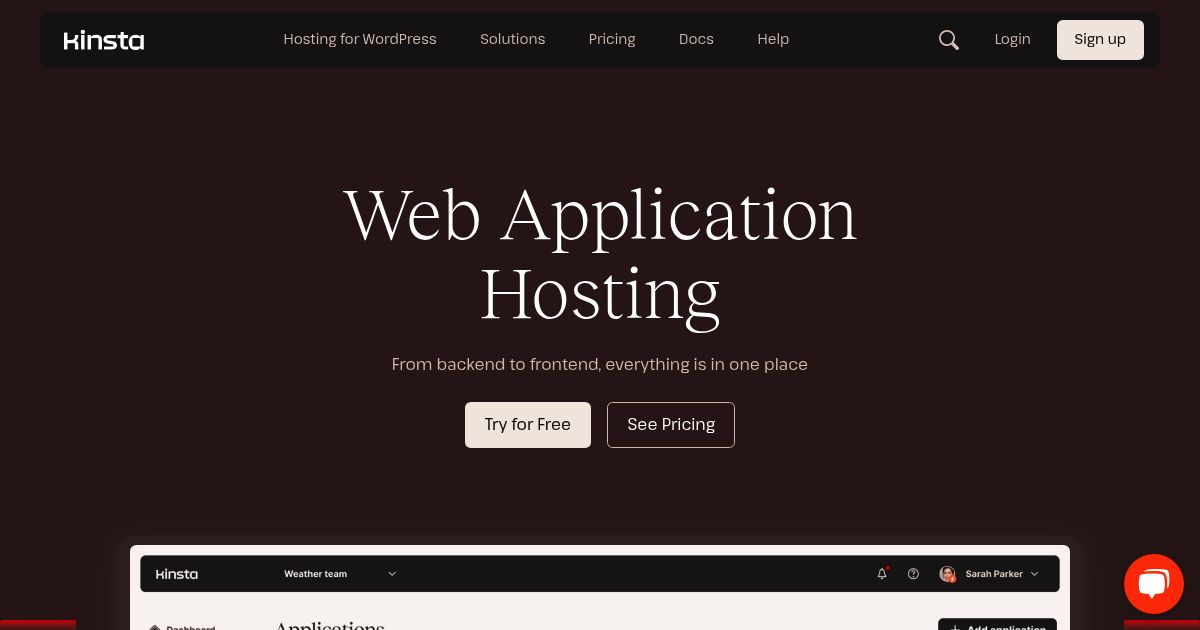
Kinsta has been a managed WordPress hosting provider well known for its high-performance hosting platform and top-notch customer support. The company has recently introduced Application Hosting, providing customers with a comprehensive Platform-as-a-Service (PaaS) solution.
With this new offering, Kinsta takes care of complex tasks such as infrastructure setup, container orchestration, custom domain integration, and server management, allowing customers to focus on developing and growing their applications. By entrusting these time-consuming responsibilities to Kinsta’s expert team, customers can rely on a reliable, one-stop-shop solution for their hosting needs.
2. Cloudways
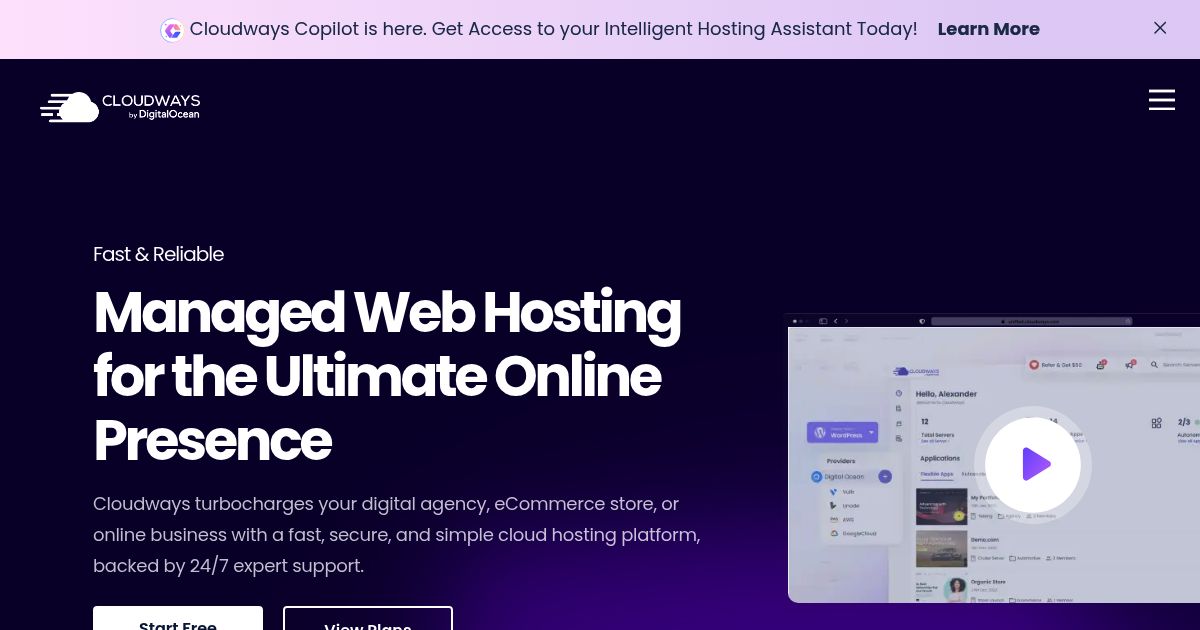
Cloudways is perhaps unique on this list because it is extremely deeply rooted in the web hosting industry. Although it is just like many other PaaS platforms and offers users high configurability for rapid deployment, many have used it to instead build custom virtual servers for hosting.
Part of the reason is its provision for managed hosting, which combines the power of Cloud PaaS without the overly technical portion of environment management. Pricing models are as transparent as many others as well.
3. Microsoft Azure App Services

Microsoft Azure is no stranger to cloud dominance, and Azure App Services is its answer to the need for a streamlined PaaS solution. Designed to help businesses deploy web applications and APIs without hassle, App Services simplifies hosting, scaling, and security management.
It’s a favorite among enterprises that rely on .NET, Java, and Node.js applications. Plus, with built-in integration for DevOps workflows, CI/CD pipelines, and enterprise security features, it’s easy to see why Azure App Services is a go-to choice for scalable cloud apps.
By abstracting much of the infrastructure management, Azure App Services lets businesses focus on building applications that deliver value—rather than dealing with server headaches.
4. Heroku

Heroku now belongs to Salesforce and is an example of PaaS based on the managed container concept. As with many PaaS environments, it is highly self-contained and integrates data services as well as a complete ecosystem of its own.
Because of its app-centricity, Heroku has gained a reputation as less of an enterprise solution. Instead, it has gained a following among the hobbyist and production development crowd. It also helps that Heroku is pretty user-friendly, allowing it to offer a more streamlined experience.
For those keen to build on Heroku, we’ve seen apps built on this platform that has managed to go for respectable prices. For example, The Regular, built to sell food and drinks, is being listed on Flippa for around $25,000.
5. AWS Elastic Beanstalk

When you think about Amazon Web Services (AWS), cloud computing comes to mind, and AWS Elastic Beanstalk is part of that expansive ecosystem. Unlike raw infrastructure services, Elastic Beanstalk is a managed PaaS solution designed to streamline application deployment.
Developers can deploy applications quickly without worrying about underlying infrastructure. It supports popular programming languages like Java, Python, Node.js, and more, automatically handling scaling, monitoring, and load balancing. The best part? You still retain control over underlying AWS resources if you need deeper customization.
Elastic Beanstalk is particularly useful for teams that want to focus on development without getting bogged down by complex server configurations. Just push your code, and AWS takes care of the rest.
6. Google App Engine
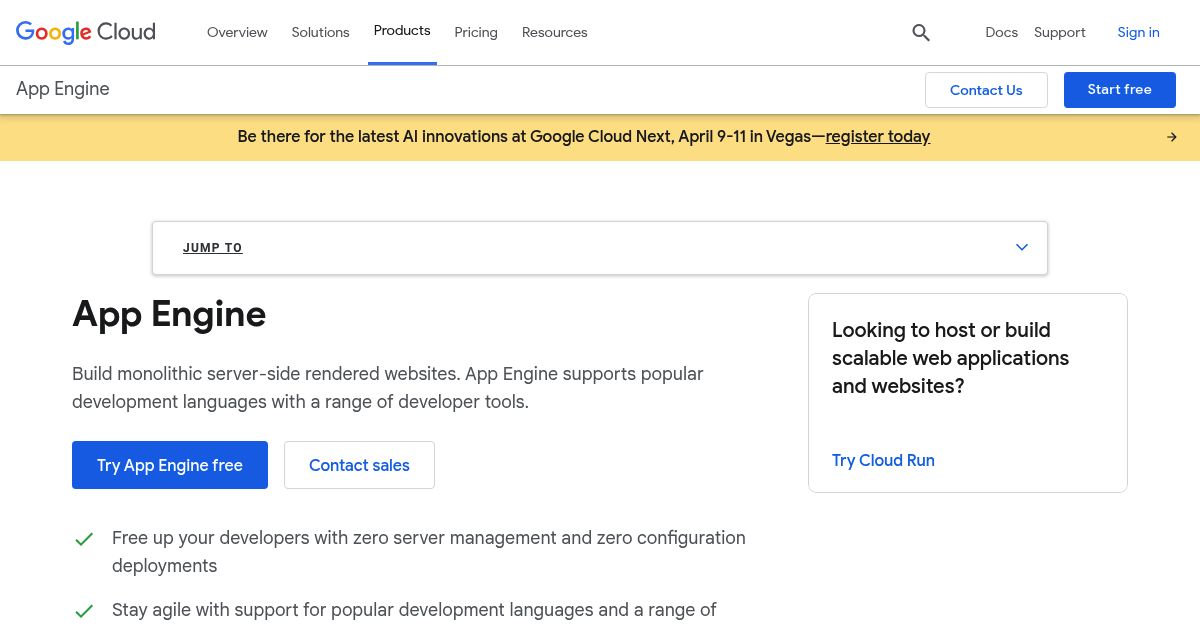
Google offers their App Engine as part of the Google Cloud ecosystem. It’s intended to be a highly scalable serverless PaaS used for rapid deployment. Google, being the giant it is, can provision highly capable servers capable of coping with almost any volume of query.
There have, however, been some issues raised by developers about the service. These include a slight lack of support in some language environments, a shortage of development tools, an inability to plug-and-play some applications, plus a lock-in to Google as the vendor.
7. Dokku
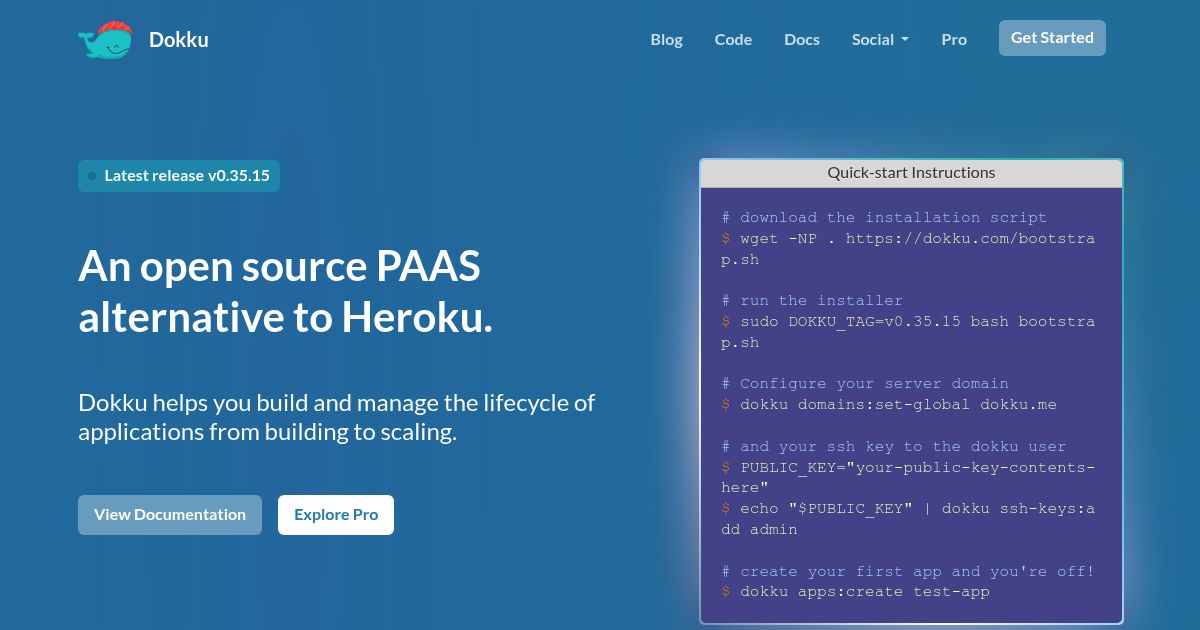
Lauding itself as the “smallest PaaS implementation you’ve ever seen”, Dokku – a PaaS example that isn’t quite as capable as the big players like AWS. What it lacks for in depth however, it makes up for in cost – Dokku is open source and completely free.
Based on container technology from Docker, this minute PaaS essentially lets you deploy on any infrastructure. The serious advantage of this is that there is a much lower chance of vendor lock-in so you’ll be able to take your business model in any direction you want.
8. Fly.io

Fly.io takes a unique approach to cloud deployment, focusing on running applications close to users for ultra-low latency. Unlike traditional PaaS providers that centralize hosting in a few regions, Fly.io lets developers deploy globally with minimal configuration.
Built primarily for containerized applications, Fly.io makes it easy to run full-stack apps with minimal DevOps overhead. It automatically routes traffic to the nearest instance, optimizing speed and performance for users across different locations.
9. Salesforce Lightning

Lightning is what Salesforce considers the next generation of their platform. It’s separate from Salesforce classic (which is SaaS) and will be the target of all future Salesforce developments in future.
Lightning offers a much-improved user interface and has improvements that will boost the experience of both business users as well as on the IT team side. An important part of the rapid development feature is the inclusion of reusable building blocks and a new delivery system.
10. IBM Cloud Foundry

IBM Cloud Foundry brings open-source flexibility to the PaaS space, catering to developers who want a fast and scalable environment for building cloud applications. It supports multiple programming languages, including Java, Ruby, and Go, making it a versatile choice.
What makes IBM Cloud Foundry stand out is its focus on portability and automation. Developers can push applications with minimal setup, while Cloud Foundry handles provisioning, load balancing, and scaling behind the scenes.
If you’re looking for a platform that combines open-source agility with enterprise-grade reliability, IBM Cloud Foundry is a solid contender. With IBM’s backing, it offers strong security and support—ideal for businesses that need a dependable cloud application environment.
11. Red Hat OpenShift

OpenShift is in a way similar to Cloudways and offers users an easier way to build and deploy applications on. It also has extensive API support so you aren’t limited only to what the platform has to offer.
Coming from Red Hat, OpenShift has also been known to be incredibly secure. There are multiple safeguards built into the environment which will step in should users try to perform unexpected actions (such as attempting to run containers with incorrect permissions).
12. Render

Render is a rising star in the PaaS space, offering a modern alternative to traditional cloud providers. It provides developers with fully managed hosting for web applications, static sites, databases, and background workers – without the operational headaches.
What makes Render stand out is its simplicity. With an intuitive UI and straightforward pricing, developers can deploy applications with minimal effort. Whether you’re running a Next.js site, a Python API, or a PostgreSQL database, Render handles scaling and security in the background.
For startups and small teams looking for a hassle-free cloud platform, Render strikes the right balance between ease of use and performance.
13. Platform.sh

Platform.sh is a PaaS designed with developers in mind, offering a powerful cloud hosting solution that automates infrastructure management. Unlike traditional cloud hosting, Platform.sh focuses on Git-based workflows, allowing teams to deploy applications effortlessly across multiple environments.
With built-in support for popular frameworks like Symfony, Laravel, and Django, Platform.sh simplifies the development cycle. It enables instant cloning of production environments for testing, making it a strong choice for teams that need fast iteration without the hassle of manual server configurations.
If your team values efficiency, scalability, and automated deployments, Platform.sh offers a powerful platform to keep projects moving forward without distractions.
14. Wasabi
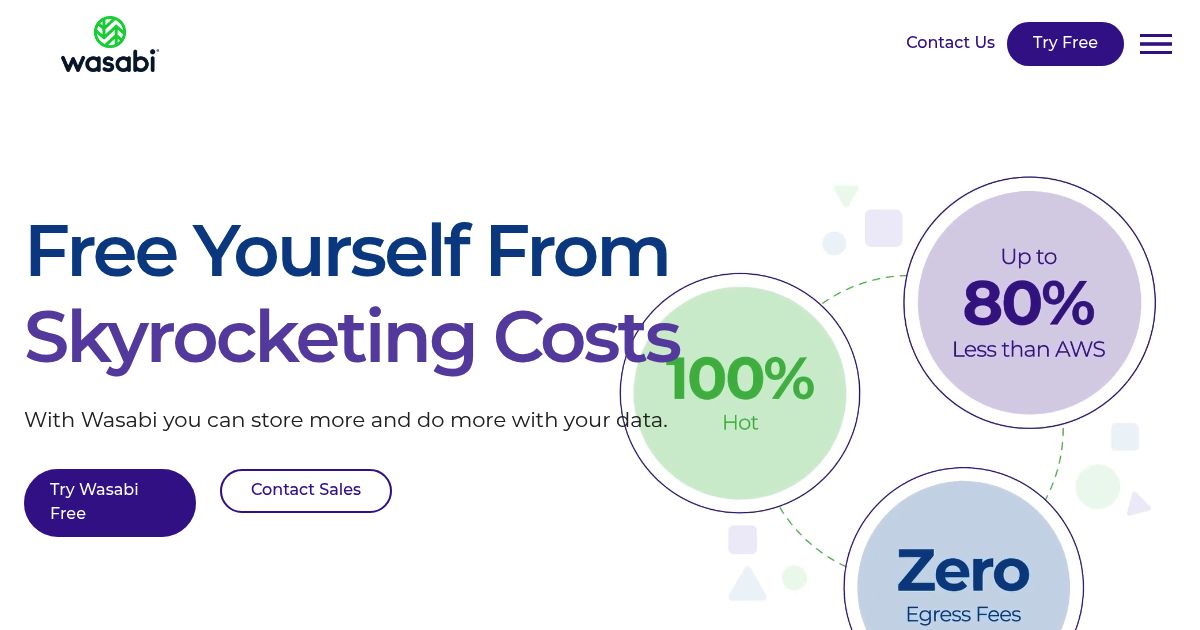
Wasabi may not be the size of Google, Amazon, or Oracle but it is one of the larger independent PaaS providers in the market. Their very impressive pricing has made them popular for a much wider variety of use cases such as Cloud storage.
It has a simple interface and is easy to use and set up as well. This makes it a good choice for both personal use and small to medium-sized businesses. The convenience in these situations makes up for those having more limited access to strong technical support teams.
Setting up hosting can be confusing. That’s why we created HostScore Setup Help, a done-for-you service for getting your hosting configured the right way.
We help with SSL installation, DNS & nameserver setup, WordPress install or migration, and security tuning. One-time fee. Backed by a 100% refund guarantee.
Explore Our ServicesIaaS vs PaaS vs SaaS: What’s the Difference?
Cloud computing services are commonly categorized into three main models: Infrastructure as a Service (IaaS), Platform as a Service (PaaS), and Software as a Service (SaaS). Each model serves a different purpose, offering varying levels of control, scalability, and ease of use.
PaaS, as we discussed in this article, simplifies development by offering a managed platform where developers can build, deploy, and run websites or applications without dealing with the underlying infrastructure.
About IaaS
IaaS provides the fundamental building blocks of cloud computing, including virtual servers, networking, and storage. Businesses using IaaS have full control over their infrastructure, allowing them to configure and manage their own operating systems and applications. This model is ideal for companies that need flexible, scalable cloud hosting solutions, such as running websites, virtual machines, or enterprise applications. Examples of IaaS providers include Digital Ocean, and Kamatera.
Abous SaaS
SaaS is the most user-friendly cloud model, providing fully managed software applications over the internet. Users do not need to install, update, or maintain anything—everything is handled by the provider. Common SaaS applications include email services, collaboration tools, and customer relationship management (CRM) software. Examples SaaS offerings include Hostinger Website Builder and Spanel.
Frequent Asked Questions
Is PaaS suitable for all types of businesses?
PaaS is ideal for businesses that develop custom applications but may not be necessary for companies that simply need a website, email hosting, or an online store. Business hosting is often the better choice for these cases.
How does business hosting differ from PaaS?
Business hosting offers managed environments optimized for CMS platforms, email, and online business operations. PaaS, on the other hand, provides developer tools for building custom applications but may require more technical expertise.
Can I switch from PaaS to a traditional web host?
Yes, but migration can be complex. If you’re currently using PaaS and realizing you don’t need its advanced infrastructure, moving to a business hosting provider can be a cost-effective and easier-to-manage solution.
What are some common PaaS use cases?
Common use cases for PaaS include developing and hosting web applications, creating and deploying APIs, developing mobile applications, and implementing data analytics solutions. PaaS is especially useful for startups and small businesses that may not have the resources to set up and manage their own infrastructure, as well as for organizations looking to quickly prototype and test new applications.
Wrapping Up: How PaaS Ties Back to Choosing a Web Host for Your Business?
PaaS platforms are game-changers for developers looking to deploy and scale applications without managing infrastructure. Whether you’re using Kinsta, Cloudways, or Azure App Services – these solutions simplify the development process.
However, if your primary goal is running a website – not developing custom applications – PaaS may not be necessary. Many small businesses, startups, and non-technical users don’t need cloud-based developer platforms.
Instead, they require a reliable, easy-to-manage business hosting solution that handles:
- Website hosting (WordPress, Joomla, Magento, etc.)
- Business email hosting and domain management
- Scalability for growing traffic without cloud complexity
- Strong security features like SSL, backups, and DDoS protection
This is where business hosting comes in. Unlike PaaS, which focuses on application development, business web hosting is designed for companies that need fast, secure, and hassle-free website management—without the technical overhead.


