

What is IaaS?
Infrastructure as a Service (IaaS) is a cloud computing model that provides virtualized computing resources over the internet. Instead of purchasing physical hardware, users can rent servers, storage, and networking infrastructure from cloud providers on a pay-as-you-go basis. This flexibility allows businesses to scale their IT needs efficiently without the upfront costs of maintaining on-premise infrastructure.
IaaS solutions are widely used for hosting websites, running applications, and managing data storage. Popular providers include Digital Ocean, Kamatera, Amazon Web Services (AWS), Microsoft Azure, and Google Cloud Platform (GCP), each offering different levels of computing power, storage, and networking capabilities.
1. Kamatera

Kamatera is a well-established Infrastructure-as-a-Service (IaaS) provider known for its flexible and cost-effective cloud solutions. With a global network of data centers, it offers a broad range of infrastructure services, including scalable compute power, block storage, and networking.
One of Kamatera’s biggest advantages is its pay-as-you-go pricing model, which allows businesses to fine-tune their cloud resources without long-term commitments. Users can scale up or down instantly, making it an ideal choice for startups, SMBs, and enterprises with fluctuating workloads.
While less well-known compared to major cloud giants like AWS or Azure, Kamatera stands out with its customizable server configurations. Unlike many IaaS providers that restrict choices to pre-defined plans, Kamatera lets users configure CPU, RAM, and storage to exact specifications. This level of control ensures that businesses only pay for what they need.
2. Digital Ocean

Many of those in the web hosting industry may be familiar with providers like Digital Ocean. Although Digital Ocean (DO) focuses on the areas of web hosting and web application deployment, it is nonetheless a good example of a niche IaaS provider.
DO offers users piecemeal allocation of various infrastructure resources that they can combine to customize a Cloud to their unique requirements. From Droplets to Kubernetes, and storage spaces – anything you need can be found here – in whatever amounts you like.
Hosting-specific focused cloud platforms like DO enable developers to quickly build and deploy powerful sites and applications.
3. Cherry Servers
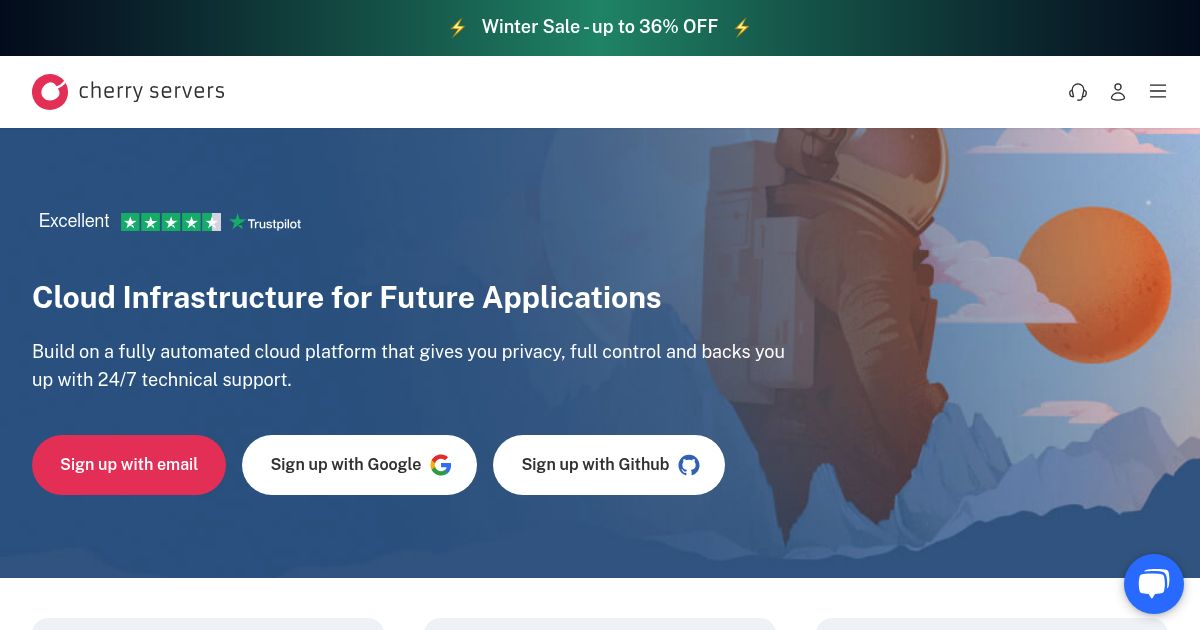
Unrelated to the brand of mechanical keyboard switches of the same name, Cherry Servers focuses on the server infrastructure side of things. Based in Siauliai, Lithuania, Cherry Servers has a solid 19-year track record in helping clients build their servers.
When we say servers, it isn’t just virtual servers either. Here you can work with multiple forms of server setups; it depends on your needs. If you just need a slice, there are virtual server slots to consider. If you need more, the sky is virtually the limit.
All you have to do is state your purpose, and they can construct and help you operate the perfect environment: No more technical headaches, extended deployment phases, or costly mistakes.
4. Microsoft Azure

Microsoft Azure is a name that comes up often no matter whether you’re thinking about SaaS, IaaS, or Paas. The company is justifiably proud of Azure since it is one of the dominant forces in all three categories.
In IaaS, customers make use of Azure to deploy various configurations of managed infrastructure. Because of the very versatile nature of these services, Azure IaaS is suitable for a wide range of business needs.
Rather than focus on the technological advantage of IaaS, Microsoft has positioned Azure along the lines of business benefits. For example, touting compliance, analytics, unified delivery, and a great deal of flexibility – especially in cost.
5. Amazon Web Services (AWS)

Where there is Cloud, Amazon isn’t far away and the company is a top competitor for Microsoft’s Azure. The brand is highly identifiable with the public Cloud and IaaS in particular. Its offerings do cover the entire Cloud spectrum.
Amazon Web Services (AWS) is easy to use and has been known to include a massive array of tools. Best of all, it is virtually limitless yet gives customers the advantage of flexibility and affordability, very important elements as businesses scale upwards.
It does have a few drawbacks though and an especially big one is with regard to EC2 limits. This may hamper business operations, depending on how you’re using the service. Resources may be limited by region, possibly leading to unintended bottlenecks.
6. Google Cloud
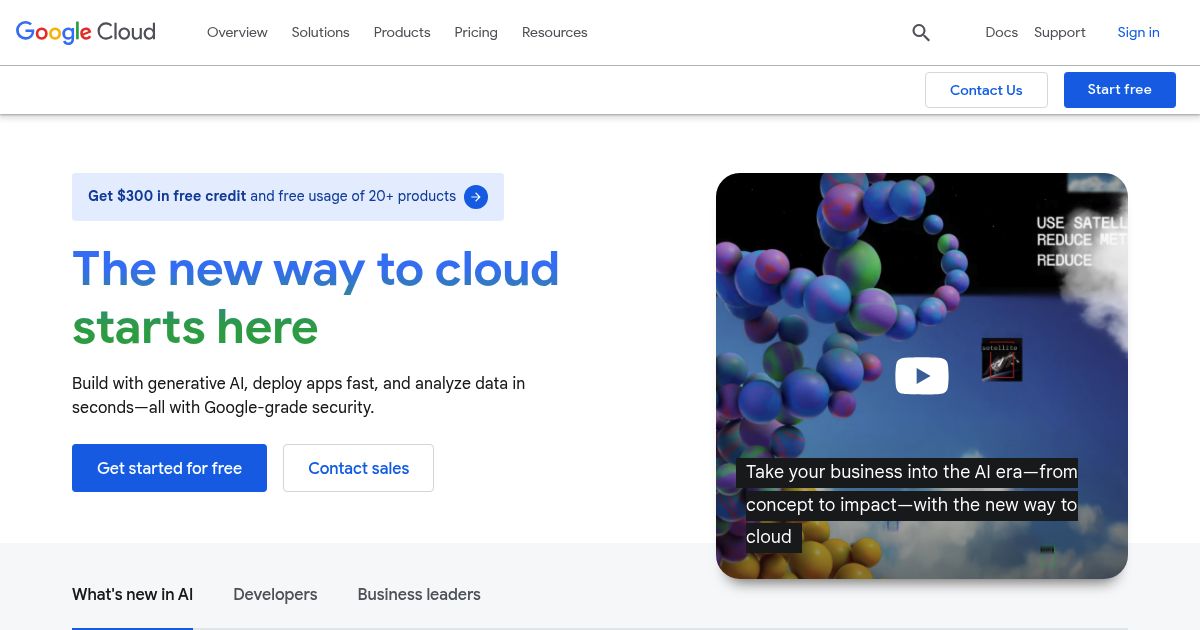
Google has always been known as an innovative company and its Cloud Infrastructure business is built in the same mould. Known for its high-performance infrastructure, Google Cloud stands out for its powerful AI-driven tools, seamless integration with open-source technologies, and cutting-edge networking capabilities.
At its core, Google Cloud’s Compute Engine provides scalable virtual machines that cater to workloads ranging from simple web applications to enterprise-scale processing. It also excels in data analytics, machine learning, and Kubernetes-based container management, making it a preferred choice for developers and data-driven enterprises.
Another major advantage of Google Cloud is its global infrastructure, with high-speed fiber networks and advanced security layers ensuring low latency and enterprise-grade reliability. While often compared to AWS and Azure, Google Cloud is particularly appealing for businesses looking to leverage big data processing, AI solutions, and sustainability-focused cloud computing.
7. IBM Cloud

IBM Cloud is another classic example of how top Cloud providers cover the entire spectrum. Its complete product includes a comprehensive IaaS segment as well. This covers compute elements, network resources, storage, and more.
Most unique about IBM Cloud is their Bare Metal as a Service (BMaaS) offering. This allows their IaaS users to get unprecedented access to the hardware that lies beneath their Cloud service. Another notable product under their IaaS range is Cloud Object Storage.
Unfortunately, IBM Cloud has been less impressive in its own business performance. The company trails behind in Cloud market share, well below top dogs Amazon and Microsoft.
8. Vultr

Vultr has stated as its mission the desire to simplify the Cloud. They try as much as possible to standardise common tasks through an easy-to-use dashboard while retaining the scalability that is the nature of IaaS.
For example, deployment of many web apps can be done with a single click and you can have almost anything running quickly. These aren’t just simple apps like WordPress, but also extend to more complex things like entire virtualized servers.
9. Oracle Cloud Infrastructure

Oracle Cloud Infrastructure (OCI) is the IaaS arm of its Cloud business. Through this, it provides powerful compute (and other infrastructure) related services. The scale of OCI enables it to meet the demands of large-scale organizations with ease.
Their IaaS structure enables Oracle to deliver on-demand scalability for enterprise workloads. This is done through the combination of their other autonomous services. Wrapping round it all is a security layer that tightly integrates where needed.
Unfortunately, Oracle has never really played well with other vendors and this shows through in some of their Cloud services as well, even down to the tool level.
10. Deft (ex-ServerCentral)

Deft, as know as ServerCentral formerly, provides computing infrastructure, but not only at an IaaS level. In fact, they go past the Cloud and also include on-premise infrastructure if that’s what you need. For IaaS, Deft offers a hybrid platform and acts as an AWS consultant.
The time they’ve spent in the market has enabled them to tightly integrate their range of products, making them one of the premium providers of infrastructure needs around. They also help customers migrate from traditional infrastructure onto IaaS.
11. Linode

Linode is yet another example of how an IaaS provider has chosen to focus on the web hosting industry. In concept, it is almost identical to what Digital Ocean does, but Linode has decided to bring forward the user-friendliness aspect.
It was one of the first in the business to introduce a flat pricing model for their IaaS. The result was much greater transparency in Cloud fees, enabling businesses to plan with greater precision despite the potential elasticity of the product.
Linode comes packaged with an intuitive Cloud Manager, excellent API, and the documentation to support it all.
12. Alibaba Cloud

Alibaba Cloud, affectionately known as Aliyun, is China’s answer to Cloud-dominating US companies. Established in Hangzhou, China, by the now-globally-know nack Ma, the company has grown at unprecedented speeds. That’s stunning considering that it is a subsidiary of Alibaba Group.
It offers a wide range of Cloud services that includes IaaS but also services as well. Today, it reach has increased and Aliyun data centers serve 63 zones around the world. Because of the IaaS structure, services are of course based on the pay-as-you-go concept.
Aliyun has been lauded by Gartner as being ideal for medium to large-sized businesses due to the combination of its agility and simplistic process.
13. Hewlett Packard Enterprise

Hewlett Packard Enterprise (HPE) is another of the big boys which provides virtually Everything as a Service. In fact, they take it to the next level and offer varying solutions even within each of those categories – such as in IaaS.
Their strength, however, lies in helping customers build tightly integrated systems. This means that as long as it’s the right solution for your business, you can use HPE to power everything from on-premise systems to the Cloud.
Dubbed its ‘Composable Cloud strategy’, the company provides multiple elements which act as building blocks for whatever you need.
14. Hitachi Enterprise Cloud

The only entry on this list from Japan, Hitachi Enterprise Cloud supports both VMware as well as Cloud-native environments. Their solution looks towards a progression pathway that is faster and more flexible.
What’s left to the user is the choice of whether to pursue a private or hybrid cloud for their automation processes and application delivery. This preconfigured approach enables customers to save both time and money.
IaaS vs PaaS vs SaaS: What’s the Difference?
Cloud computing services are commonly categorized into three main models: Infrastructure as a Service (IaaS), Platform as a Service (PaaS), and Software as a Service (SaaS). Each model serves a different purpose, offering varying levels of control, scalability, and ease of use.
IaaS provides the fundamental building blocks of cloud computing, including virtual servers, networking, and storage. Users manage their operating systems and applications. This model suits businesses needing scalable hosting and custom IT environments.
Abous PaaS
PaaS takes cloud computing a step further by offering a fully managed platform for application development and deployment. Instead of handling the infrastructure, developers can focus on writing code while the provider manages the backend, including security, updates, and scaling. PaaS solutions are particularly useful for developers who need a streamlined environment to build and launch applications without worrying about infrastructure maintenance. Examples of PaaS include Kinsta and Cloudways.
Abous SaaS
SaaS is the most user-friendly cloud model, providing fully managed software applications over the internet. Users do not need to install, update, or maintain anything—everything is handled by the provider. Common SaaS applications include email services, collaboration tools, and customer relationship management (CRM) software. Popular SaaS offerings include Hostinger Website Builder and Spanel.
What is Infrastructure as a Service (IaaS), and how does it work?
Infrastructure as a Service (IaaS) is a cloud computing model that provides virtualized computing resources over the internet. Instead of purchasing and maintaining physical servers, businesses can rent compute power, storage, and networking on a pay-as-you-go basis. Users have full control over the infrastructure, allowing them to install operating systems, configure security settings, and manage applications while the cloud provider handles hardware maintenance and uptime.
What are the potential downsides of using IaaS?
Despite its benefits, IaaS comes with challenges such as cost unpredictability, security concerns, and management complexity. Since resources are billed on usage, expenses can fluctuate, making budgeting difficult. Security remains a shared responsibility, meaning businesses must properly configure firewalls, encryption, and access controls. Additionally, IaaS requires technical expertise to set up and manage infrastructure efficiently. Businesses must weigh these factors before adopting IaaS.
Is IaaS suitable for all types of businesses and applications?
While IaaS is highly flexible and scalable, it may not be the best fit for all businesses. Small companies with limited technical expertise might find managing infrastructure complex and prefer PaaS or SaaS solutions instead. Additionally, some industries with strict data compliance regulations may require on-premises infrastructure rather than cloud-based IaaS. Businesses should evaluate their operational needs, technical expertise, and budget before choosing an IaaS provider.
What are some common IaaS use cases?
IaaS is commonly used for hosting websites, running enterprise applications, big data processing, disaster recovery, and AI/ML workloads. It is also ideal for businesses that require scalable infrastructure, such as eCommerce platforms handling seasonal traffic spikes or startups needing cost-effective, on-demand computing power.
How does IaaS differ from other cloud computing models like PaaS and SaaS?
IaaS differs from other cloud models in the level of control it provides. With Software as a Service (SaaS), users access fully managed applications (e.g., Google Workspace, Dropbox), while Platform as a Service (PaaS) provides a development environment for building applications without managing underlying infrastructure (e.g., Google App Engine, Heroku). IaaS, on the other hand, offers raw computing resources, giving users full flexibility to configure servers, networking, and storage to fit their needs.
Wrapping Up
IaaS plays a foundational role in the web hosting industry, powering many cloud-based hosting services. Some hosting providers operate their own infrastructure, while others build their services on top of major IaaS platforms like AWS or Google Cloud.
When selecting a web host, it’s essential to understand whether the provider uses IaaS infrastructure and how that affects performance, reliability, and pricing. For businesses that require high scalability and control, cloud-based hosting solutions that leverage IaaS might be a better choice than traditional shared or dedicated hosting.
Ultimately, the best hosting option depends on your specific needs – whether you prioritize cost efficiency, performance, or advanced cloud features. If you’re exploring hosting solutions, check out our in-depth hosting reviews to find the best fit for your business.


