The best web hosting providers for photographers are Hostinger, Verpex, and Cloudways.
To choose the best web hosting for a photography website, the key criteria include fast image loading speed, storage capacity, ease of use, scalability, pricing, and the ability to handle media-heavy content like high-resolution images and client galleries.
Quick Comparisons
| Hosting Provider | Best For | Storage | Performance | Support | Starting Price |
|---|---|---|---|---|---|
| Hostinger | Budget portfolios & beginners | 50 – 100 GB SSD | LiteSpeed Cache, CDN | 24/7 live chat | $2.99/mo |
| Verpex | Support & small business photographers | Unmetered SSD | cPanel + global servers | 24/7 expert chat & email | $2.99/mo |
| Cloudways | Performance & scalability | 40 – 160 GB SSD | Advanced caching & malware protection | 24/7 support with ticketing | $11/mo |
| Kinsta | Security & premium portfolios | 10 – 100 GB SSD | Google Cloud C2 VMs | WordPress specialists | $30/mo |
| InMotion Hosting | Storage & email features | 100 – 200 GB NVMe SSD | NVMe SSD + UltraStack | US-based 24/7 support | $3.49/mo |
Note: HostScore offers a data-driven look at web host performance, but photographers may have unique needs like large storage, fast image loading, and design flexibility. This guide focuses on helping photographers find the best hosting service to showcase visual work online.
1. Hostinger

Visit Online: https://www.hostinger.com/
Hostinger is a Lithuania-based web hosting provider known for its budget-friendly plans and global server infrastructure. It powers millions of websites worldwide and is especially popular among beginners and freelancers for its simplicity and value.
What Makes Hostinger Right for Photographers?
Hostinger combines affordability with performance, making it an excellent option for photographers starting out or building a personal portfolio. Its shared hosting plans include NVMe-SSD or SSD storage up to 200 GB, free domain name, unlimited bandwidth on higher tiers, and automatic backups. All these features are essential for hosting high-resolution images and galleries.
Photographers will appreciate Hostinger’s native integration with LiteSpeed Web Server and its optimization for WordPress, which ensures fast loading speeds even for media-heavy pages. The built-in Hostinger Website Builder and one-click photo gallery plugins simplify the setup process, while a global CDN (on Business plans and up) helps reduce latency when showcasing work to international clients.
Find out more about Hostinger services in our review.
Hostinger Pros
- Affordable entry plan at $2.99/month for 3 websites, plus 15% off with HOSTSCORE15.
- Global network of data centers in Europe, Asia, North America, and South America
- Excellent AI ecosystem with AI Builder (new!), Hostinger Agent with memory, OpenClaw, Hermes, n8n, and Paperclip
- User-friendly hPanel with API and MCP access for AI-assisted hosting management
- Developer API and MCP integration - Hostinger Connector lets Claude, Cursor, Codex, and other MCP-compatible tools manage websites
- Multiple payment methods accepted, including crypto and digital wallets
Hostinger Cons
- The lowest price requires 48 months upfront and renews at $10.99/month
- Advanced Agent features and managed AI applications may require separate paid plans
- Hostinger AI Builder sites have limited portability compared with WordPress websites
- Hostinger does not support Windows hosting.
2. Verpex

Visit Online: https://verpex.com/
Verpex is a relatively new web hosting provider headquartered in the UK, with a focus on managed hosting and exceptional customer support. It offers global server locations and competitive pricing, aiming to deliver enterprise-grade performance to individuals and small businesses alike.
What Makes Verpex Right for Photographers?
Verpex shines with its commitment to reliability and support, the two crucial areas for photographers who can’t afford downtime or slow image delivery. All plans include free daily backups, SSD storage, and unlimited bandwidth, which means photographers can store and serve large image libraries without worrying about hitting resource limits.
Its user-friendly cPanel interface makes it easy to install WordPress or other CMS platforms used for portfolio websites. Verpex also provides free website migration, making it painless for photographers moving from another host. With 24/7 customer support and a 45-day money-back guarantee, Verpex offers peace of mind alongside technical robustness.
Want to find out more about Verpex? Check out our complete review.
Verpex Pros
- Budget-friendly entry pricing on shared and VPS hosting plans
- 45-day money-back guarantee on shared/reseller plans (longer than industry standard)
- Daily backup included in all shared hosting plans at no extra cost
- Unlimited free site migrations
- Choice of 8 global data centers across five continents
- Wide hosting selection including Windows, reseller, and managed servers
Verpex Cons
- Steep renewal pricing after the first term (up to 90% higher than intro rates)
- Short refund window on managed VPS (7 days compared to 30+ with some competitors)
3. Cloudways

Visit Online: https://verpex.com/
Cloudways is a managed cloud hosting platform that sits on top of cloud providers like DigitalOcean, Vultr, Linode, AWS, and Google Cloud. It caters to users who want cloud hosting performance without the complexity of direct server management.
What Makes Cloudways Right for Photographers?
Cloudways is a powerful choice for professional photographers who need fast, scalable hosting for image-rich websites. With its advanced caching stack (Varnish, Redis, Memcached) and SSD-based infrastructure, Cloudways ensures that large portfolios and client galleries load quickly — even under high traffic.
Unlike shared hosting, Cloudways gives users dedicated resources and the flexibility to choose data centers closest to their audience. It also includes on-demand and automatic backups, staging environments, and one-click server scaling – all ideal for photographers who need performance and growth without being bogged down by technical admin tasks.
Want to find out more about Cloudways? Check out our complete review.
Cloudways Pros
- Reliable server uptime and speed performance
- Good abstration over complex cloud server setups with integrated dashboard
- High scalability; Autonomous plan supports auto-scaling
- Easy server cloning, site staging, and website transfer
- Host unlimited websites and applications in one account
- 30% discount for first two months with coupon "HOSTSCORE"
Cloudways Cons
- Getting expensive - Prices increased steadily for the past few years
- Limited trial period
- Excellent technical support, but poor billing practices and support
4. Kinsta

Visit Online: https://kinsta.com/
Kinsta is a premium managed WordPress hosting provider powered by the Google Cloud Platform. It’s designed for businesses, developers, and creatives who need top-tier performance, security, and support.
What Makes Kinsta Right for Photographers?
Kinsta offers a performance-focused hosting experience with features that directly benefit media-heavy sites. Built on Google’s C2 virtual machines, Kinsta provides lightning-fast load times, even for image-rich portfolios and gallery-heavy themes. The use of a global CDN, automatic database optimization, and 24/7 uptime monitoring ensures a seamless user experience for site visitors.
For photographers who manage multiple projects or client websites, Kinsta’s staging environments and custom-built MyKinsta dashboard allow for streamlined workflow management. While pricing is higher compared to budget hosts, the trade-off is a secure, ultra-reliable hosting stack backed by expert WordPress support.
Want to find out more about Kinsta hosting? Check out our full review.
Kinsta Pros
- Outstanding uptime and speed backed by Google Cloud’s premium tier network.
- 300+ CDN locations worldwide through Cloudflare Enterprise integration.
- Advanced firewall, DDoS protection, and built-in malware scanning.
- Specialized WordPress support in English, Portuguese, Spanish, Italian, French, German, Japanese, Danish, Dutch, and Swedish.
- Free site migration assistance handled by Kinsta’s support team.
- MyKinsta dashboard with detailed analytics, staging environments, and one-click tools.
- Free premium Cloudflare features, including HTTP/3, wildcard SSLs, and edge caching at no extra cost.
Kinsta Cons
- Pricing is expensive and less suitable for those managing multiple small sites.
- No built-in email hosting, requiring a separate provider.
- Certain WordPress plugins are restricted due to performance or security issues.
5. InMotion Hosting
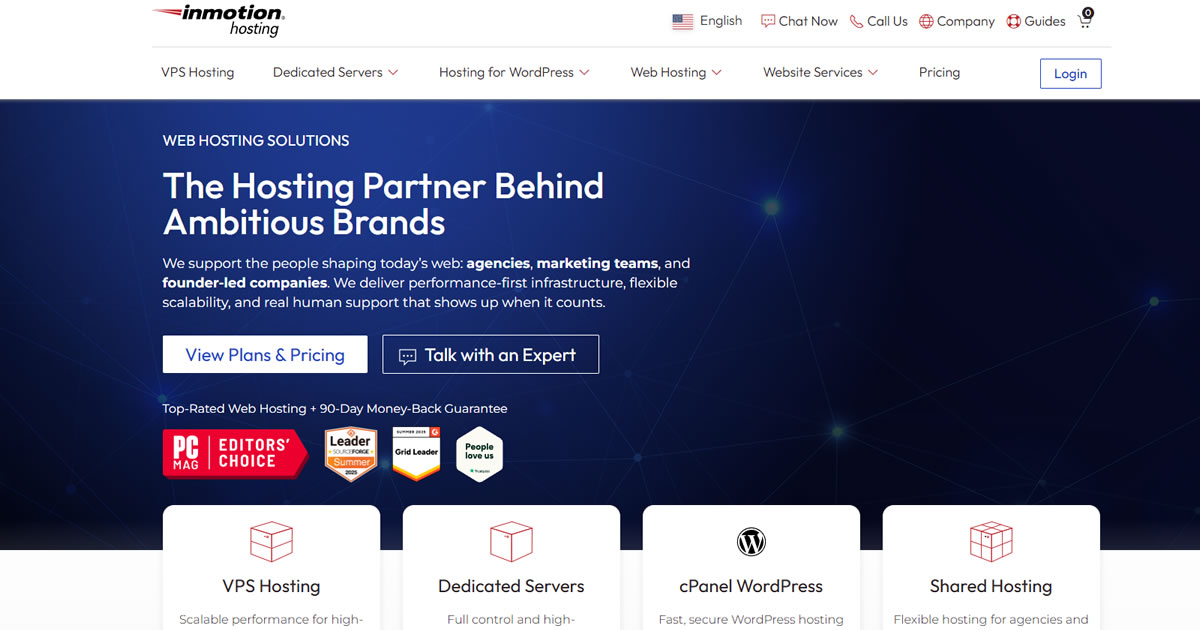
Visit Online: https://inmotionhosting.com/
InMotion Hosting is a U.S.-based web host with a strong reputation for performance, customer support, and business-grade solutions. It has been in the industry since 2001 and offers a wide range of services, from shared hosting to dedicated servers.
What Makes InMotion Hosting Right for Photographers?
InMotion Hosting is a well-rounded option for photographers who want generous storage, built-in email, and reliable uptime. Its plans include NVMe SSDs (up to 100 GB+), unlimited bandwidth, and free SSL — all vital for hosting high-quality visuals and maintaining client trust.
The platform supports multiple CMS options (WordPress, Joomla, etc.), offers drag-and-drop builders, and includes marketing tools like email accounts and autoresponders — useful for client communication and gallery sharing. InMotion’s US-based support and 90-day money-back guarantee provide additional assurance for those seeking a safe, long-term hosting investment.
Want to find out more about InMotion hosting? Check out our full review.
InMotion Hosting Pros
- Affordable entry pricing
- Developer stack on all shared hosting plans (Python/Node/Ruby, Git, SSH)
- Built-in hack, DDoS, and malware protection
- Long 90-day money back guarantee refund window (best in market)
- Free SSL, email, and site migration
InMotion Hosting Cons
- Lower shared hosting plans lack advanced speed features
- Higher renewal rates across shared, VPS, and reseller plans
- No Asia-based data center
- No Windows Server hosting option
Comparison of the Best Hosting for Photographers
Choosing the right hosting for your photography website depends on what matters most: cost, performance, storage, or support. Below is a side-by-side comparison of the top hosting providers for photographers. Each option offers a distinct advantage — from Hostinger’s affordability to Kinsta’s enterprise-grade security.
| Hosting Provider | Best For | Storage | Performance | Support | Starting Price |
|---|---|---|---|---|---|
| Hostinger | Budget portfolios & beginners | 50 – 100 GB SSD | LiteSpeed Cache, CDN | 24/7 live chat | $2.99/mo |
| Verpex | Support & small business photographers | Unmetered SSD | cPanel + global servers | 24/7 expert chat & email | $2.99/mo |
| Cloudways | Performance & scalability | 40 – 160 GB SSD | Advanced caching & malware protection | 24/7 support with ticketing | $11/mo |
| Kinsta | Security & premium portfolios | 10 – 100 GB SSD | Google Cloud C2 VMs | WordPress specialists | $30/mo |
| InMotion Hosting | Storage & email features | 100 – 200 GB NVMe SSD | NVMe SSD + UltraStack | US-based 24/7 support | $3.49/mo |
What is the Best Hosting for Photo-Heavy WordPress Sites?
Cloudways is the best choice for photo-heavy WordPress sites. It runs on high-performance cloud infrastructure (DigitalOcean, Vultr, AWS, etc.) and includes an optimized caching stack (Varnish, Redis, Memcached) that significantly improves page load speed for image-heavy content.
With Cloudways, photographers get isolated server resources, global data center options, and the freedom to scale as their portfolio grows. Its WordPress integration is smooth, and tools like Breeze (Cloudways’ caching plugin) and image optimization plugins work seamlessly on this stack.
What is the Best Hosting if You Sell Photos Online?
InMotion Hosting is a reliable pick for photographers who run eCommerce sites or sell prints directly. Its plans include integrated email services, WooCommerce support, and generous storage space — all necessary for hosting high-resolution product photos and managing client communications.
InMotion’s NVMe SSDs and optimized UltraStack server setup deliver great speed, while free SSL and built-in security tools help keep transactions secure. With marketing tools and support for multiple CMSs, it’s a strong platform for creative businesses.
Which Web Host Offers the Best Speed for Image Loading?
Cloudways is the top performer when it comes to speed — especially for image-heavy photography websites. Built on high-performance cloud infrastructure (DigitalOcean, Vultr, AWS, and others), Cloudways provides photographers with dedicated server resources, NVMe SSD or traditional SSD storage, and an advanced caching stack that includes Varnish, Memcached, and Redis. These features work together to minimize load times, even for large galleries and retina-resolution images. With built-in integration of Cloudflare Enterprise (available on some plans), global image delivery is further optimized through edge caching and faster DNS response.
What makes Cloudways even more appealing for photographers is its flexible auto-scaling and real-time server monitoring. When traffic surges (say, after sharing a new gallery or running a promotion) your server can adjust resources automatically. The platform also includes a custom performance dashboard with 24/7 monitoring and alerts, so users can stay ahead of any slowdowns or downtime risks. This combination of speed, transparency, and scalability makes Cloudways ideal for professionals who rely on fast-loading visuals to impress and convert visitors.
What Kind of Storage & Bandwidth Do Photography Websites Need?
Photography websites are media-heavy by nature, so generous storage and bandwidth are crucial. A small to mid-sized portfolio may need 10 to 30 GB of SSD space, but professionals managing client galleries or selling prints online should aim for 100 GB or more, ideally on NVMe SSDs for faster file access.
In terms of bandwidth, unlimited or unmetered plans are ideal. High-resolution images and galleries can quickly eat through monthly transfer limits, especially if your site sees regular traffic from clients and prospects reviewing work.
A CDN is also highly recommended to improve global load times and reduce server strain
Do Photographers Need Managed WordPress Hosting?

Managed WordPress hosting isn’t a must for every photographer, but it can make life much easier, especially if you want to focus purely on photos / content creation. Managed hosts handle updates, backups, performance optimizations, and security for you, which removes a lot of overhead.
For example, with providers like Kinsta or Cloudways, you get daily backups, staging environments, and automated performance tweaks tailored to WordPress. This is useful if you’re running a dynamic gallery, WooCommerce store, or portfolio with regular changes.
Pros:
- Hassle-free performance and security optimizations
- Expert WordPress support
- Time-saving automation (backups, updates, scaling)
Cons:
- Higher monthly cost
- Less flexibility if you want to run multiple CMS platforms
- Can be overkill for static portfolio sites
Beyond Web Hosting: Improve Your Photography Site Operation Experience
Building a successful photography website goes beyond just choosing the right hosting provider. Here are some additional tools, tips, and resources to help photographers enhance their website performance, improve visibility, and protect their valuable work.
Photo Gallery Plugins and Tools

To present your photography in the best light, consider using dedicated photo gallery plugins that make it easier to display high-quality images while ensuring a great user experience. These plugins often include features like customizable galleries, lightbox displays, and fast loading times. Some popular options include:
- NextGEN Gallery: One of the most popular and feature-rich gallery plugins for WordPress, ideal for photographers who want full control over their portfolios.
- Envira Gallery: Known for its speed and simplicity, Envira Gallery is perfect for photographers who want to display images in a visually appealing way without slowing down their site.
- PhotoShelter: A specialized platform for professional photographers that provides portfolio display options, online storage, and eCommerce features for selling prints and licenses.
These tools help enhance the user experience by allowing photographers to present their portfolios in an engaging, aesthetically pleasing format.
SEO for Photography Websites

Optimizing your photography website for search engines can help you reach a larger audience and attract potential clients. Here are some key SEO tips for photographers:
- Image Alt Tags: Use descriptive alt tags for every image, including keywords that describe the subject of the photo. This helps search engines understand the content of your images and can improve your site’s ranking.
- Image Compression: Large image files can slow down your site, which negatively impacts user experience and SEO. Tools like TinyPNG or ImageOptim compress images without losing quality, ensuring faster load times.
- SEO Plugins: Use plugins like Yoast SEO (for WordPress) to optimize your site’s content, including meta descriptions, keywords, and readability. This will help your portfolio get discovered by potential clients searching for photographers in your niche.
Improving SEO helps photographers stand out in a crowded online space, driving traffic to their website and increasing the chance of securing new business.
Image Rights and Security

As a photographer, protecting your work from unauthorized use is crucial. Consider these tools and strategies to safeguard your images:
- Watermarking: Watermarking your images can deter unauthorized usage while still allowing you to showcase your work. Tools like Watermarkly or PhotoMarks make it easy to add custom watermarks to your photos.
- Image Protection Plugins: Plugins like WP Content Copy Protection (for WordPress) disable right-click functionality on your website, making it harder for users to download or copy your images without permission.
- Copyright and Licensing: Consider registering your images with a copyright service or displaying clear licensing terms on your website to ensure you retain control over your work.
These measures provide peace of mind and help protect your creative output from misuse or theft.
Cloud Storage Integration

Managing and storing large image files can quickly take up space on your hosting plan. Integrating cloud storage solutions ensures your photos are securely backed up without overloading your website’s storage capacity. Here are some options:
- Google Drive: Offers easy cloud storage with seamless sharing capabilities. Ideal for photographers needing to store and share large files with clients.
- Dropbox: Another excellent cloud storage solution that integrates well with many hosting platforms. Dropbox allows you to store, share, and sync files across multiple devices, providing easy access to your photography portfolio.
- Amazon S3: For photographers with extensive storage needs, Amazon S3 offers a scalable solution for storing large files. Some hosting providers even offer built-in integration with Amazon S3, making backups and storage management simpler.
By leveraging cloud storage, photographers can keep their hosting space clear while ensuring their images are stored safely and easily accessible.
You May Also Be Interested In: