

The best MySQL hosting providers are HostArmada, Hostinger, Verpex, Kamatera, and Hosting.com.
To choose the best hosting for MySQL databases, the most important criteria include storage speed (SSD or NVMe), number of databases allowed, remote MySQL access, server stability, and transparency of usage limits.
Based on our review of 50+ hosting providers, HostArmada is the best MySQL hosting provider overall. It offers unlimited MySQL databases on all shared plans, full NVMe storage, Remote MySQL support, and clearly stated resource quotas (more about this later).
Hostinger and Verpex follow HostArmada as the top MySQL hosting options with strong support for database-heavy applications, scalable server infrastructure, and clear MySQL resource policies. Hostinger allows up to 800 MySQL databases in their shared plans with built-in security and up to 100 concurrent MySQL connections. Verpex supports remote MySQL and includes NVMe storage with fixed database limits.
Best MySQL Hosting Compared
| Host | No. of MySQL | Remote MySQL | Database Limitations | Storage Type |
|---|---|---|---|---|
| HostArmada | Unlimited | Yes | 350MB – 1024MB database size; MySQL query execution below 1 second. | NVMe |
| Hostinger | 300 – 800 | Yes | Maximum 3GB – 6GB database size for shared / cloud plans ; 50 – 100 MySQL user connections. | SSD/NVMe |
| Verpex | Plan-limited | Yes | Maximum 5GB database size for all plans. | NVMe |
| Kamatera | Custom setup | Yes (manual) | No fixed limits, but MySQL performance depends on how well the server is configured and resourced. | Custom |
| Hosting.com | Plan-limited | No | Up to 600,000 inodes | SSD/NVMe |
1. HostArmada

Visit Online: https://www.hostarmada.com/
HostArmada is a privately owned hosting provider known for its emphasis on performance, transparent resource limits, and reliable support. Founded in 2019, the company operates across multiple global data centers and offers cloud-based shared hosting, VPS, and dedicated solutions with a developer-friendly approach.
When it comes to MySQL database hosting, HostArmada stands out for its combination of NVMe SSD storage, clear policy on resource usage, and generous database allowances. All shared hosting plans support unlimited MySQL databases, a rare offering in today’s hosting landscape. Each plan includes Remote MySQL access, useful for applications hosted externally or for local database management. Importantly, the company publishes detailed limits for database table size, database queries execution time, and inode usage per plan — which allow you to plan for your usage and reduce the risk of unexpected throttling.
With cPanel, auto-backups, and LiteSpeed integration for speed, HostArmada is ideal for users managing many database-driven websites like WordPress, Magento, or custom PHP apps.
HostArmada Pros
- Competitive pricing
- Daily remote backups with up to 21 days of restore points
- NGINX server and NVMe storage for all shared hosting plans
- 45-day money-back guarantee
- Free malware scans and Web Application Firewall (WAF) on all shared hosting plans
- Supports hosting of legal adult content websites
- Wide range of server locations
HostArmada Cons
- Price increases upon renewal
- Entry-level plan supports only one website
- Advanced speed features like dynamic caching are limited to the highest-tier shared plan
- No Windows Server hosting option
2. Hostinger
Visit Online: https://www.hostinger.com
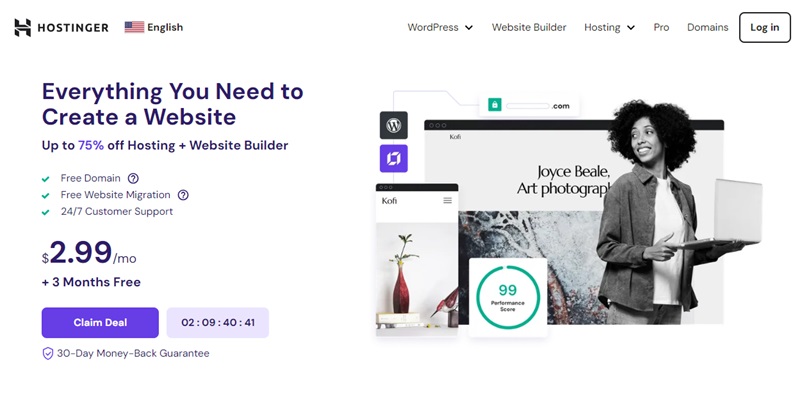
Hostinger is a global hosting provider known for its budget-friendly pricing, fast-loading infrastructure, and beginner-friendly tools. The company serves millions of users worldwide and offers a range of services including shared, cloud, and VPS hosting.
For MySQL hosting, Hostinger offers strong value, especially for users needing multiple databases. Its shared plans (priced at $2.99 – $3.79/mo) support from 300 up to 800 MySQL databases, depending on the tier, which is more than enough for most websites and applications. Remote MySQL access is supported, and users are allowed up to 100 concurrent MySQL user connections, which is clearly outlined in their technical documentation.
Hostinger also includes security measures like custom firewalls and DDoS protection, and its infrastructure is powered by LiteSpeed with full SSD storage. Combined with their proprietary control panel (hPanel), users get a smooth experience when managing databases, backups, and resource usage.
Hostinger Pros
- Affordable entry plan at $2.99/month for 3 websites, plus 15% off with HOSTSCORE15.
- Global network of data centers in Europe, Asia, North America, and South America
- Excellent AI ecosystem with AI Builder (new!), Hostinger Agent with memory, OpenClaw, Hermes, n8n, and Paperclip
- User-friendly hPanel with API and MCP access for AI-assisted hosting management
- Developer API and MCP integration - Hostinger Connector lets Claude, Cursor, Codex, and other MCP-compatible tools manage websites
- Multiple payment methods accepted, including crypto and digital wallets
Hostinger Cons
- The lowest price requires 48 months upfront and renews at $10.99/month
- Advanced Agent features and managed AI applications may require separate paid plans
- Hostinger AI Builder sites have limited portability compared with WordPress websites
- Hostinger does not support Windows hosting.
3. Verpex

Visit Online: https://www.verpex.com/
Verpex is a newer hosting company focused on providing simple, high-performance hosting with clear limits and helpful support. It operates multiple server locations worldwide and uses cloud infrastructure for redundancy and speed.
Verpex is well-suited for MySQL hosting thanks to its full NVMe storage across all shared hosting plans and support for remote MySQL connections. While the number of databases allowed is limited per plan, the quotas are clearly documented and aligned with each tier’s performance profile. For users who value clarity and predictable usage boundaries, this level of transparency is a plus. Verpex also includes daily backups, free migrations, and a well-organized cPanel interface, making it ideal for small agencies, developers, or site owners managing database-heavy websites like forums, blogs, or eCommerce sites.
Verpex Pros
- Budget-friendly entry pricing on shared and VPS hosting plans
- 45-day money-back guarantee on shared/reseller plans (longer than industry standard)
- Daily backup included in all shared hosting plans at no extra cost
- Unlimited free site migrations
- Choice of 8 global data centers across five continents
- Wide hosting selection including Windows, reseller, and managed servers
Verpex Cons
- Steep renewal pricing after the first term (up to 90% higher than intro rates)
- Short refund window on managed VPS (7 days compared to 30+ with some competitors)
4. Kamatera

Visit Online: https://www.kamatera.com/
Kamatera is a cloud service provider that caters to developers and enterprises needing custom virtual infrastructure. Founded in 1995, the company operates a wide global footprint with data centers in North America, Europe, Asia, and the Middle East.
Kamatera is ideal for advanced users who want to build their own MySQL hosting environment from the ground up. Users can deploy virtual machines with any OS, configure MySQL versions manually, and scale resources (CPU, RAM, disk) in real time. This makes Kamatera a flexible option for high-performance database applications, staging environments, or SaaS tools. While it lacks managed hosting features by default, users can opt for managed service add-ons. Pricing is usage-based and highly customizable, which is appealing for technical users who want tight control over their infrastructure and costs.
Kamatera Pros
- Excellent server speed performance
- Highly flexible hosting plans
- Wide range of support and use cases
- Affordable pricing at bare server unit
- Choice of 24 distributed data centers
- Free to create a $100 worth server during the first 30 days
Kamatera Cons
- Confusing pay-as-you-go pricing model
- Many vital add-ons require extra cost
5. Hosting.com
Visit Online: https://www.hosting.com/
Hosting.com is a veteran hosting provider (formerly A2 Hosting) offering both managed and unmanaged VPS, as well as shared and email hosting plans. The company serves a niche of cost-conscious developers and small businesses looking for reliable, no-frills infrastructure.
Hosting.com is a good fit for developers and small teams who need affordable hosting and are comfortable managing their own server environments. Its unmanaged VPS and email hosting plans deliver solid value, and the shared hosting tier remains a core offering. However, the platform is no longer as flexible or high-performance as it once was. Following its migration under A2 Hosting, the managed VPS plans became more restrictive, losing features like custom SSH ports, PHP overrides, and other advanced configuration options.
For MySQL database users, Hosting.com works best as a budget solution for lightweight applications, internal tools, or LMS setups that don’t require deep server customization or advanced observability tools.
Hosting.com Pros
- Developer-friendly: Node.js, Python, Redis, and SSH acces even on shared plans
- Turbo plans include NVMe, LiteSpeed, and HTTP/3 tech
- Excellent email hosting deal for small businesses
- Free cPanel site migrations
- Cheap unmanaged VPS with strong specs
Hosting.com Cons
- Renewal rates jump steeply after promo
- One website limit on all Turbo plans
- Lacks modern cloud or autoscaling options
- Managed VPS plans have become more restrictive post-A2 migration
Comparison Among the Best MySQL Hosting Providers
Choosing a MySQL host depends on your project size, technical skill, and performance needs. Here’s how the top providers compare across key metrics:
| Host | No. of MySQL | Remote MySQL | Database Limitations | Storage Type |
|---|---|---|---|---|
| HostArmada | Unlimited | Yes | 350MB – 1024MB database size; MySQL query execution below 1 second. | NVMe |
| Hostinger | 300 – 800 | Yes | Maximum 3GB – 6GB database size for shared / cloud plans ; 50 – 100 MySQL user connections. | SSD/NVMe |
| Verpex | Plan-limited | Yes | Maximum 5GB database size for all plans. | NVMe |
| Kamatera | Custom setup | Yes (manual) | No fixed limits, but MySQL performance depends on how well the server is configured and resourced. | Custom |
| Hosting.com | Plan-limited | No | Up to 600,000 inodes | SSD/NVMe |
Which Host is Best for Hosting MySQL Databases in Bulk?
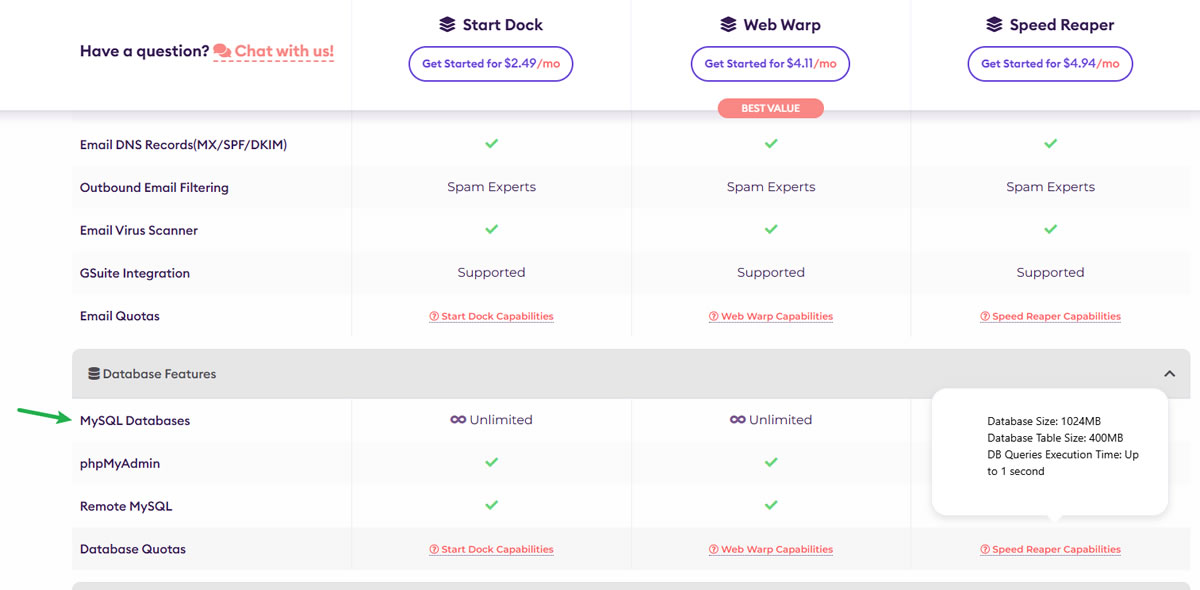
HostArmada is the best choice for hosting a large number of MySQL databases. Unlike many providers that cap the number of databases per plan, HostArmada offers unlimited MySQL databases even on its entry-level shared hosting plan. This is ideal for developers, SaaS vendors, resellers, or site managers who maintain dozens, or even hundreds, of small to mid-sized databases across client projects or subdomains.
Every shared hosting plan is backed by full NVMe SSD storage and includes cPanel for streamlined database management. HostArmada also sets clear per-plan limits on MySQL concurrent connections, RAM, CPU cores, and inode usage, so you can plan for growth without hidden throttling. Additionally, Remote MySQL access is supported by default, making it easy to manage external apps or connect from local development tools.
Why HostArmada MySQL Hosting is best for bulk database hosting:
- Unlimited MySQL databases across all shared plans
- Full NVMe SSD for fast read/write speeds
- cPanel + Remote MySQL access for easy management
- Transparent resource limits reduce risk of downtime
- Ideal for client sites, dev environments, and multi-tenant apps
Which MySQL Host is Best for Small Business Websites?
Hostinger is the best MySQL hosting option for small business websites, thanks to its balance of affordability, built-in tools, and security features. The entry-level Premium Shared Hosting plan allows up to 300 MySQL databases, while the Cloud Startup plans allow up to 800 databases — more than enough for running multiple websites, staging environments, or app integrations.
Each plan also includes automatic daily backups, two-factor authentication, web application firewall, malware scanning, and DDoS protection to safeguard business-critical data.
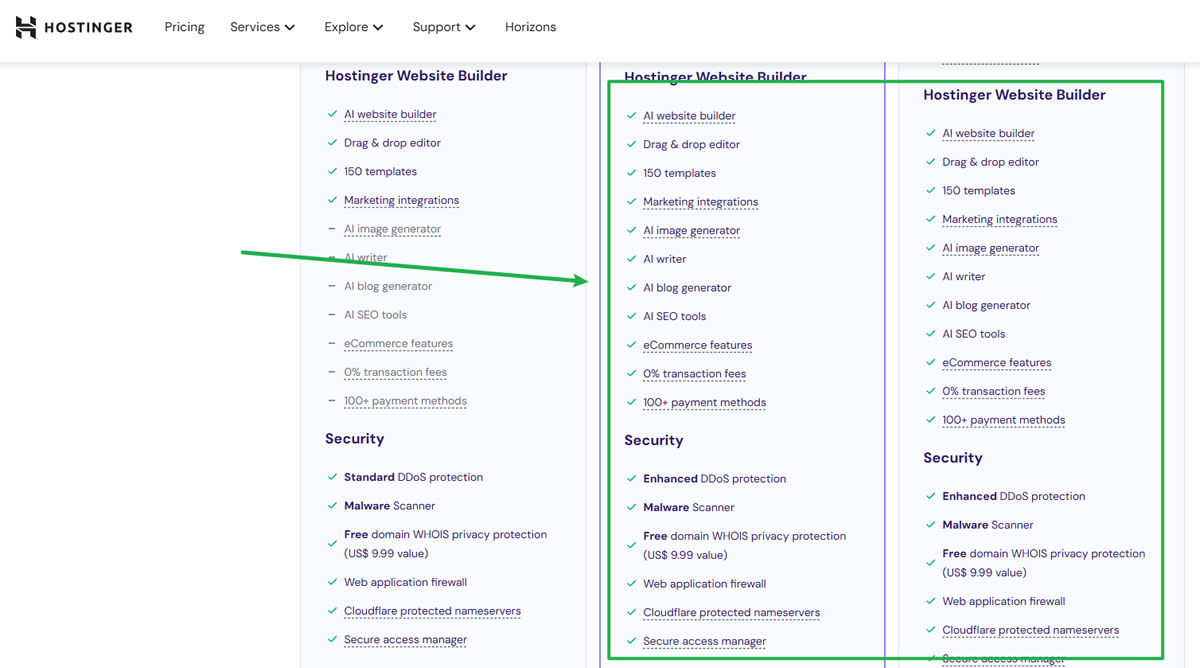
What sets Hostinger apart is its ongoing platform innovation. The company’s proprietary hPanel control panel is fast, user-friendly, and continually updated with quality-of-life improvements. Hostinger also offers an integrated Website Builder with drag-and-drop functionality and AI tools, which is especially helpful for SMB owners who want to get online quickly without hiring a developer. With bundled features like LiteSpeed server optimization, Git access, and caching tools, Hostinger delivers enterprise-style reliability with small-business pricing.
Why Hostinger MySQL Hosting ideal for small businesses:
- Easy-to-use custom control panel
- Built-in website builder and email hosting
- Advanced security at no extra cost
- Clear MySQL resource limits and generous allocations
- Daily backups and automatic updates
Which Provider Supports Remote MySQL Connections?
Remote MySQL is a feature that allows applications, scripts, or users on external servers or devices to connect to a MySQL database hosted on a different server. This is useful when your web app is hosted separately from your database, when you’re running analytics/reporting tools locally, or when you’re integrating third-party platforms that need database access. Instead of relying solely on localhost (127.0.0.1), Remote MySQL lets you securely whitelist external IP addresses to communicate with your MySQL server over the internet.
For users who need secure and easy Remote MySQL access, HostArmada and Verpex offer the most straightforward setup via cPanel. Users can easily whitelist external IPs under the “Remote MySQL” section in their dashboard. This is especially useful for managing remote development setups or integrating apps hosted elsewhere.
Which Host Offers the Best Value for Heavy MySQL Workloads?
HostArmada offers the best value for database-heavy workloads. With unlimited MySQL databases, NVMe storage, and predictable CPU/memory limits per plan, it’s well-suited for eCommerce, forums, CRMs, and other high-load applications. The inclusion of Remote MySQL and full cPanel access also adds flexibility for developers.
What is the Most Scalable MySQL Hosting Service?
Kamatera is the most scalable solution on the list. Users can increase CPU, RAM, and storage instantly via the control panel, and deploy new virtual machines across global data centers. It’s the best option for users who expect unpredictable traffic spikes or need flexible test/staging environments.
What’s the best MySQL hosting with NVMe storage?
HostArmada and Verpex are the best MySQL hosting providers offering full NVMe storage across all shared hosting plans. NVMe (Non-Volatile Memory Express) is a modern storage interface that significantly outperforms traditional SATA SSDs by connecting directly to the CPU via PCIe. This enables much faster data transfers and higher IOPS (input/output operations per second), which directly benefits MySQL-driven websites by reducing latency and speeding up read/write operations.
Why MySQL Hosting Matters?

MySQL is the backbone of most dynamic websites, powering platforms like WordPress, Magento, Joomla, and custom web applications. Efficient MySQL hosting ensures faster queries, higher uptime, and better scalability as traffic grows.
A poor MySQL setup can lead to slow page loads, frequent timeouts, or even complete site failure under load. Whether you’re managing a blog or a business application, having a host that handles MySQL properly is critical to long-term stability.
What to Look for in a Good MySQL Host?
When choosing a hosting service for your MySQL database, these are the most important factors you should consider.
- Database limits: Ensure the plan includes enough MySQL databases for your use case. Unlimited is ideal, but even 300+ is generous.
- Remote access: Needed if your app or reporting tools connect from an external server.
- Storage type: NVMe or SSD storage greatly improves database performance.
- Resource transparency: Look for clearly published limits on MySQL connections, RAM, CPU usage, and IOPS.
- Backup and restore tools: Regular backups and easy restoration options reduce risk.
- Scalability: If you anticipate your database needs growing over time, it’s essential to choose a hosting service that can easily accommodate your needs and scale up resources as needed.
- Control panel access: A user-friendly interface like cPanel or hPanel simplifies database management.
- Security and backup options: Look for a hosting service that provides strong security measures, such as DDoS protection and regular backups, to ensure the safety and availability of your MySQL database.

